


The Board said 99.19% affiliated schools have at least one Indian language teacher, while revised guidelines address concerns over staffing, textbooks, and implementation challenges.
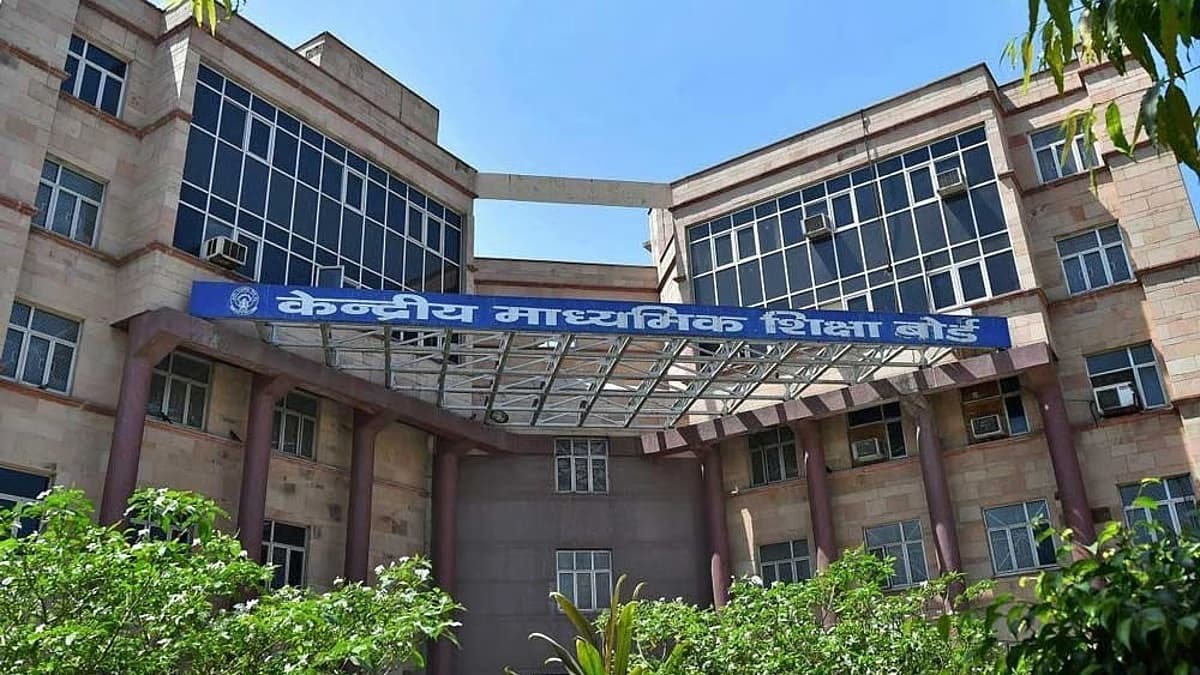
The Central Board of Secondary Education (CBSE) has told the Supreme Court that nearly half of its affiliated schools already meet the requirements of the three-language policy for Class 9, arguing that the framework can be implemented without additional teaching staff in many institutions.
In a counter affidavit filed before the apex court, the Board said 47.3% of its 28,848 affiliated schools already offer two or more native Indian languages to Class 9 students and are therefore fully compliant with the policy without appointing extra teachers. It also stated that 99.19% of affiliated schools have at least one Indian language teacher.

The affidavit, submitted along with separate responses from the Ministry of Education and the National Council of Educational Research and Training (NCERT), defends the three-language policy against petitions filed by parents and foreign language teachers challenging its implementation.
"Recognizing that schools may require time to build full teaching capacity in different Bhartiya Bhashas, the Board has permitted flexible staffing arrangements as an interim measure,” CBSE stated.
The petitions, filed by parents from Delhi, Gurugram, Noida, and Chennai along with teachers, challenge the Board's May 15 circular making three languages compulsory for Class 9 from July 1, 2026.
The petitioners have argued that the circular is unconstitutional and arbitrary, claiming it contradicts an earlier CBSE notification issued 36 days before, which had stated that the third language requirement would not apply to Class 9 until the 2029-30 academic session.
They have also contended that schools are being asked to implement the policy without adequate textbooks, trained teachers, or a board assessment framework, forcing students to rely on Class 6 textbooks and allowing teachers from other subjects with only functional language proficiency to teach the third language.
CBSE, however, argued that the concerns raised in the petitions have been addressed through the implementation guidelines issued on June 29 and a clarification circular released on July 10, making the primary reliefs sought by the petitioners unnecessary.
Under the revised framework, Class 9 students are required to study three languages, with at least two being Bhartiya Bhashas.
As a one-time relaxation, students currently studying two non-native languages, such as English and French, may choose any Bhartiya Bhasha to meet the requirement.
Rejecting the claim that foreign languages are being removed from schools, the Board said there is no restriction on studying foreign languages. According to the affidavit, a foreign language can continue as one of the three prescribed languages or be offered as an additional fourth language.
In a separate affidavit, NCERT informed the court that it has undertaken the preparation, review, and dissemination of textbooks in 22 Scheduled Languages to support implementation of the third-language framework.
It also said the Ministry of Education has constituted a High-Powered Task Force, in coordination with CBSE, the National Institute of Open Schooling (NIOS), and academic experts, to expedite textbook development for the Class 9 transition phase.

Jammu and Kashmir Unemployment: Economic Growth Has Yet to Resolve Job Crisis

China’s Chery unveils AI companion robot designed to ease loneliness
Varanasi Air Show 2026: Schools in Two Chandauli Blocks to Hold Online Classes on October 22, 24

India AI Fellowship 2026: UG Students to Get ₹1 Lakh, PG Students ₹2 Lakh

New Zealand teachers work nearly five hours more than OECD average
China’s Chery unveils AI companion robot designed to ease loneliness
.jpg&w=256&q=75)
New Zealand reforms could leave more students without school qualifications

Alfred Nobel’s will created one of the world’s most recognised prizes. Here’s how

Pepperdine University earns Google recognition and Digital Education Council membership for AI initiatives
Dhirubhai Ambani International School breaks into global top 10 with record IB score

Jammu and Kashmir Unemployment: Economic Growth Has Yet to Resolve Job Crisis
China’s Chery unveils AI companion robot designed to ease loneliness
Varanasi Air Show 2026: Schools in Two Chandauli Blocks to Hold Online Classes on October 22, 24
India AI Fellowship 2026: UG Students to Get ₹1 Lakh, PG Students ₹2 Lakh
New Zealand teachers work nearly five hours more than OECD average
China’s Chery unveils AI companion robot designed to ease loneliness
New Zealand reforms could leave more students without school qualifications
Alfred Nobel’s will created one of the world’s most recognised prizes. Here’s how
Pepperdine University earns Google recognition and Digital Education Council membership for AI initiatives
Dhirubhai Ambani International School breaks into global top 10 with record IB score
Copyright© educationpost.in 2026 All Rights Reserved.