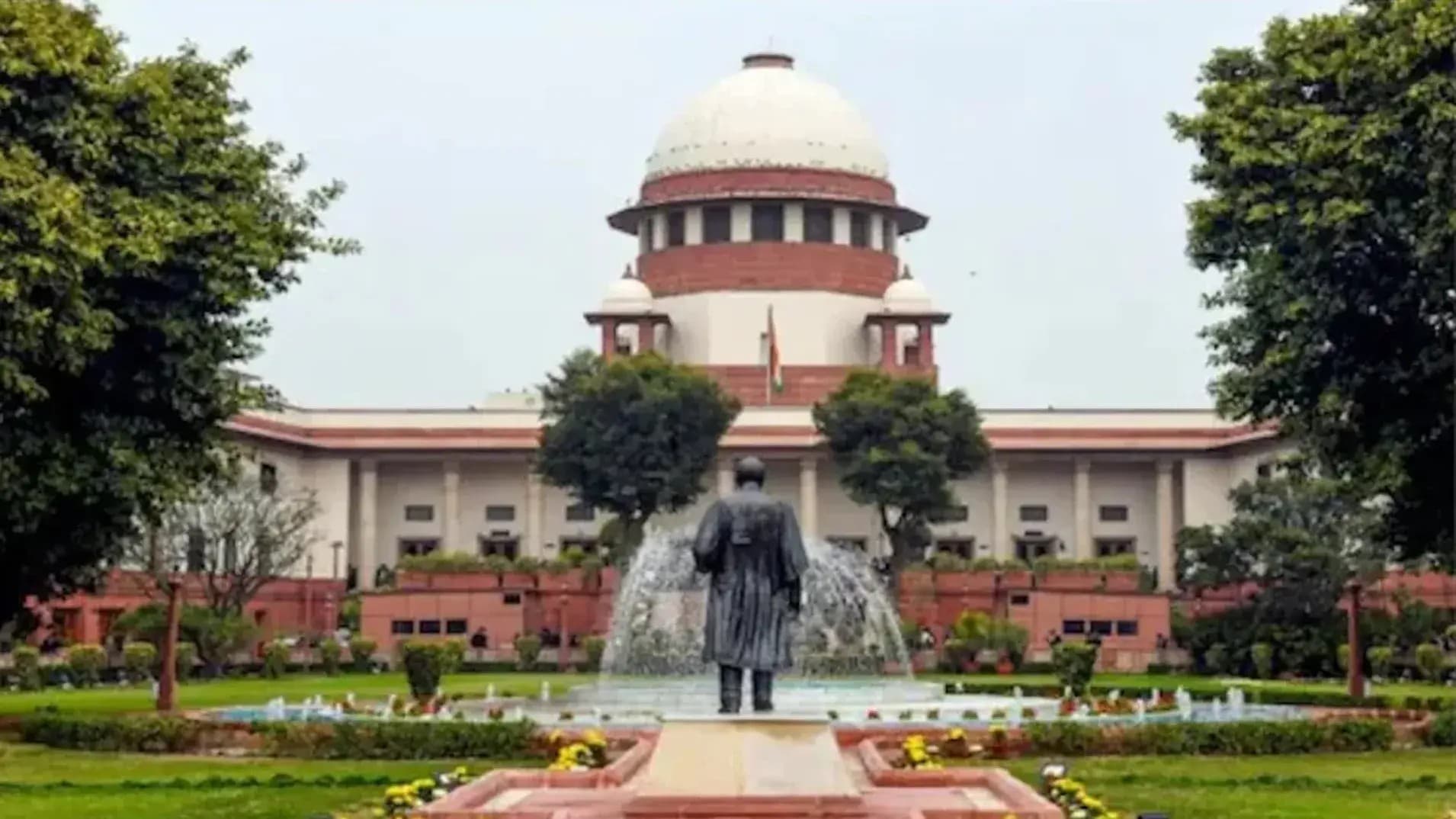
The Supreme Court has instructed the University Grants Commission (UGC) to act on recommendations aimed at tackling caste-based discrimination in higher education campuses and to incorporate them into the UGC (Promotion of Equity in Higher Education Institutions) Regulations, 2025, within eight weeks.
The order came on Sept 15 from a Bench of Justices Surya Kant and Joymalya Bagchi while hearing a petition filed six years ago by the mothers of Rohith Vemula and Payal Tadvi.

Both students had died by suicide after facing caste-related harassment. Represented by senior advocate Indira Jaising and advocates Prasanna S and Disha Wadekar, the petitioners sought urgent reforms to curb what they described as “rampant” discrimination on campuses.
Rohith Vemula was a PhD scholar at Hyderabad Central University, while Payal Tadvi was a tribal student at TN Topiwala National Medical College.
Their deaths in 2016 and 2019 had triggered widespread protests and demands for systemic changes.
Solicitor-General Tushar Mehta, representing the government, told the court that nearly 391 suggestions were received on the draft regulations.
He said an expert panel led by Shailesh N Zala, former vice-chancellor of Maharaja Krishnakumar Sinhji Bhavnagar University in Gujarat, had examined these and forwarded them to the UGC for review.
“The committee is examining these suggestions, and the regulations will be amended accordingly if the UGC accepts them. It is at this stage,” he noted.
Jaising, appearing for the petitioners, said the delay in finalizing safeguards had cost lives. “The focus of this petition is specifically on caste-based discrimination. Earlier judgments of the Supreme Court dealing with campus discrimination were neutral in relation to caste. My interest is prevention rather than cure,” she said.
Justice Kant referred to a written submission by Jaising that highlighted ten key issues, such as banning discriminatory practices, mental health counseling, and social audits.
“Our proposal is that now that the matter is pending with the UGC and the expert committee, a final decision with regard to the regulations will be taken by them. We direct today that these points will also be considered for incorporation in the regulations,” he said.
When Jaising pressed for a strict deadline, Justice Kant assured her that the court would monitor progress.
“We will fix a timeline and keep the matter open. If some of the suggestions are not incorporated, we will examine the reasons,” he remarked, adding that certain proposals could pose difficulties in implementation.
The court directed the UGC to consider a wide set of measures, including banning segregation in hostels and classrooms, enforcing disciplinary action against discriminatory practices, digitizing scholarships to prevent harassment through delays, and establishing grievance committees with at least half their members from Scheduled Caste, Scheduled Tribe, and Other Backward Class communities.
Appeals from these committees would lie with the National Commission for Scheduled Castes and the National Commission for Scheduled Tribes.
Other proposals before the court included complainant protection mechanisms similar to witness protection, personal liability of staff for negligence, specialized counseling for marginalized students, mandatory social audits, NAAC reporting on anti-discrimination compliance, and withdrawal of grants from institutions failing to act.







.jpg&w=256&q=75)