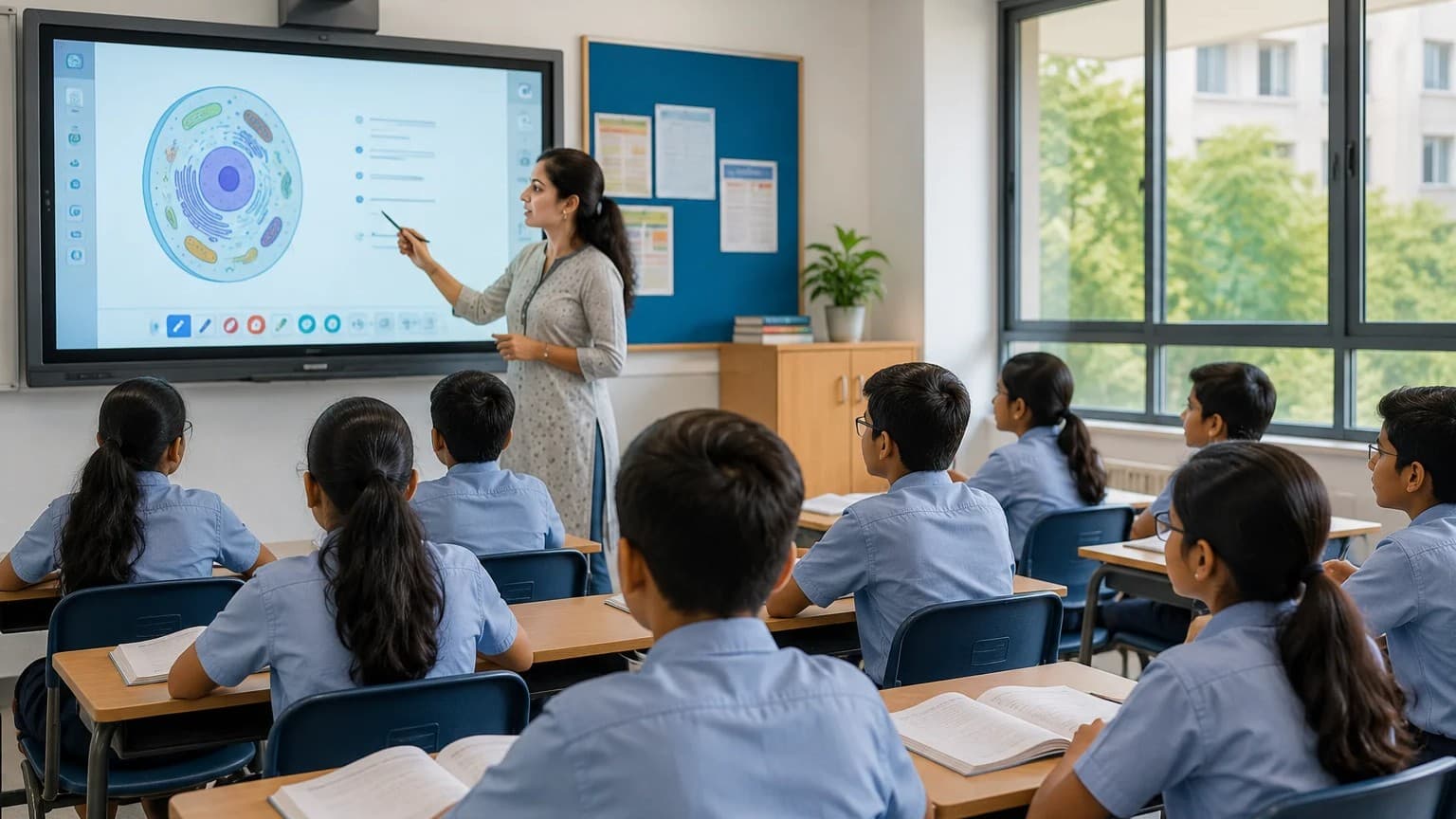
Schools across Gautam Buddh Nagar have been asked to reduce students’ exposure to digital screens after concerns emerged over children spending several hours a day using smart and digital boards during classes.
The district administration has directed government, aided and private schools in Noida and Greater Noida to follow prescribed limits on classroom screen use.

Primary students should not be exposed to screens for more than 30 minutes a day, while the limit for upper-primary students has been set at 60 minutes.
The administration said designated magistrates and nodal officers will oversee implementation of the guidelines. Compliance reports will be submitted through the District Inspector of Schools, Gautam Buddh Nagar.
The directions followed concerns raised by parents’ associations about schools relying extensively on smart boards to display textbooks, conduct classwork, hold question-and-answer sessions and assign homework.
The administration said smart boards are "a supplementary medium to make teaching more effective," but cautioned schools against using them unnecessarily at the expense of students’ health, academics, physical activity and other aspects of school life.
Under the guidelines, smart and digital boards should primarily be used "for explaining difficult concepts and displaying pictures, videos and necessary teaching material."
Schools have been advised to shift routine writing, practice exercises, question-and-answer sessions and interactive classroom activities to blackboards, whiteboards or greenboards instead of relying on digital screens.
The administration has also asked schools to maintain suitable screen brightness and classroom lighting. Students should be seated at an appropriate distance from screens, while breaks should be provided "after about 20 minutes of screen use."
For online classes, schools have been advised to follow National Council of Educational Research and Training (NCERT) recommendations regarding class duration and breaks. The 20-20-20 practice has also been recommended to help reduce eye strain.
The guidelines call for quarterly eye examinations for students, with schools required to share the examination reports with parents.
Schools have also been instructed to notify parents if students develop symptoms such as eye irritation, headaches or blurred vision. Medical consultation should be sought when required.
The administration has further encouraged schools to introduce "digital-free periods, digital zero days and digital detox" activities.
Students should also be given opportunities to participate in sports, reading, creative activities and social interaction to ensure that digital learning does not dominate their daily school experience.