NEET UG 2026: Parliamentary panel summons NTA, Education Ministry officials over paper leak controversy
The committee will review examination security reforms, progress on the K Radhakrishnan panel recommendations, the CBI investigation, and plans to shift the medical entrance test online.
EPN Desk19 May 2026 07:50
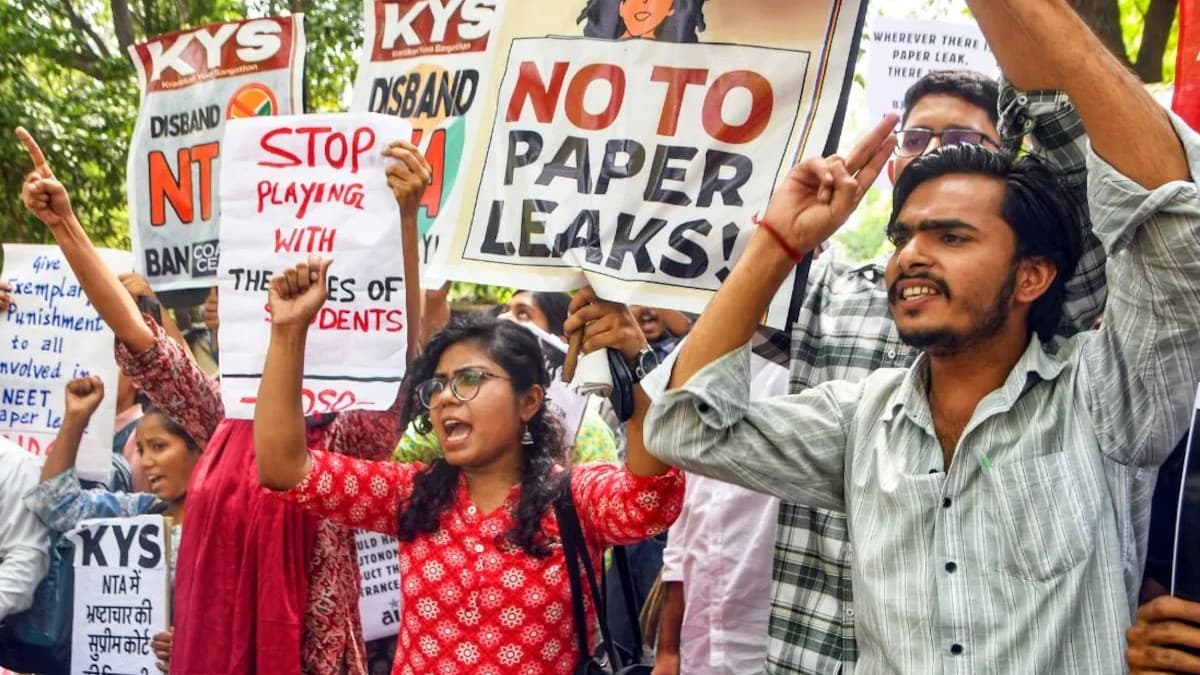
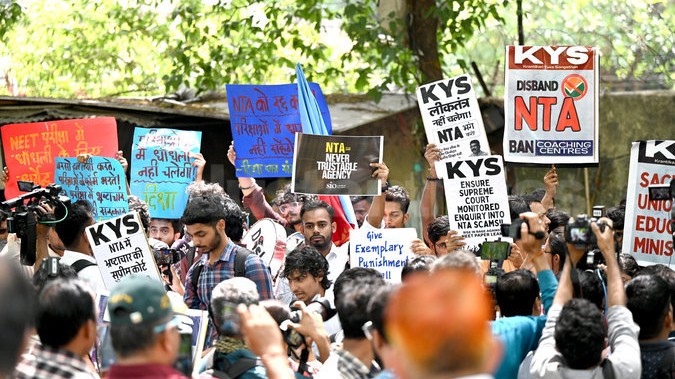
Senior officials of the National Testing Agency (NTA) and the Education Ministry have been summoned by a parliamentary panel for discussions on the NEET UG 2026 controversy on May 21 in New Delhi, amid growing national concern over the examination paper leak and the future of India’s entrance testing system.
The Parliamentary Standing Committee on Education, Women, Children, Youth and Sports has scheduled detailed deliberations on the alleged irregularities surrounding the medical entrance examination, the implementation of recommended NTA reforms, and broader concerns linked to examination governance and institutional accountability.
Digital Shift Planned After NEET Crisis
Even before the parliamentary meeting, the Union government had already announced a major structural change in the examination process.
Education Minister Dharmendra Pradhan recently confirmed that the NEET UG re-examination will be conducted on June 21 after the earlier test was canceled over allegations of malpractice.
He also said that from next year, the examination would move to a computer-based format in an effort to strengthen transparency and reduce the possibility of paper leaks.
The proposed digital transition is being viewed as one of the biggest reforms in the history of India’s medical entrance examination system.
Officials believe the shift could minimize vulnerabilities associated with physical question papers, transportation logistics, and unauthorized circulation of exam material.
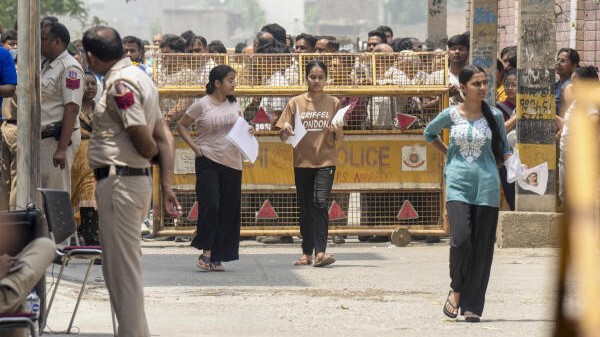
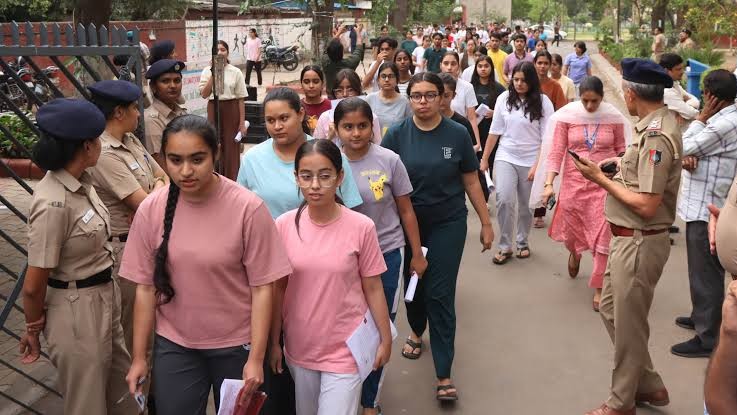
The controversy surrounding NEET UG 2026 erupted after reports of alleged malpractice surfaced days after the examination held on May 3. Nearly 23 lakh candidates had registered for the test conducted across India and at centers abroad.
According to the NTA, information related to suspected irregularities was received on May 7, prompting the agency to eventually cancel the examination.
Parliamentary Panel Summons Top Officials
The parliamentary committee, headed by Congress leader Digvijaya Singh, has summoned senior bureaucrats and NTA leadership to explain the circumstances that led to the crisis and to discuss corrective measures being introduced to restore confidence in national examinations.
Those called for the deliberations include Higher Education Secretary Vineet Joshi and NTA Chairperson Pradeep Kumar Joshi.
The panel is expected to examine how the alleged paper leak occurred despite existing safeguards and whether the agency possesses the administrative and technological capacity required to conduct large-scale examinations involving millions of candidates.
Apart from the leak investigation, the committee will also review the implementation status of the K Radhakrishnan Committee recommendations, which were framed after the NEET UG 2024 controversy exposed weaknesses within the examination system.
Focus on K Radhakrishnan Committee Reforms
The K Radhakrishnan Committee, chaired by former ISRO chairman Dr K Radhakrishnan, had been constituted to examine structural and operational deficiencies within the NTA following the earlier paper leak controversy.
The committee proposed sweeping reforms aimed at improving governance, reducing excessive dependence on contractual staffing, and strengthening internal accountability mechanisms.
Recommendations included the creation of functional administrative verticals, permanent staffing structures, empowered oversight mechanisms, and expanded middle and senior management capacity.
One of the most significant outcomes of those recommendations was the government’s approval in October 2024 for the creation of 16 new senior administrative positions within the NTA.
These included eight Director-level posts and eight Joint Director-level posts intended to strengthen institutional management and supervision.
Notably, the Joint Director designation did not previously exist within the NTA’s sanctioned structure, making the move part of a broader attempt to build stronger operational layers inside the agency.
Half of Senior NTA Posts Still Vacant
Despite the urgency attached to reforms after the 2024 controversy, staffing progress inside the NTA has remained slow. Latest government updates indicate that only eight of the 16 newly created senior posts have been filled so far, leaving a vacancy rate of 50%.
Among the Joint Director-level appointments made in December 2024 were Archana Shukla from the Indian Statistical Service, Amit Kumar from the Indian Supply Service, and Shivani from the Indian Railway Personnel Service.
With the later appointments of Akash Jain and Aditya Rajendra Bhojgadhiya, the number of filled Joint Director posts rose to five out of eight.
At the Director level, only three appointments have been completed. Sandeep Kumar Mishra of the IRS Income Tax cadre joined in December 2024, while Pawan Kumar Sharma of IRSSE and Vijaykumar Vinayakrao Patil of IOFS were appointed in March 2025. Five Director-level positions still remain vacant.
The incomplete staffing situation has raised fresh concerns because these posts were specifically created to prevent governance failures similar to those highlighted during the NEET controversies.
Questions Over Administrative Capacity
Education policy observers and examination experts have repeatedly warned that staffing gaps and weak institutional structures could create vulnerabilities in agencies responsible for high-stakes national tests.
The Radhakrishnan Committee had specifically cautioned against excessive dependence on contractual employees and argued that permanent governance systems were necessary for accountability and continuity.
The renewed scrutiny following the cancellation of NEET UG 2026 has revived concerns over whether the NTA currently possesses sufficient administrative depth to manage examinations such as NEET and JEE without operational strain.
The issue has become even more significant because the CBI investigation into the latest paper leak allegations continues to expand across multiple states.
CBI Expands Probe Into Alleged Leak Network
The Central Bureau of Investigation has intensified its probe into the alleged NEET UG paper leak, making several arrests and conducting searches across multiple cities.
Among the latest arrests is Shivraj Raghunath Motegaonkar, founder of Renukai Chemistry Classes (RCC), a coaching institute network operating nine branches, including its main center in Latur, Maharashtra.
According to officials, Motegaonkar was arrested after investigators allegedly recovered a leaked NEET question paper from his mobile phone during searches conducted at his premises.
The CBI has alleged that Motegaonkar was an “active member of the organized gang” involved in leaking and circulating the examination paper.
Investigators claim that he received question papers and answers on April 23, nearly 10 days before the examination was conducted nationwide and abroad.
Officials further alleged that handwritten copies of leaked papers and answer keys were distributed to selected individuals and later destroyed after the examination.
Connection With NTA-Linked Individuals
The CBI has also claimed that Motegaonkar had links with chemistry lecturer P V Kulkarni, who was allegedly associated with the NTA.
“He is close to P V Kulkarni, chemistry lecturer, who is associated with the NTA (National Testing Agency). Searches conducted at his institute and residence resulted in the recovery of the chemistry question bank, which contained exactly the same questions that appeared in the NEET exam held on May 3,” a CBI spokesperson said.
The agency conducted searches at RCC’s Shivnagar branch in Latur and questioned Motegaonkar for several hours before arresting him.
“In the last 24 hours, the CBI has also conducted searches at five locations at various places and seized several incriminating documents, laptops, and mobile phones. A detailed analysis of the seized items is going on,” the spokesperson added.
So far, 10 accused individuals have been arrested from Delhi, Jaipur, Gurugram, Nasik, Pune, Latur, and Ahilyanagar.
Earlier arrests included chemistry lecturer P V Kulkarni and biology lecturer Manisha Mandhare. Both were reportedly connected through another accused, Manisha Waghmare, who is also in CBI custody.
The agency has already registered an FIR and formed multiple investigative teams to examine how the alleged leak network operated across states.
Political Pressure Intensifies
The controversy has also triggered sharp political reactions, with Opposition leaders accusing the Education Ministry of repeated institutional failures affecting students.
Leader of Opposition Rahul Gandhi on Sunday launched a strong attack on the Centre, linking the NEET UG paper leak controversy with other education-related disputes involving CBSE evaluation practices and curriculum implementation.
In a post on X, Gandhi alleged that the Education Ministry was “failing every single age group” of students.
Referring to the NEET controversy, he said the leak had affected more than 22 lakh medical aspirants and pushed lakhs of families into uncertainty.
He also referred to complaints regarding lower-than-expected CBSE Class 12 scores under the On-Screen Marking evaluation system and concerns surrounding a new language requirement for CBSE Class 9 students.
“Three exams. Three age groups. One minister," Gandhi wrote.
He further alleged that the Education Ministry had become “a department of disasters” and called on Prime Minister Narendra Modi to apologize to affected students.
Education Ministry Faces Mounting Scrutiny
The NEET controversy has now evolved into one of the most significant crises in India’s education sector in recent years.
What began as allegations of malpractice has expanded into a nationwide debate about examination security, institutional accountability, coaching networks, staffing deficiencies, and the pressure associated with centralized entrance tests involving millions of candidates.
The controversy has also revived concerns that despite repeated committees and reform announcements, implementation has remained uneven and slow.
The government, however, has defended its response, arguing that swift action was taken once irregularities were detected and that the re-examination, CBI investigation, and upcoming technological reforms demonstrate a commitment to restoring trust.
Meanwhile, the parliamentary committee is also expected to discuss the impact of artificial intelligence on education and future employability strategies.
Representatives from Anthropic India, IIT Kanpur, IIT Madras, Infosys, and Pratham have been invited for separate deliberations on emerging educational challenges.
In another session, the panel will meet representatives from Aligarh Muslim University and the National Commission for Minority Educational Institutions to discuss reservation implementation, institutional vacancies, and issues linked to the National Education Policy.
The committee is additionally scheduled to review government action taken on earlier recommendations concerning the Ministry of Women and Child Development, teacher training reforms, and the functioning of the National Council for Teacher Education under NEP 2020.
For now, however, the spotlight remains firmly on the NEET UG crisis, with students, parents, educational institutions, and policymakers waiting to see whether the parliamentary review and ongoing investigations lead to meaningful reforms capable of restoring confidence in one of India’s most critical entrance examinations.