As the National Education Policy 2020 enters its fifth year of implementation, new figures presented in Parliament on Dec 1 reveal that the expansion of regional language teaching in Central government schools remains limited.
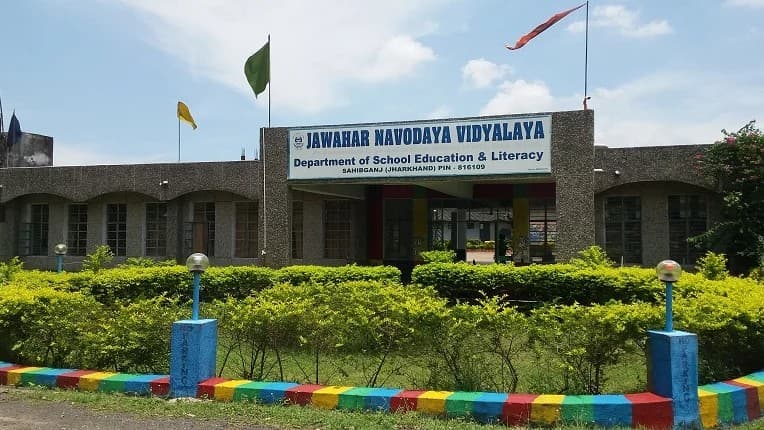
Data from the Union Education Ministry shows that only a little over 16% of Kendriya Vidyalayas currently teach any of the 10 regional languages listed by the government. In contrast, Jawahar Navodaya Vidyalayas have a far wider presence of regional or local languages.

According to the Ministry’s submission in the Lok Sabha, a majority of JNVs offer at least one of 18 local languages, although Hindi has also been counted in that category.
The government added that all Navodaya schools include a local or regional language as a compulsory subject from Classes VI to IX. The ministry’s reply, however, did not specify which states these schools belong to.
The information was shared in response to a question by Trinamool Congress MP Sharmila Sarkar. The ministry said that there are 1,405 approved Kendriya Vidyalayas and 689 approved Jawahar Navodaya Vidyalayas across India.
Among them, 226 KVs teach one or more regional languages, including Gujarati, Kannada, Punjabi, Tamil, Malayalam, Assamese, Bodo, Marathi, Bengali, and Manipuri.
Under existing KV rules, Hindi and English are mandatory from Classes I to VIII. Sanskrit is added as a compulsory subject from Classes VI to VIII, and students in Classes IX and X may choose any two languages from English, Hindi, and Sanskrit.
These details come at a time when debate continues around the NEP’s three-language system, which says that, wherever possible, at least two of the three languages taught in schools should be Indian languages.
Among the KVs offering regional languages, Punjabi appears most frequently with 55 schools, followed by Kannada with 48, Malayalam with 42, Tamil with 36, and Assamese with 26. The remaining languages are offered in fewer than 10 schools each.

Minister of State for Education Jayant Chaudhary noted in the written reply that the KV curriculum accounts for the frequent transfers of Central government employees and allows schools to hire language teachers on contract if at least 15 students opt for that language.
For JNVs, the ministry reported that 665 schools offer at least one of the 18 local languages listed. Of these, 315 teach Hindi as a local language.
Assamese is the most widely taught regional language beyond Hindi, offered in 51 JNVs, while each of the remaining 16 languages is taught in fewer than 30 schools.