


The professor disputes claims about witness submissions and email exchanges, while the teachers' association questions the Vice-Chancellor's authority and alleged disclosure of confidential inquiry findings.
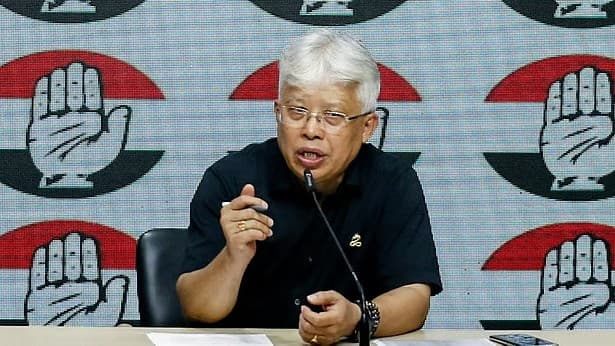
Jawaharlal Nehru University (JNU) Professor and Congress MP Angomcha Bimol Akoijam has challenged the university administration's account of the sexual harassment inquiry that led to his dismissal, alleging false claims about his cooperation, the submission of witnesses and the communications exchanged during the proceedings.
Dismissed from university service on October 9, Akoijam has questioned the procedure followed by the Internal Complaints Committee (ICC) and accused the administration of allowing a media trial to damage his reputation.

His response came as the Jawaharlal Nehru University Teachers' Association (JNUTA) separately raised concerns about alleged procedural violations, the authority behind the dismissal order and the disclosure of confidential inquiry findings.
In a detailed post on X, Akoijam disputed statements made by Vice-Chancellor Santishree Dhulipudi Pandit regarding his participation in the inquiry. He maintained that he had submitted a written response to the allegations, provided his deposition and presented witnesses during the proceedings.
"Despite my witnesses having given their depositions on 14 August 2026, the VC of JNU tells a blatant lie, saying that I have not produced any witnesses. I had responded to the allegations in writing on May 31 and submitted my deposition on July 16," he posted.
The professor also contested the Vice-Chancellor's claim that the university or the ICC had sent him 300 emails during the inquiry. According to Akoijam, he received and responded to 43 emails.
He further questioned the differing numbers of complainants cited by the Vice-Chancellor in media statements.
Akoijam alleged that the proceedings amounted to a "witchhunt" and criticized the circulation of allegations through the media before the matter had been fully examined. He also disputed references to "sex for grades," claiming that the allegation did not appear in the complaint filed against him.
Questioning the fairness of the inquiry, he argued that procedural lapses could prejudice either the complainant or the respondent, depending on the circumstances.
He accused the university administration of disregarding established rules and institutional norms, comparing its functioning to a "Khap Panchayat."
The professor has indicated that his legal team will pursue the matter, maintaining that both the allegations against him and the procedure followed by the university require thorough scrutiny.
JNUTA questions dismissal order and Executive Council's role
The Jawaharlal Nehru University Teachers' Association (JNUTA) has separately challenged the procedure followed in Akoijam's dismissal, alleging that the Vice-Chancellor issued the order without the approval of the university's Executive Council.
The association has also questioned the reported circulation of confidential findings from the internal inquiry.
In a statement issued on Oct 11, JNUTA said it was “deeply shocked” by media reports and the circulation of a dismissal order dated Oct 9, 2026, on social media.
The association questioned the Vice-Chancellor's authority to dismiss a faculty member without following the prescribed institutional process.
Akoijam, who taught at the Centre for the Study of Social Systems (CSSS) under JNU's School of Social Sciences, is also the Congress MP representing Inner Manipur.
He was dismissed from university service with immediate effect on Oct 9 following an inquiry into allegations of sexual harassment. The order was signed by Vice-Chancellor Santishree D Pandit.
JNUTA argued that, under Statute 30 of the JNU Act, the authority to dismiss a faculty member rests with the Executive Council.
It alleged that the decision was taken unilaterally, claiming that no Executive Council meeting had been convened and that relevant documents had not been shared with council members.
The association's objections center on whether the university followed the prescribed procedures before terminating Akoijam's service. It called for compliance with institutional regulations and questioned the administration's handling of the disciplinary process.
Confidentiality concerns over ICC findings
JNUTA also expressed concern over the reported circulation of the Internal Complaints Committee's recommendations and the dismissal order.
It argued that making confidential inquiry-related material public could violate the confidentiality requirements governing sexual harassment proceedings.
The association said the reported disclosure raised questions about whether the university had complied with due process and the rules applicable to complaints of sexual harassment.
It also alleged that the dismissal order had been leaked for political purposes, criticizing what it described as the administration's disregard for established procedures.
JNUTA further highlighted differences between the university's former Gender Sensitisation Committee Against Sexual Harassment (GSCASH) framework and the current Internal Committee system, particularly in the classification of minor and major penalties.
According to the association, these differences make it important to establish whether the correct procedures and applicable regulations were followed in Akoijam's case.
It warned that procedural lapses in sexual harassment proceedings could undermine the pursuit of justice and called on the administration to be held accountable for adhering to institutional rules.
The association's objections relate to the process followed in issuing the dismissal order and the alleged disclosure of confidential material.
These concerns are separate from the sexual harassment allegations against Akoijam, which prompted the university's inquiry.
The controversy has brought the university's disciplinary procedures, the role of its statutory bodies and the confidentiality of internal sexual harassment investigations under scrutiny.
While Akoijam has disputed the administration's account of his cooperation with the inquiry, JNUTA has questioned the authority and procedure behind his dismissal.
Both have called attention to the need for the matter to be examined in accordance with the applicable rules and institutional procedures.

IIIT Ranchi student death: NHRC to examine allegations of administrative negligence and delayed medical aid
.jpg&w=256&q=75)
Karnataka introduces 7.5% sub-quota for rural government school students in professional course admissions

Dubai forum to examine AI agents’ role in journalism and digital publishing

NEET PG Counselling 2026 Round 1 registration begins Oct 12, check schedule and key dates
Groundwater and urban resilience in focus at UAEU’s international conference
IIIT Ranchi student death: NHRC to examine allegations of administrative negligence and delayed medical aid
Karnataka introduces 7.5% sub-quota for rural government school students in professional course admissions
Dubai forum to examine AI agents’ role in journalism and digital publishing
NEET PG Counselling 2026 Round 1 registration begins Oct 12, check schedule and key dates
PM Modi praises NEP impact, Tamil Nadu CM Vijay seeks ₹5,110 crore in dues

IIIT Ranchi student death: NHRC to examine allegations of administrative negligence and delayed medical aid
Karnataka introduces 7.5% sub-quota for rural government school students in professional course admissions
Dubai forum to examine AI agents’ role in journalism and digital publishing
NEET PG Counselling 2026 Round 1 registration begins Oct 12, check schedule and key dates
Groundwater and urban resilience in focus at UAEU’s international conference
IIIT Ranchi student death: NHRC to examine allegations of administrative negligence and delayed medical aid
Karnataka introduces 7.5% sub-quota for rural government school students in professional course admissions
Dubai forum to examine AI agents’ role in journalism and digital publishing
NEET PG Counselling 2026 Round 1 registration begins Oct 12, check schedule and key dates
PM Modi praises NEP impact, Tamil Nadu CM Vijay seeks ₹5,110 crore in dues
Copyright© educationpost.in 2026 All Rights Reserved.