


A new Economic Advisory Council to the Prime Minister working paper highlights the widening gap between student enrolment and faculty availability, raising concerns about teaching quality and institutional capacity.
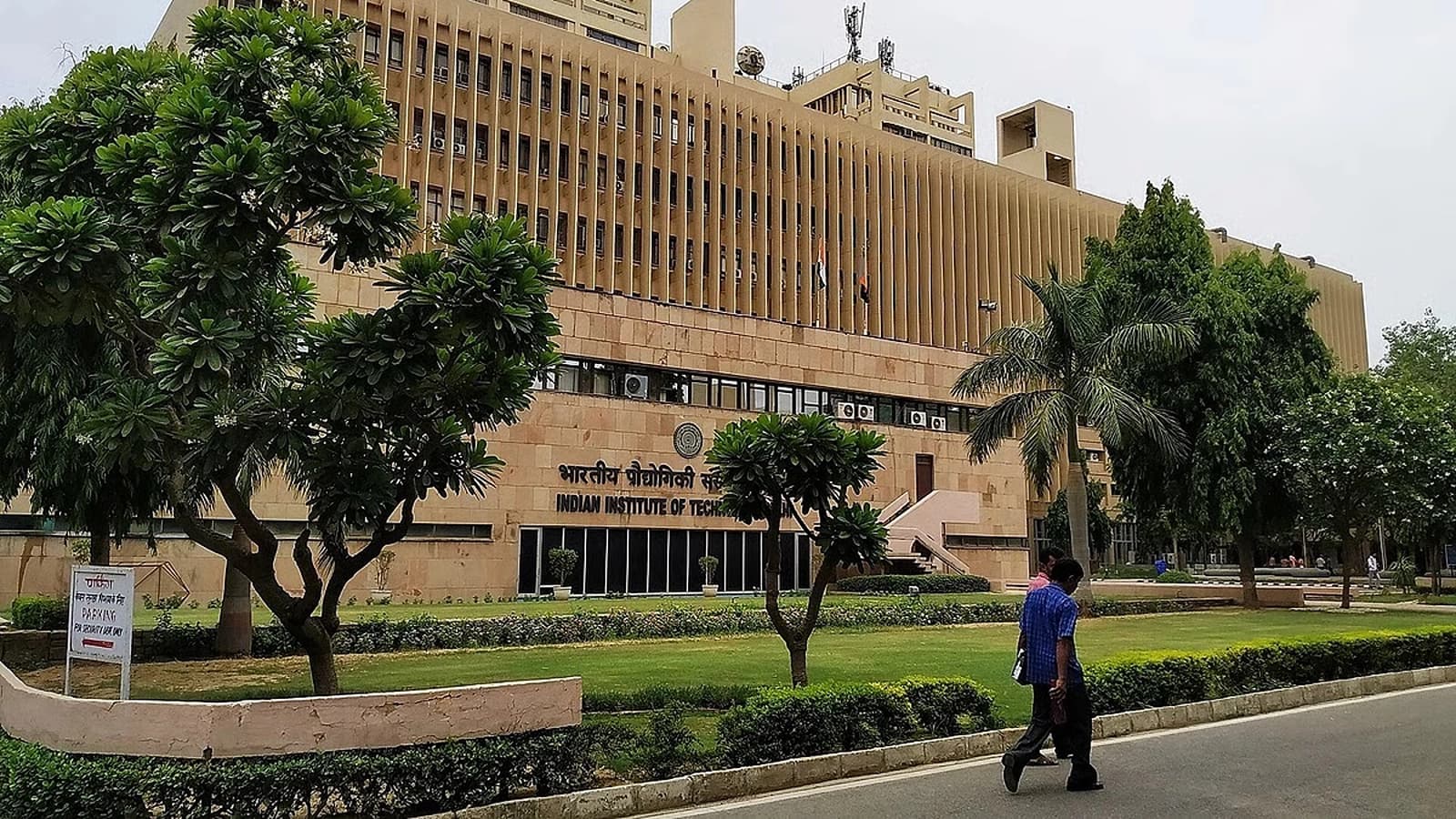
India's higher education system is expanding rapidly, but the availability of qualified teachers is not keeping pace with the growing number of students. A new working paper by the Economic Advisory Council to the Prime Minister (EAC-PM) has highlighted significant faculty shortages across premier educational institutions, including the Indian Institutes of Technology (IITs).
According to the paper, nearly 39% of sanctioned faculty positions at IITs were vacant as of March 2023. The shortage was also substantial at other centrally funded institutions, including Indian Institutes of Management (IIMs), National Institutes of Technology (NITs) and Indian Institutes of Information Technology (IIITs).

The report raises concerns about India's ability to maintain academic standards while expanding access to higher education. It argues that increasing student intake and establishing new institutions must be accompanied by adequate recruitment of teachers and investment in academic infrastructure.
The EAC-PM working paper, titled How India is Transforming Educational Capacity under the New Education Policy 2020: School Networks, Higher Education and Pathways to Work, highlights the growing mismatch between student enrolment and the teaching workforce.Between 2014-15 and 2023-24, the number of students enrolled in higher education increased by 31.5%, rising from 3.42 crore to 4.50 crore.During the same period, the number of teachers increased by only 17.6%, from 14.73 lakh to 17.32 lakh.
This imbalance has affected the student-teacher ratio in higher education institutions. The ratio increased from approximately 23 students per teacher in 2014-15 to 26 students per teacher in 2023-24.The findings indicate that the expansion of higher education has not been matched by a proportionate increase in teaching capacity.
The working paper also highlights faculty shortages across India's leading centrally funded technical and management institutions.
According to parliamentary committee figures cited in the EAC-PM paper, the vacancy position as of March 2023 was as follows:
| Institution | Sanctioned posts | Vacant posts | Vacancy rate |
|---|---|---|---|
| IITs | 11,292 | 4,415 | 39% |
| IIMs | 1,570 | 484 | 31% |
| NITs | 7,483 | 2,206 | 29% |
| IIITs | 1,315 | 705 | 54% |
| IISERs | 735 | 52 | 7% |
The figures show that IIITs recorded the highest vacancy rate at 54%, followed by IITs at 39%. IIMs reported 31% vacancies, while NITs had 29% of their sanctioned teaching positions unfilled.The IISER system presented a comparatively better picture, with only 7% of faculty positions vacant.
Among the institutions covered in the parliamentary data, IIITs reported the most significant faculty shortage. More than half of their sanctioned teaching positions were vacant.The shortage across IITs and other institutions reflects challenges in recruiting and retaining qualified faculty members, particularly in specialised academic and research fields.
The figures also show that faculty shortages are not uniform across institutions. While some institutions have managed to fill most sanctioned positions, others continue to face substantial staffing gaps.
A separate analysis of institution-wise data published in 2026 by NDTV found that 22 IITs together had 12,198 sanctioned faculty positions, of which 7,558 were occupied. This left 4,640 vacancies, representing a vacancy rate of approximately 38%.IIT Kharagpur reported the highest vacancy rate at 51.31%, followed by IIT (ISM) Dhanbad at 48.4%.The data indicates that significant faculty shortages have continued in several IITs despite recruitment initiatives.
The shortage of teachers in higher education institutions is linked to several challenges, including:
IIT Gandhinagar Director Rajat Moona has attributed part of the recruitment challenge to the limited availability of candidates with the required academic and research credentials. He has also highlighted competition from leading international universities for highly trained researchers.
A shortage of teachers can affect more than classroom teaching. Faculty members are responsible for supervising research, mentoring students, conducting practical sessions and supporting academic development.When institutions operate with fewer teachers than their sanctioned strength, existing faculty members may face increased workloads. This can also limit the time available for research guidance and individual student support.
The EAC-PM working paper emphasises that higher education expansion should not be measured only through the number of institutions, campuses or student admissions. Adequate faculty strength, research facilities and academic infrastructure are equally important.India's higher education challenge, therefore, is not simply to accommodate more students but to ensure that institutions have the teaching capacity required to provid
Nearly 4 in 10 IIT Faculty Posts Vacant: India's Higher Education System Faces Teacher Shortage
RMS CET 2026: NTA Revises Class 9 Social Science Syllabus; Check New Topics
AP SSC Exam 2027: BSEAP Releases Fee Payment Schedule; Late Fee Up to Rs 500

From admissions to employment, J&K brings private universities under 25% domicile quota

DU Teachers Seek Fresh Evaluation Guidelines for 400-Mark Undergraduate Research Programme
From admissions to employment, J&K brings private universities under 25% domicile quota

After NEET paper leak row, NTA moves to expand examination center network

Who will teach computer skills? 3,818 government schools told to discontinue ICT instructors
Can industry-academia partnerships bridge India's AI talent gap? IIT Delhi gets ₹9 crore Walmart support

Odisha opens second phase of MMCPY scholarship applications for 2026-27, check details

Nearly 4 in 10 IIT Faculty Posts Vacant: India's Higher Education System Faces Teacher Shortage
RMS CET 2026: NTA Revises Class 9 Social Science Syllabus; Check New Topics
AP SSC Exam 2027: BSEAP Releases Fee Payment Schedule; Late Fee Up to Rs 500
From admissions to employment, J&K brings private universities under 25% domicile quota
DU Teachers Seek Fresh Evaluation Guidelines for 400-Mark Undergraduate Research Programme
From admissions to employment, J&K brings private universities under 25% domicile quota
After NEET paper leak row, NTA moves to expand examination center network
Who will teach computer skills? 3,818 government schools told to discontinue ICT instructors
Can industry-academia partnerships bridge India's AI talent gap? IIT Delhi gets ₹9 crore Walmart support
Odisha opens second phase of MMCPY scholarship applications for 2026-27, check details
Copyright© educationpost.in 2026 All Rights Reserved.