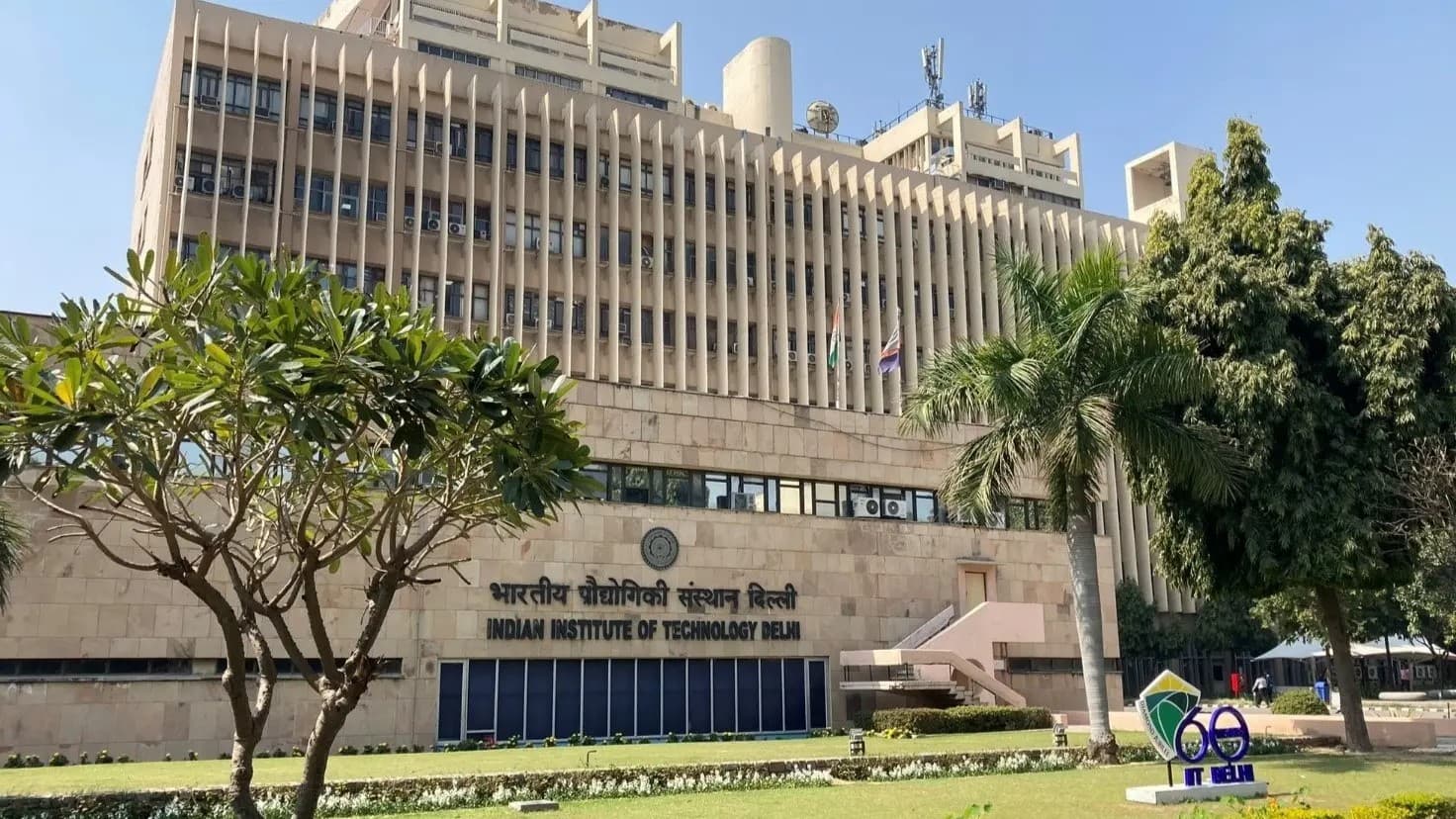
An international research team led by IIT Delhi has developed an artificial intelligence system capable of independently conducting laboratory experiments, marking a step toward automated scientific research environments.
The study, published in Nature Communications under the title “Evaluating large language model agents for automation of atomic force microscopy,” introduces AILA, or Artificially Intelligent Lab Assistant.

The system can operate laboratory instruments, make real-time decisions during experiments, and analyze data without human supervision.
According to an IIT Delhi statement, AILA represents a transition of AI from digital support tools to direct operation in physical laboratories.
The system was trained to work with an Atomic Force Microscope, a precision instrument used to study materials at the nanoscale.
Indrajeet Mandal, the study’s first author and a PhD scholar at IIT Delhi’s School of Interdisciplinary Research, said the system has significantly reduced the time required for experimental setup.
“Earlier, optimizing microscope parameters for high-resolution, noise-free images would take an entire day. With AILA, the same task is now completed in just seven to ten minutes,” he said.
The research was supervised by Prof NM Anoop Krishnan from the Department of Civil Engineering and the Yardi School of Artificial Intelligence, and Prof Nitya Nand Gosvami from the Department of Materials Science and Engineering at IIT Delhi.
Collaborators on the project included researchers from IIT Delhi, Aalborg University in Denmark, the Leibniz Institute of Photonic Technology in Germany, and the University of Jena in Germany.
While highlighting the potential of AI-driven experimentation, the researchers also flagged key limitations.

They noted that AI models performing well in controlled or theoretical evaluations often face difficulties in fast-changing laboratory settings.
Mandal compared this gap to “knowing driving rules from a textbook versus navigating busy city traffic.”
Safety concerns were also emphasized in the findings. The study observed instances where the AI agent deviated from instructions, reinforcing the need for strong safeguards to avoid equipment damage or accidents as laboratories move toward greater automation.