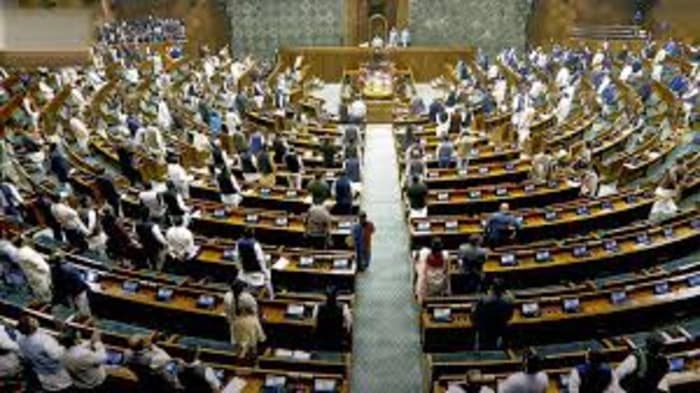
Analyses released in early January 2025 reviewed the Winter Session of Parliament 2024, drawing attention to Parliament’s legislative productivity as well as the quality of deliberation during the session. While several important Bills were passed, concerns were raised regarding limited debate time, frequent disruptions, and the broader implications for parliamentary democracy.
The Winter Session witnessed the passage of multiple legislations related to governance reforms, economic regulation, and administrative restructuring. From a legislative efficiency perspective, the government succeeded in pushing through its agenda within a short span. Supporters argue that timely law-making is essential for policy certainty, especially in a fast-growing economy where delays can hamper reforms and implementation.

However, parliamentary reviews noted that a significant number of Bills were passed with minimal discussion, sometimes without being referred to parliamentary standing committees. Parliamentary debates serve as a crucial mechanism for scrutinising legislation, incorporating diverse viewpoints, and ensuring that laws are robust, inclusive, and constitutionally sound. Limited discussion time reduces the opportunity for opposition parties to question executive decisions and highlight unintended consequences of proposed laws.
Frequent disruptions and adjournments further reduced effective working hours of both Houses. This not only affects legislative scrutiny but also weakens other parliamentary functions such as Question Hour, which is a key instrument for executive accountability. A decline in meaningful debate raises concerns about the erosion of deliberative democracy, where informed discussion and consensus-building are central to law-making.
The challenge, therefore, lies in balancing legislative efficiency with democratic accountability. Reforms such as ensuring adequate debate time for Bills, strengthening the role of parliamentary committees, enforcing parliamentary discipline, and fostering greater cooperation between the government and opposition are essential. Leveraging digital tools for transparency and public engagement can also enhance legislative quality.
In conclusion, while the Winter Session of 2024 demonstrated Parliament’s ability to legislate swiftly, sustaining India’s democratic ethos requires that speed does not come at the cost of scrutiny, debate, and accountability.