


Linking Traffic Challans to Electricity Bills Among Recovery Options Suggested by SC
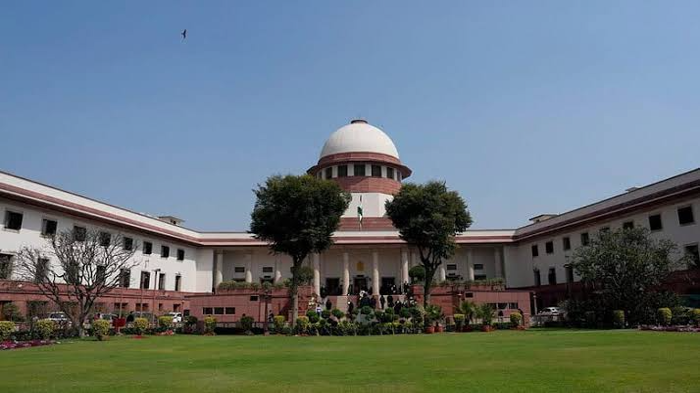
The Supreme Court on Monday suggested that states and Union Territories consider linking unpaid traffic e-challan fines with electricity bills as one possible measure to improve recovery of outstanding penalties for traffic violations.

A Bench of Justices J.B. Pardiwala and K.V. Viswanathan made the suggestion while hearing an application seeking effective implementation of electronic enforcement mechanisms for traffic violations and recovery of fines imposed through e-challans.
The Bench emphasised that simply issuing e-challans would have limited effectiveness unless there were adequate mechanisms to recover the penalties.
“It is not just sufficient to keep issuing e-challans,” the Bench observed, stressing that the key issue was recovery of fines imposed through the electronic system.
The court suggested that unpaid traffic fines could be added to electricity dues as a way of encouraging defaulters to clear their outstanding penalties.
“If people are not paying traffic challans, add it to their electricity dues bill,” the Bench remarked while asking authorities to explore how such a mechanism could be implemented.
The Supreme Court also considered several other measures to strengthen recovery of unpaid e-challan amounts.
It suggested withholding renewal of vehicle registration certificates, issuance of duplicate registration certificates and changes in ownership details until outstanding challans linked to a vehicle are cleared.
The Bench also discussed the possibility of blocklisting vehicles with unpaid challans on the Parivahansewa portal and preventing the transfer of ownership of such vehicles.
Measures concerning vehicle fitness certificates and Pollution Under Control (PUC) certificates were also considered, including withholding their issuance or renewal where traffic fines remain unpaid.
The court further discussed preventing renewal of driving licences in cases where e-challans remain outstanding and considering appropriate measures for licences that are already in force.
The Bench also suggested random checks of vehicles to identify those against which e-challans had not been paid. In cases where an outstanding e-challan is detected, it said authorities could consider taking steps to impound the vehicle.
The Supreme Court asked amicus curiae and senior advocate Gaurav Agarwal to prepare a chart detailing the directions issued by the court, the time granted for their implementation, their current status and the amicus curiae’s observations.
The issue of poor recovery of e-challan fines had previously come before the Supreme Court in 2023, when an application sought an effective and time-bound mechanism for recovering penalties imposed through electronic challans.
The applicant had argued that the low recovery rate substantially weakened the objective of electronic enforcement of traffic rules.
According to data furnished by the Union government in the Rajya Sabha at the time, only 7.61 per cent of the total amount imposed through e-challans had been recovered, against penalties exceeding Rs 3,877 crore.
The latest proceedings focused on strengthening the recovery mechanism so that electronic enforcement of traffic rules is backed by effective collection of imposed penalties.

FUEL to Celebrate 20th Foundation Day and 2nd Convocation in Pune on October 24

Former Russian Test Cosmonaut Nikolai Tikhonov Discusses Space Exploration at Chennai Science Festival
Promised in 30 days, pending after 42: J&K medical interns resume strike

UAE parents urged to check if children truly learn from AI homework

Chennai School Holiday Today: Schools Closed in 5 Tamil Nadu Districts Due to Heavy Rain

Sharjah schools set boundaries for AI use in homework and exams

Former MIT scientist wins $6 million defamation verdict in misconduct dispute

McMahon highlights Trump’s push to return education powers to states

Could smarter energy solutions make data centres more sustainable?

Cambridge and AstraZeneca extend joint PhD programme for three years

FUEL to Celebrate 20th Foundation Day and 2nd Convocation in Pune on October 24
Former Russian Test Cosmonaut Nikolai Tikhonov Discusses Space Exploration at Chennai Science Festival
Promised in 30 days, pending after 42: J&K medical interns resume strike
UAE parents urged to check if children truly learn from AI homework
Chennai School Holiday Today: Schools Closed in 5 Tamil Nadu Districts Due to Heavy Rain
Sharjah schools set boundaries for AI use in homework and exams
Former MIT scientist wins $6 million defamation verdict in misconduct dispute
McMahon highlights Trump’s push to return education powers to states
Could smarter energy solutions make data centres more sustainable?
Cambridge and AstraZeneca extend joint PhD programme for three years
Copyright© educationpost.in 2026 All Rights Reserved.