Standardising learning outcomes while allowing regional flexibility

The Ministry of Education has released the draft NEP-2025, proposing major structural reforms in school education. The most significant change is the creation of National School Boards (NSBs) that offer multidisciplinary curricula combining sciences, arts, and vocational skills. These boards aim to reduce the long-standing disparities between state boards and national boards like CBSE and ICSE.
The NSBs will emphasise competency-based learning, flexibility in subject selection, and a blended approach combining traditional and digital pedagogy. The policy aims to ensure that students in any state have access to uniform learning outcomes without undermining local culture or language priorities.

The draft policy introduces credit transfer mechanisms that allow students to switch schools or streams without academic loss—mirroring the flexibility seen in NEP-2020 at the higher-education level. Schools will adopt AI-based adaptive learning systems, digital classrooms, and improved teacher-training modules to reduce learning gaps.
A strong emphasis is placed on Indian languages, particularly through multilingual teaching, regional literature, and translation ecosystems. Skill-based education—including coding, robotics, agriculture, and entrepreneurship—is positioned at par with academic subjects to curb the “hierarchy of streams.”
However, critics argue that rapid standardisation may place heavy administrative burdens on states, risk centralisation, and demand high investment in digital infrastructure. Rural and under-funded schools may struggle to keep pace.


Rajasthan Board to hold two Class 10 board exams from 2026-27, check details

IIT Bombay begins student welfare overhaul after suicide row

Francis Halzen wins 2026 Nobel Prize in Physics for high-energy neutrino research

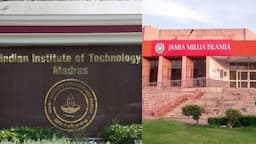
IIT Madras courses to give Jamia school students early exposure to AI, law and more

G7 plans release of 100 million barrels of oil, diesel to ease price pressures

Francis Halzen wins 2026 Nobel Prize in Physics for high-energy neutrino research

IISc at 254 in THE Rankings: What India’s Premier Research Institution’s Scores Actually Reveal

CBSE to screen inclusive education module for school staff on October 7

University of Toronto launches $100 million PhD scholarship programme

World Teachers’ Day 2026: India’s workforce grows, but staffing gaps remain as educators shape confidence and learning

Rajasthan Board to hold two Class 10 board exams from 2026-27, check details

IIT Bombay begins student welfare overhaul after suicide row

Francis Halzen wins 2026 Nobel Prize in Physics for high-energy neutrino research

IIT Madras courses to give Jamia school students early exposure to AI, law and more

G7 plans release of 100 million barrels of oil, diesel to ease price pressures

Francis Halzen wins 2026 Nobel Prize in Physics for high-energy neutrino research

IISc at 254 in THE Rankings: What India’s Premier Research Institution’s Scores Actually Reveal

CBSE to screen inclusive education module for school staff on October 7

University of Toronto launches $100 million PhD scholarship programme

World Teachers’ Day 2026: India’s workforce grows, but staffing gaps remain as educators shape confidence and learning
Copyright© educationpost.in 2024 All Rights Reserved.
Designed and Developed by @Pyndertech