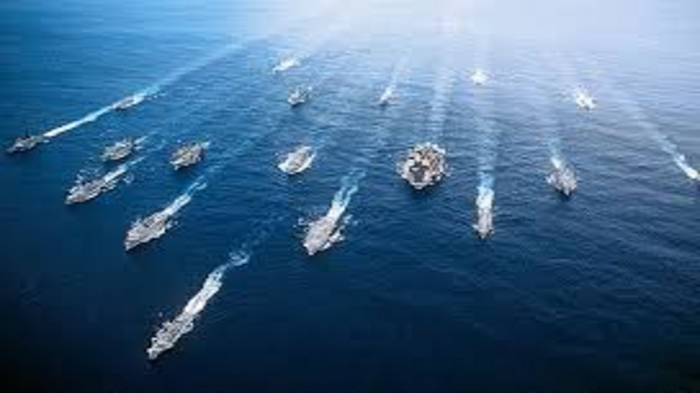
India and Japan recently conducted the Joint Indo-Pacific Maritime Exercise (JIMEX), aimed at strengthening bilateral naval cooperation and ensuring security in the strategically important Indo-Pacific region. The exercise involved coordinated maneuvers, tactical drills, and operational interoperability between the Indian Navy and Japan Maritime Self-Defense Force (JMSDF).
Key areas of focus included maritime domain awareness, anti-submarine warfare, surface combat drills, and humanitarian assistance and disaster relief (HADR) operations. These exercises enhance the ability of both navies to operate together effectively in real-world scenarios, including crisis response, search and rescue, and countering asymmetric maritime threats.

Experts note that JIMEX contributes to broader regional stability by promoting freedom of navigation, safeguarding sea lines of communication, and deterring potential threats in the Indo-Pacific. It also aligns with India’s Act East Policy and Japan’s vision of a free and open Indo-Pacific, reinforcing multilateral security cooperation among like-minded nations.
The exercise also provides an opportunity to share expertise, technology, and operational best practices, strengthening strategic trust and interoperability. It signals India and Japan’s commitment to upholding international maritime norms, promoting peace, and contributing to a rules-based regional order.
While challenges such as evolving geopolitical dynamics and regional tensions persist, joint exercises like JIMEX are seen as critical for maintaining readiness, building mutual confidence, and fostering stronger defence partnerships.
Overall, the India–Japan maritime exercise enhances regional security architecture, deepens bilateral defence ties, and demonstrates India’s proactive role in promoting stability, freedom of navigation, and strategic cooperation in the Indo-Pacific region.