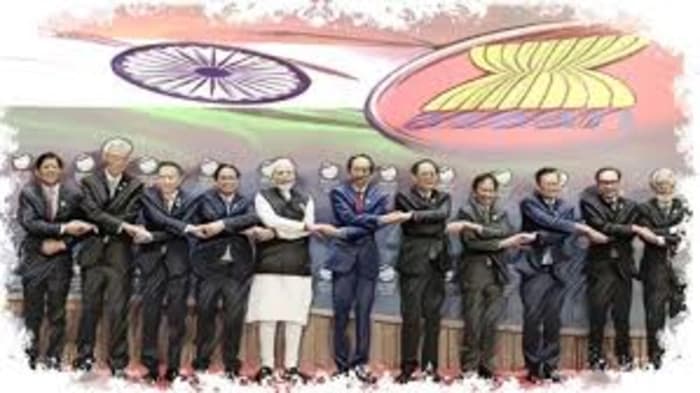
As the 20th East Asia Summit (EAS) convenes in Kuala Lumpur from October 26–28, discussions around regional stability, economic integration, and maritime cooperation are set to dominate the agenda. In this context, commentator Ram Madhav argues that India must recalibrate its approach toward the Association of Southeast Asian Nations (ASEAN) to align with the bloc’s growing aspirations for strategic autonomy and inclusive partnerships amid a rapidly changing global order.
ASEAN, historically cautious about aligning too closely with any major power, now faces a complex geopolitical environment — defined by US–China competition, South China Sea tensions, and a renewed focus on Indo-Pacific security architecture. The article underscores that India’s engagement with ASEAN should go beyond symbolism and embrace a pragmatic, multi-dimensional partnership — one that values ASEAN centrality in the regional security framework.

India’s Act East Policy and participation in mechanisms like the Quad and Indo-Pacific Economic Framework (IPEF) must, therefore, be pursued without undermining ASEAN’s independent stance. The column highlights that ASEAN nations are keen on balancing ties with all major players, including India, Japan, China, and the US — making it essential for New Delhi to position itself as a reliable, non-hegemonic partner offering economic, digital, and infrastructural alternatives.
Further, India’s emphasis on regional connectivity projects such as the India–Myanmar–Thailand Trilateral Highway and enhanced maritime cooperation in the Bay of Bengal and the South China Sea are seen as vital to strengthening its regional footprint.
In conclusion, the article calls for strategic patience, cultural diplomacy, and economic outreach as tools for India to deepen trust with ASEAN. By appreciating the bloc’s nuanced diplomacy and supporting its central role in the Indo-Pacific, India can secure both its strategic interests and regional stability.