


Climate Change Pushes Three Arctic Seal Species Closer to Extinction
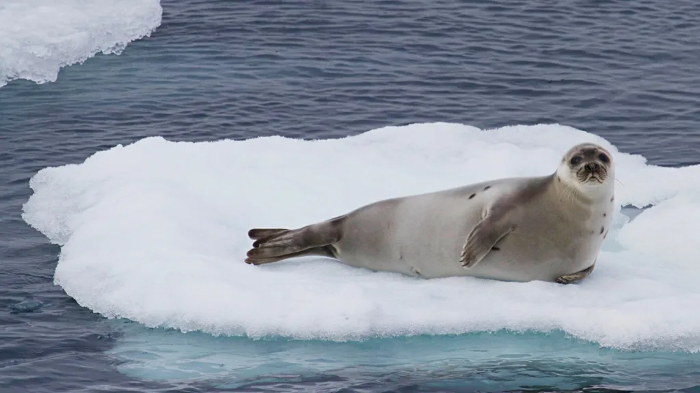
Three species of Arctic seals are facing an increased risk of extinction as rising global temperatures accelerate the loss of sea ice, according to an update to the International Union for Conservation of Nature (IUCN) Red List of Threatened Species.
The update, released at the IUCN World Conservation Congress in Abu Dhabi on October 10, 2025, upgraded the hooded seal (Cystophora cristata) from Vulnerable to Endangered. The bearded seal (Erignathus barbatus) and harp seal (Pagophilus groenlandicus) were moved from Least Concern to Near Threatened.

These changes highlight the growing impact of climate change on Arctic ecosystems and species that depend on frozen habitats for survival.
Sea ice provides essential breeding grounds for seals and allows them to give birth, raise their young, rest, moult and access feeding areas. As temperatures rise, the ice becomes thinner, retreats earlier and forms later in the year. This reduces the availability of suitable habitats and can lower the survival chances of seal pups.
The IUCN has also highlighted that global warming is progressing particularly rapidly in the Arctic, making the region increasingly vulnerable to environmental changes.
The decline in sea ice affects more than the three seal species. Other ice-dependent animals, including Arctic walruses and several marine mammals, also face growing pressure as their habitats change. Seals in Antarctic and subpolar regions may face similar challenges.
Retreating sea ice can also alter marine food webs and feeding patterns, making it harder for seals to access prey. At the same time, reduced ice cover allows greater human access to previously difficult-to-reach areas, increasing the potential for disturbance and pressure on wildlife habitats.
Dr Kit Kovacs, co-chair of the IUCN Species Survival Commission’s Pinniped Specialist Group and a programme leader at the Norwegian Polar Institute, has highlighted the difficulties faced by Arctic seals as ice retreats around Svalbard. The changing conditions make breeding, resting and feeding increasingly challenging.
The revised conservation classifications underline the need for stronger climate action and continued monitoring of vulnerable species. Protecting marine habitats, reducing greenhouse gas emissions and improving scientific research are important steps towards limiting further biodiversity loss.
The situation demonstrates how global warming can threaten wildlife by transforming the natural habitats on which entire species depend.
SRM College of Nursing organises lamp lighting ceremony for 35th BSc Nursing, 34th DGNM batches

Patrick Stewart Dies at 86: Star Trek's Captain Picard and X-Men's Professor X Remembered

Jamia ends two-decade freeze on student polls, hunger strike called off
UAE makes schoolchildren priority for free flu vaccines across emirates

Syria restricts women’s entry to defence, security university courses under new admission rules
Patrick Stewart Dies at 86: Star Trek's Captain Picard and X-Men's Professor X Remembered
UAE makes schoolchildren priority for free flu vaccines across emirates
NTU Singapore, VFT launch joint research lab to develop safer batteries for renewable energy storage

ULLAS 2026: Will B.Ed. Students' Academic Credits Depend on Adults Passing Literacy Tests?
Earth’s life story may not have begun with comets, new study finds

SRM College of Nursing organises lamp lighting ceremony for 35th BSc Nursing, 34th DGNM batches
Patrick Stewart Dies at 86: Star Trek's Captain Picard and X-Men's Professor X Remembered
Jamia ends two-decade freeze on student polls, hunger strike called off
UAE makes schoolchildren priority for free flu vaccines across emirates
Syria restricts women’s entry to defence, security university courses under new admission rules
Patrick Stewart Dies at 86: Star Trek's Captain Picard and X-Men's Professor X Remembered
UAE makes schoolchildren priority for free flu vaccines across emirates
NTU Singapore, VFT launch joint research lab to develop safer batteries for renewable energy storage
ULLAS 2026: Will B.Ed. Students' Academic Credits Depend on Adults Passing Literacy Tests?
Earth’s life story may not have begun with comets, new study finds
Copyright© educationpost.in 2026 All Rights Reserved.