


Solar, wind and storage integration challenges

At the beginning of 2025, India reaffirmed its commitment to expanding renewable energy capacity as a central pillar of its climate and energy strategy. With ambitious targets of achieving 500 GW of non-fossil fuel capacity by 2030 and net-zero emissions by 2070, the focus is now shifting from capacity addition to effective integration of renewable energy into the national power system.
India has made significant progress in scaling up solar and wind energy, emerging as one of the world’s largest renewable energy markets. Large-scale solar parks, rooftop solar initiatives, and wind corridors have contributed to a steady increase in clean power generation. However, the intermittent nature of solar and wind poses challenges for grid stability, frequency regulation, and round-the-clock power supply, especially as their share in the energy mix rises.

Energy storage has therefore become a critical priority. Battery energy storage systems, pumped hydro storage, and emerging technologies such as green hydrogen are being promoted to balance supply and demand. The National Green Hydrogen Mission aims to use surplus renewable power to produce hydrogen, which can be deployed in industries, transport, and power generation, thereby enhancing energy security and decarbonisation.
Despite these advances, several challenges persist. High upfront costs of storage technologies, delays in transmission infrastructure, financial stress in power distribution companies (DISCOMs), and land acquisition issues continue to hinder seamless integration. Regulatory frameworks for storage deployment and market-based mechanisms for grid balancing are still evolving.
The way forward lies in coordinated planning and policy innovation. Strengthening transmission networks through the Green Energy Corridor, incentivising storage deployment, reforming DISCOM finances, and promoting hybrid renewable projects can enhance system reliability. Greater private sector participation and technological innovation will also be key.
In conclusion, India’s renewable energy push in 2025 marks a crucial transition—from rapid capacity expansion to building a resilient, flexible, and sustainable energy ecosystem capable of supporting long-term economic growth and climate goals.
UP Board Extends Deadline to October 22 for 5,905 Schools to Submit Class 9, 11 Student Lists
NIOS October Exam 2026: Class 10, 12 Theory Hall Tickets Released; Download Link Here
Haryana Open School Exams 2027: BSEH Extends Application Deadline to October 31
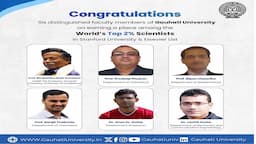
Gauhati University Places Six Faculty Members in World’s Top 2% Scientists List 2026

Ontario’s OSAP funding pause hits ballet school and divinity college students
.jpg&w=256&q=75)
From Class 8 to hospital owner: Rajasthan Police expose alleged fake doctor registration

Who will lead Keralam's universities? Government begins steps to appoint permanent VCs
%20(1)%20(1).jpeg&w=256&q=75)
Why does cracking JEE Advanced depend on coaching? IIT Kanpur Director calls for a revamp
.jpg&w=256&q=75)
NEET-PG 2026 answer key row: Supreme Court seeks NBEMS response on missing question papers
.png&w=256&q=75)
42 Iraqi universities feature in QS Arab Region University Rankings 2027

UP Board Extends Deadline to October 22 for 5,905 Schools to Submit Class 9, 11 Student Lists
NIOS October Exam 2026: Class 10, 12 Theory Hall Tickets Released; Download Link Here
Haryana Open School Exams 2027: BSEH Extends Application Deadline to October 31
Gauhati University Places Six Faculty Members in World’s Top 2% Scientists List 2026
Ontario’s OSAP funding pause hits ballet school and divinity college students
From Class 8 to hospital owner: Rajasthan Police expose alleged fake doctor registration
Who will lead Keralam's universities? Government begins steps to appoint permanent VCs
Why does cracking JEE Advanced depend on coaching? IIT Kanpur Director calls for a revamp
NEET-PG 2026 answer key row: Supreme Court seeks NBEMS response on missing question papers
42 Iraqi universities feature in QS Arab Region University Rankings 2027
Copyright© educationpost.in 2026 All Rights Reserved.