


The SAIEE 2021–25 marks the first synchronized national effort to estimate elephant numbers alongside the tiger census
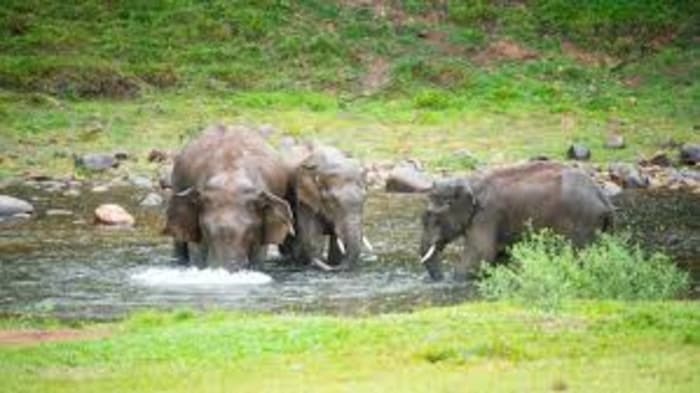
The recently released Synchronous All India Elephant Estimation (SAIEE) 2021–25 reveals a worrying decline in India’s elephant population. The estimate of 22,446 elephants indicates an 18% drop compared to the 2017 figure of 27,312. Although the report urges caution in interpreting this as a direct decline due to changes in counting methods, the findings highlight deep-rooted conservation challenges and emerging threats to India’s most iconic megafauna. The elephant, listed as Endangered under the IUCN Red List, is also India’s National Heritage Animal — making its protection a test of both ecological stewardship and policy resolve.
Trends in Elephant Census 2021–25

The SAIEE 2021–25 is the first synchronized nationwide elephant census conducted alongside the tiger census to assess the overlap in habitats and corridors. The findings show the following key trends:
Southern India continues to host the highest number of elephants, with Karnataka, Kerala, and Tamil Nadu accounting for nearly 45% of the national population.
Eastern and Northeastern regions, particularly Odisha, Assam, and Arunachal Pradesh, recorded declines attributed to habitat fragmentation and human interference.
The Central Indian region, including Chhattisgarh and Jharkhand, saw a concerning drop due to mining and linear infrastructure development.
While some regions such as Uttarakhand and parts of the Western Ghats have shown stable numbers, the overall pattern suggests that population decline and distributional shifts are influenced by human activity and landscape pressures.
Methodological Shifts & Comparability Issues
The report emphasizes that differences in methodology—particularly the move from block count sampling to line transect distance sampling—may partly explain the apparent decline. The new approach relies on statistical modeling and sampling-based extrapolation rather than full visual counts, potentially affecting comparability with earlier estimates.
Moreover, uneven sampling effort, limited field accessibility, and seasonal variation in elephant movements add further uncertainty. Experts have urged that long-term monitoring frameworks, not periodic snapshots, should guide population assessments to ensure reliability. Nonetheless, even with these caveats, the SAIEE findings align with field reports suggesting stress on elephant habitats and growing incidents of human–elephant conflict.
Threats & Conservation Challenges
The report underlines a complex web of ecological and anthropogenic threats:
Habitat Fragmentation: Expanding roads, railways, and mining zones have fragmented elephant corridors, particularly in central and northeastern India.
Human–Elephant Conflict: India records over 500 human and 100 elephant deaths annually due to conflict. Agricultural encroachment and corridor blockages drive elephants toward human settlements.
Climate Change: Altered rainfall and drought cycles affect forage and water availability, pushing herds to migrate unpredictably.
Poaching & Electrocution: Illegal ivory trade and accidental electrocution remain persistent challenges despite stronger laws.
Policy and Coordination Gaps: Inconsistent enforcement of the Project Elephant (1992) guidelines and lack of synchronized efforts across states reduce policy effectiveness.
Policy Recommendations & Institutional Gaps
To address these multi-layered challenges, the article proposes a five-pronged policy approach:
Corridor Protection & Legal Backing:
Legally notify critical elephant corridors under the Wildlife Protection Act, 1972, and integrate them into land-use planning.
Conflict Mitigation Framework:
Establish local Rapid Response Teams and early warning systems; promote insurance and compensation schemes for affected communities.
Technology Integration:
Use satellite tracking, AI-based movement mapping, and drone surveillance for real-time monitoring and conflict prevention.
Community Participation:
Encourage Eco-Development Committees and community forest rights to involve local populations in conservation incentives.
Institutional Reform:
Strengthen Project Elephant through a centralized National Elephant Conservation Authority akin to NTCA (for tigers), ensuring funding and accountability.
Conclusion
India’s elephants embody the ecological health of its forests and the ethical balance between development and conservation. The SAIEE 2021–25 findings serve as both a warning and an opportunity — a call to rethink fragmented conservation models and embed wildlife protection within broader climate and land-use policy. Unless decisive measures are taken to restore corridors, reduce conflicts, and modernize monitoring systems, India risks not only losing elephants but also the ecological balance they symbolize.

Morocco opens inclusive university for deaf and hearing students in Rabat

Kuwait University opens petroleum lab to train geology students

UP Board Extends Deadline to October 22 for 5,905 Schools to Submit Class 9, 11 Student Lists

NIOS October Exam 2026: Class 10, 12 Theory Hall Tickets Released; Download Link Here

Haryana Open School Exams 2027: BSEH Extends Application Deadline to October 31
.jpg&w=256&q=75)
From Class 8 to hospital owner: Rajasthan Police expose alleged fake doctor registration

Who will lead Keralam's universities? Government begins steps to appoint permanent VCs
%20(1)%20(1).jpeg&w=256&q=75)
Why does cracking JEE Advanced depend on coaching? IIT Kanpur Director calls for a revamp
.jpg&w=256&q=75)
NEET-PG 2026 answer key row: Supreme Court seeks NBEMS response on missing question papers
.png&w=256&q=75)
42 Iraqi universities feature in QS Arab Region University Rankings 2027

Morocco opens inclusive university for deaf and hearing students in Rabat
Kuwait University opens petroleum lab to train geology students
UP Board Extends Deadline to October 22 for 5,905 Schools to Submit Class 9, 11 Student Lists
NIOS October Exam 2026: Class 10, 12 Theory Hall Tickets Released; Download Link Here
Haryana Open School Exams 2027: BSEH Extends Application Deadline to October 31
From Class 8 to hospital owner: Rajasthan Police expose alleged fake doctor registration
Who will lead Keralam's universities? Government begins steps to appoint permanent VCs
Why does cracking JEE Advanced depend on coaching? IIT Kanpur Director calls for a revamp
NEET-PG 2026 answer key row: Supreme Court seeks NBEMS response on missing question papers
42 Iraqi universities feature in QS Arab Region University Rankings 2027
Copyright© educationpost.in 2026 All Rights Reserved.