


Decarbonising industry and ensuring energy security
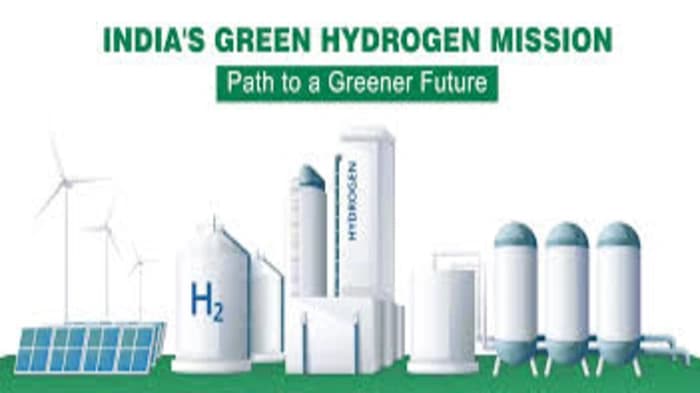
Government reviews in early 2026 highlighted steady progress under the National Green Hydrogen Mission, marking an important step in India’s transition towards a low-carbon and energy-secure future. The Mission aims to position India as a global hub for green hydrogen production, while supporting decarbonisation of hard-to-abate sectors and reducing dependence on imported fossil fuels.
Green hydrogen, produced through electrolysis using renewable energy, is particularly relevant for sectors such as steel, fertilisers, refineries, and heavy transport, where direct electrification is difficult. Pilot projects reviewed under the Mission demonstrated early success in blending green hydrogen in fertiliser production, using hydrogen-based direct reduced iron (DRI) processes in steel, and deploying hydrogen fuel-cell buses and trucks in select regions.

The progress reflects a supportive policy ecosystem, including production-linked incentives, demand aggregation mechanisms, and funding for research, development, and demonstration. By linking green hydrogen production with India’s expanding renewable energy capacity, the Mission seeks to address both decarbonisation and energy security objectives. Domestic hydrogen production can reduce exposure to volatile global energy markets and improve long-term balance-of-payments stability.
However, several challenges remain. High production costs, limited electrolyser manufacturing capacity, storage and transportation constraints, and the absence of a mature hydrogen market pose hurdles to large-scale deployment. Ensuring availability of affordable renewable power and developing standards, safety regulations, and certification systems are also critical.
The way forward involves scaling up electrolyser manufacturing, promoting public–private partnerships, developing hydrogen transport and storage infrastructure, and creating assured demand through mandates and long-term offtake agreements. International collaboration on technology and finance can further accelerate progress.
In conclusion, India’s review of the National Green Hydrogen Mission underscores its strategic importance in achieving Net Zero 2070 goals. Sustained policy support and coordinated implementation will be key to transforming pilot successes into a competitive and resilient green hydrogen economy.

UP Board Extends Deadline to October 22 for 5,905 Schools to Submit Class 9, 11 Student Lists

NIOS October Exam 2026: Class 10, 12 Theory Hall Tickets Released; Download Link Here

Haryana Open School Exams 2027: BSEH Extends Application Deadline to October 31

Gauhati University Places Six Faculty Members in World’s Top 2% Scientists List 2026

Ontario’s OSAP funding pause hits ballet school and divinity college students
.jpg&w=256&q=75)
From Class 8 to hospital owner: Rajasthan Police expose alleged fake doctor registration

Who will lead Keralam's universities? Government begins steps to appoint permanent VCs
%20(1)%20(1).jpeg&w=256&q=75)
Why does cracking JEE Advanced depend on coaching? IIT Kanpur Director calls for a revamp
.jpg&w=256&q=75)
NEET-PG 2026 answer key row: Supreme Court seeks NBEMS response on missing question papers
.png&w=256&q=75)
42 Iraqi universities feature in QS Arab Region University Rankings 2027

UP Board Extends Deadline to October 22 for 5,905 Schools to Submit Class 9, 11 Student Lists
NIOS October Exam 2026: Class 10, 12 Theory Hall Tickets Released; Download Link Here
Haryana Open School Exams 2027: BSEH Extends Application Deadline to October 31
Gauhati University Places Six Faculty Members in World’s Top 2% Scientists List 2026
Ontario’s OSAP funding pause hits ballet school and divinity college students
From Class 8 to hospital owner: Rajasthan Police expose alleged fake doctor registration
Who will lead Keralam's universities? Government begins steps to appoint permanent VCs
Why does cracking JEE Advanced depend on coaching? IIT Kanpur Director calls for a revamp
NEET-PG 2026 answer key row: Supreme Court seeks NBEMS response on missing question papers
42 Iraqi universities feature in QS Arab Region University Rankings 2027
Copyright© educationpost.in 2026 All Rights Reserved.