


Environmental enforcement tackles industrial pollution
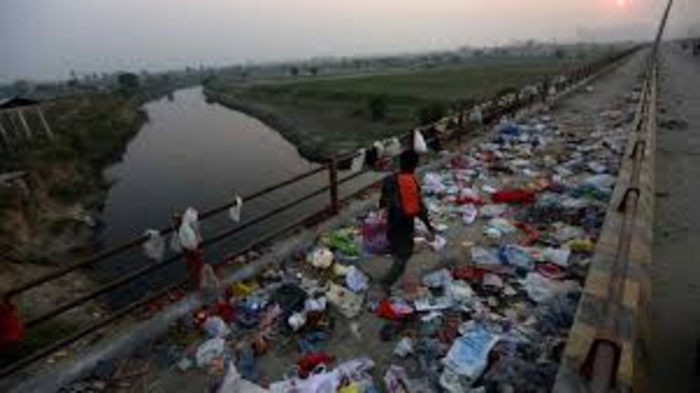
The National Green Tribunal (NGT) imposed a ₹500 crore environmental compensation penalty on several industries operating in Uttar Pradesh for persistent violations of pollution control norms that have severely degraded the Hindon River, a major tributary of the Yamuna. The tribunal also directed the constitution of a monitoring committee to oversee compliance with environmental safeguards and restoration measures.
The Hindon River has long suffered from industrial effluents, untreated sewage, and solid waste dumping, particularly from sugar mills, paper units, distilleries and small-scale manufacturing clusters. Scientific assessments submitted to the NGT highlighted high levels of biochemical oxygen demand (BOD), chemical oxygen demand (COD) and toxic contaminants, rendering the river ecologically stressed and unfit for human use.

Why it matters:
The NGT’s order reinforces the “polluter pays” principle, a cornerstone of Indian environmental jurisprudence. By imposing a substantial monetary penalty, the tribunal aims to deter future violations and ensure that the cost of environmental damage is borne by those responsible rather than the public exchequer.
The decision also underscores the importance of regulatory enforcement in addressing river pollution, complementing broader initiatives such as the Namami Gange Programme. Effective monitoring and compliance are crucial, as weak enforcement has often undermined pollution control laws despite the existence of statutory frameworks under the Water (Prevention and Control of Pollution) Act, 1974 and the Environment (Protection) Act, 1986.
From a governance perspective, the case highlights challenges in industrial regulation, inter-agency coordination and local body capacity. The monitoring committee’s role is expected to include tracking effluent treatment plant (ETP) performance, ensuring sewage treatment compliance, and recommending remedial actions.
Conclusion:
The NGT’s ₹500 crore penalty in the Hindon River case signals a tougher stance on industrial pollution and strengthens environmental accountability. Sustained monitoring, technological upgrades in pollution control, and institutional coordination will be critical to translating judicial orders into long-term ecological restoration.

NIOS October Exam 2026: Class 10, 12 Theory Hall Tickets Released; Download Link Here

Haryana Open School Exams 2027: BSEH Extends Application Deadline to October 31

Gauhati University Places Six Faculty Members in World’s Top 2% Scientists List 2026
DU VC asks DUSU leaders to lead drug-free campus campaign, proposes wellness centers

Russia seeks to curb multiple university applications with upfront payment rule
.jpg&w=256&q=75)
From Class 8 to hospital owner: Rajasthan Police expose alleged fake doctor registration

Who will lead Keralam's universities? Government begins steps to appoint permanent VCs
%20(1)%20(1).jpeg&w=256&q=75)
Why does cracking JEE Advanced depend on coaching? IIT Kanpur Director calls for a revamp
.jpg&w=256&q=75)
NEET-PG 2026 answer key row: Supreme Court seeks NBEMS response on missing question papers
.png&w=256&q=75)
42 Iraqi universities feature in QS Arab Region University Rankings 2027

NIOS October Exam 2026: Class 10, 12 Theory Hall Tickets Released; Download Link Here
Haryana Open School Exams 2027: BSEH Extends Application Deadline to October 31
Gauhati University Places Six Faculty Members in World’s Top 2% Scientists List 2026
DU VC asks DUSU leaders to lead drug-free campus campaign, proposes wellness centers
Russia seeks to curb multiple university applications with upfront payment rule
From Class 8 to hospital owner: Rajasthan Police expose alleged fake doctor registration
Who will lead Keralam's universities? Government begins steps to appoint permanent VCs
Why does cracking JEE Advanced depend on coaching? IIT Kanpur Director calls for a revamp
NEET-PG 2026 answer key row: Supreme Court seeks NBEMS response on missing question papers
42 Iraqi universities feature in QS Arab Region University Rankings 2027
Copyright© educationpost.in 2026 All Rights Reserved.