


Post-Republic Day measures show temporary success
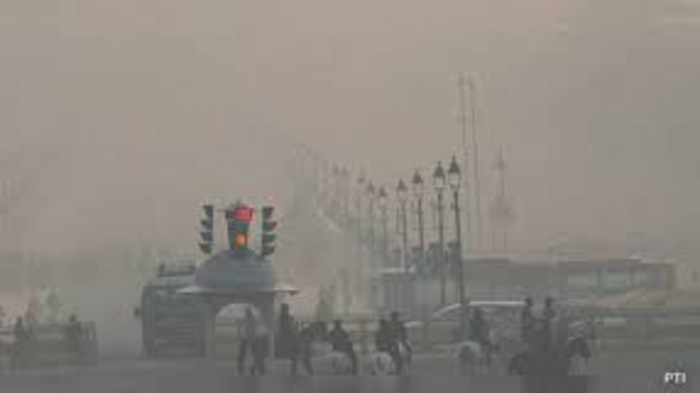
Delhi–NCR recorded a noticeable improvement in air quality following the strict enforcement of pollution control measures ahead of Republic Day, with the Air Quality Index (AQI) improving from the “Severe” category to “Poor.” While the development provided temporary relief to residents, experts and authorities have cautioned that short-term interventions alone are insufficient to address the region’s chronic air pollution problem.
The improvement has been attributed to a combination of emergency measures and favourable meteorological conditions. Authorities implemented restrictions such as curbs on construction activities, intensified checks on vehicular emissions, regulation of industrial operations, and enhanced public transport services. Measures under the Graded Response Action Plan (GRAP) were strictly enforced to ensure compliance during the high-profile national event.

In addition, light winds and changes in atmospheric conditions aided the dispersion of pollutants, contributing to the temporary decline in particulate matter concentrations. However, environmental experts have emphasised that meteorological factors often play a decisive role in such short-term improvements, making them inherently fragile and reversible.
Despite the improvement, pollution levels in the “Poor” category continue to pose health risks, particularly to vulnerable groups such as children, the elderly and those with respiratory or cardiovascular conditions. Public health specialists have reiterated the need for sustained preventive measures and behavioural changes to reduce long-term exposure.
Experts and policymakers have stressed that structural and long-term interventions are essential for durable air quality improvement. These include cleaner energy transitions, expansion of public transport, electric mobility, effective management of construction dust, industrial emission controls, and coordinated regional action to address stubble burning and transboundary pollution.
The recent improvement in AQI highlights the effectiveness of strict enforcement in the short run but also underscores the limitations of episodic responses. Authorities have acknowledged that lasting solutions require institutional coordination, technological upgrades and public participation. Sustained policy implementation, rather than event-driven measures, will be critical to ensuring cleaner air for Delhi–NCR in the long term.

NIOS October Exam 2026: Class 10, 12 Theory Hall Tickets Released; Download Link Here

Haryana Open School Exams 2027: BSEH Extends Application Deadline to October 31
Gauhati University Places Six Faculty Members in World’s Top 2% Scientists List 2026

DU VC asks DUSU leaders to lead drug-free campus campaign, proposes wellness centers

Russia seeks to curb multiple university applications with upfront payment rule
.jpg&w=256&q=75)
From Class 8 to hospital owner: Rajasthan Police expose alleged fake doctor registration

Who will lead Keralam's universities? Government begins steps to appoint permanent VCs
%20(1)%20(1).jpeg&w=256&q=75)
Why does cracking JEE Advanced depend on coaching? IIT Kanpur Director calls for a revamp
.jpg&w=256&q=75)
NEET-PG 2026 answer key row: Supreme Court seeks NBEMS response on missing question papers
.png&w=256&q=75)
42 Iraqi universities feature in QS Arab Region University Rankings 2027

NIOS October Exam 2026: Class 10, 12 Theory Hall Tickets Released; Download Link Here
Haryana Open School Exams 2027: BSEH Extends Application Deadline to October 31
Gauhati University Places Six Faculty Members in World’s Top 2% Scientists List 2026
DU VC asks DUSU leaders to lead drug-free campus campaign, proposes wellness centers
Russia seeks to curb multiple university applications with upfront payment rule
From Class 8 to hospital owner: Rajasthan Police expose alleged fake doctor registration
Who will lead Keralam's universities? Government begins steps to appoint permanent VCs
Why does cracking JEE Advanced depend on coaching? IIT Kanpur Director calls for a revamp
NEET-PG 2026 answer key row: Supreme Court seeks NBEMS response on missing question papers
42 Iraqi universities feature in QS Arab Region University Rankings 2027
Copyright© educationpost.in 2026 All Rights Reserved.