


Thousands of young academics across India face stalled careers as universities bypass UGC pay norms, rely on 11-month contracts, and leave faculty underpaid, insecure, and excluded from research opportunities.
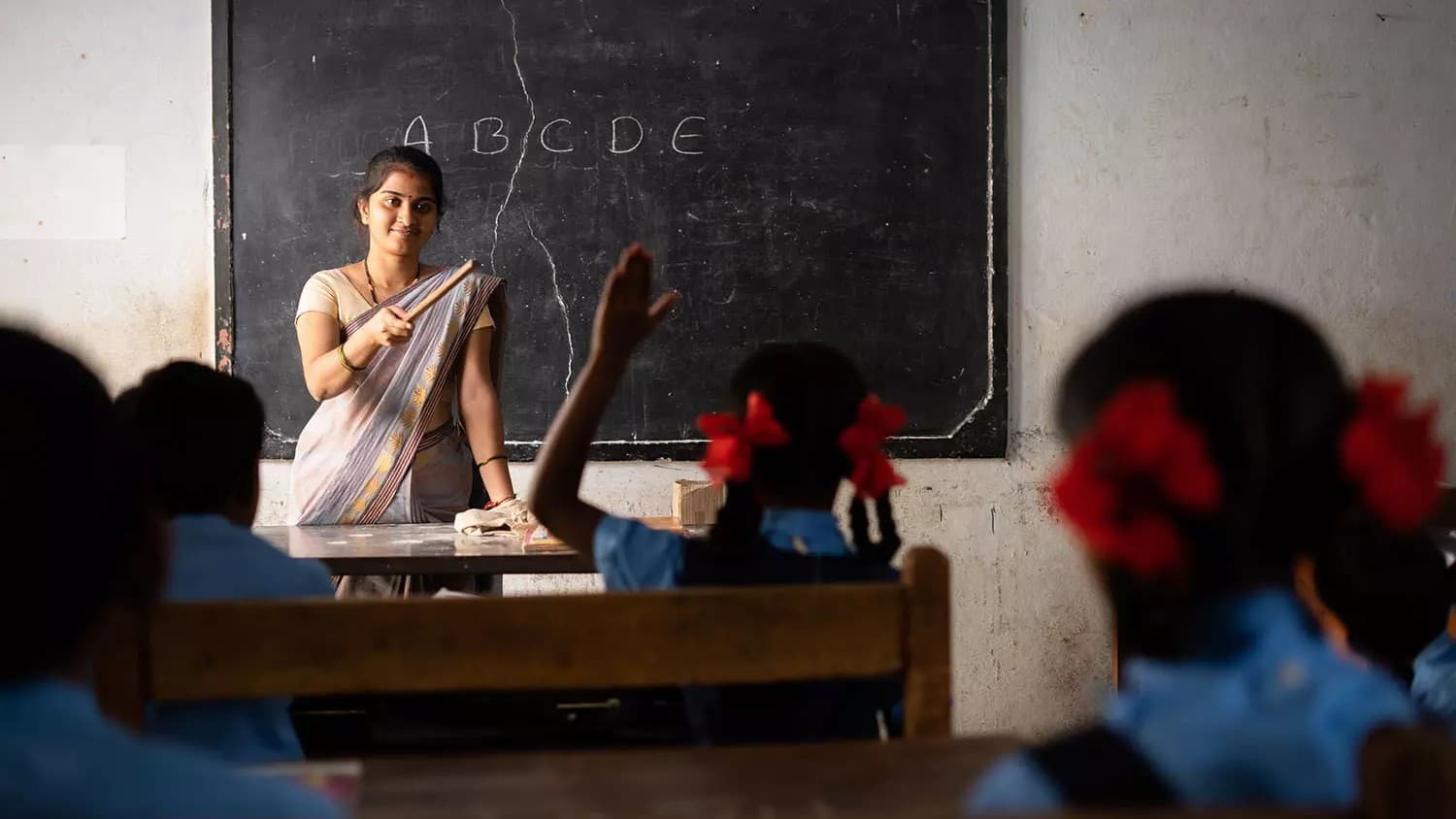
Across India’s higher education sector, thousands of faculty members continue to face precarious working conditions despite the University Grants Commission (UGC) prescribing clear salary structures for assistant professors.
Government and private institutions are increasingly relying on contractual hiring, often at wages well below the statutory pay scale.

For Aniket Kundu, who joined Veermata Jijabai Technological Institute (VJTI), Mumbai, the promise of a stable academic career soon faded.
“On paper, it looked promising: ₹65,000 a month, a three-year contract, and the opportunity to teach at one of India’s oldest engineering colleges. But the reality was very different. We carried out the same responsibilities as permanent assistant professors, yet were designated as ‘contractual faculty’ to deny us permanency,” he said.
He recounted how insecurity was deliberately created through service breaks and repeated renewal interviews.
“The administration deliberately kept us insecure by enforcing breaks in service,15 days in the first year and longer thereafter, to disrupt continuity. Despite a three-year contract, we were subjected to renewal interviews every 11 months,” Kundu added.
“Our salaries remained frozen at ₹65,000, with no increments, no benefits, and no job security. Ironically, we were asked to justify our research output when no laboratories or PhD students were made available to us,” Kundu explained.
The COVID-19 pandemic deepened the crisis, with contractual staff asked to teach online without pay while permanent colleagues continued to receive full salaries.
“By the end of my stint, my three-year contract had been broken into three-month extensions, leaving me with 11 appointment letters over five years. It was a paper trail of exploitation. That is when I decided to move to IIT Bombay, where at least my qualifications were respected,” he added.
Kundu said his struggles did not end with VJTI. He has maintained records of five years’ worth of job applications, many of which went nowhere.
“In some cases, seats were openly sold, and deserving candidates were sidelined. At Delhi University, which has at least tried to uphold permanent recruitment in some cases, I applied to 15 colleges. Only one called me for an interview, and even there the selection favored insiders. This is not just nepotism; it is systemic rot,” he said.
According to UGC’s 7th Central Pay Commission guidelines, assistant professors should start at Pay Level 10, with a basic pay of ₹57,700 that can rise to ₹182,400.
With allowances, monthly earnings should range from ₹70,000 to ₹100,000. But the reality is starkly different.
At NIT Delhi, PhD-qualified contractual faculty are paid ₹80,000 a month, while those with only M.Tech degrees earn just ₹49,650.
NIT Jalandhar offers ₹54,000 to PhD holders and ₹45,000 to those awaiting their degree. An AmbitionBox report showed that assistant professors at NIT Silchar earn between ₹4.9 lakh and ₹6.2 lakh annually, much lower than UGC norms.
What was once a temporary arrangement, the 11-month contract has now become the standard, leaving faculty in constant uncertainty. Private universities follow similar trends, sometimes at even lower salaries.
In one case, a private university in North India offered a post-PhD assistant professor ₹55,000 a month, well below the prescribed scale.
“Government institutions are legitimizing underpayment. When NITs themselves recruit at compromised wages, private universities get a free hand to exploit teachers,” said a faculty member who did not want to be named.
Data supports the scale of the issue. The All India Survey on Higher Education (AISHE) 2021–22 reported that 34% of sanctioned teaching posts remain vacant across central universities.
Rather than filling these positions through permanent recruitment, institutions continue to depend on temporary and guest faculty.
While Delhi University has made some effort to preserve permanent hiring, most state and central universities have normalized contractual practices. Education analysts warn that this trend could dissuade young researchers from pursuing academia.
“We are asking the best minds to spend eight to ten years in doctoral and postdoctoral research, only to then offer them salaries lower than what corporate entry-level jobs provide,” observed a Delhi-based higher education analyst.
The problem extends beyond pay. Dr Ankit Kumar Srivastava of Indrashil University pointed out the professional disadvantages contractual faculty face.
“Nobody can feel secure while employed as ad hoc or contractual faculty. Most contracts last only 11 months and are not even counted as experience. We are barred from supervising PhD students, given no opportunities for professional development, and yet burdened with teaching loads equal to or greater than those of permanent faculty. Employment is highly insecure; you can be terminated at any point, or your contract simply not renewed,” he said.
He added that favoritism often dominates hiring decisions. “In Gujarat, there is an open preference for Gujarati candidates, often at the cost of quality. This is not limited to private colleges; it extends to central universities and even NITs such as Warangal, Trichy, and Surat. Many panels reject competent candidates because they feel threatened by their capabilities. As a result, numerous highly qualified scholars remain unemployed.”

International graduates could contribute $1 trillion to US, UK, Canada and Australia

NEET UG Stray Vacancy Result 2026: MBBS Seat Allotted at AIR 11.90 Lakh; Check Closing Ranks
Telangana to Implement 25% RTE Quota in Private Schools for EWS and Disadvantaged Children

Could smarter energy solutions make data centres more sustainable?

Cambridge and AstraZeneca extend joint PhD programme for three years
Could smarter energy solutions make data centres more sustainable?
Cambridge and AstraZeneca extend joint PhD programme for three years

China shuts three Tibetan schools, raising fears for language and cultural identity
.webp&w=256&q=75)
CCPA reports 3,940 delistings in crackdown on online sale of explosive substances
UGC seeks governors’ intervention as 82 Tamil Nadu institutions face 150 fee-refund complaints

International graduates could contribute $1 trillion to US, UK, Canada and Australia
NEET UG Stray Vacancy Result 2026: MBBS Seat Allotted at AIR 11.90 Lakh; Check Closing Ranks
Telangana to Implement 25% RTE Quota in Private Schools for EWS and Disadvantaged Children
Could smarter energy solutions make data centres more sustainable?
Cambridge and AstraZeneca extend joint PhD programme for three years
Could smarter energy solutions make data centres more sustainable?
Cambridge and AstraZeneca extend joint PhD programme for three years
China shuts three Tibetan schools, raising fears for language and cultural identity
CCPA reports 3,940 delistings in crackdown on online sale of explosive substances
UGC seeks governors’ intervention as 82 Tamil Nadu institutions face 150 fee-refund complaints
Copyright© educationpost.in 2026 All Rights Reserved.