AIIMS nursing applications hit record high at 1.91 lakh
BSc Nursing applications surge over 1,000% in five years as allied healthcare courses also go past 1.17 lakh, reflecting a sharp rise in interest in specialized healthcare careers.
Amin Masoodi26 September 2026 12:23
For years, the path to a career in healthcare has been closely associated with one destination: an MBBS seat. But application data from the All India Institute of Medical Sciences (AIIMS) suggests that an increasing number of students are also looking at nursing and specialised allied healthcare programmes as career options.
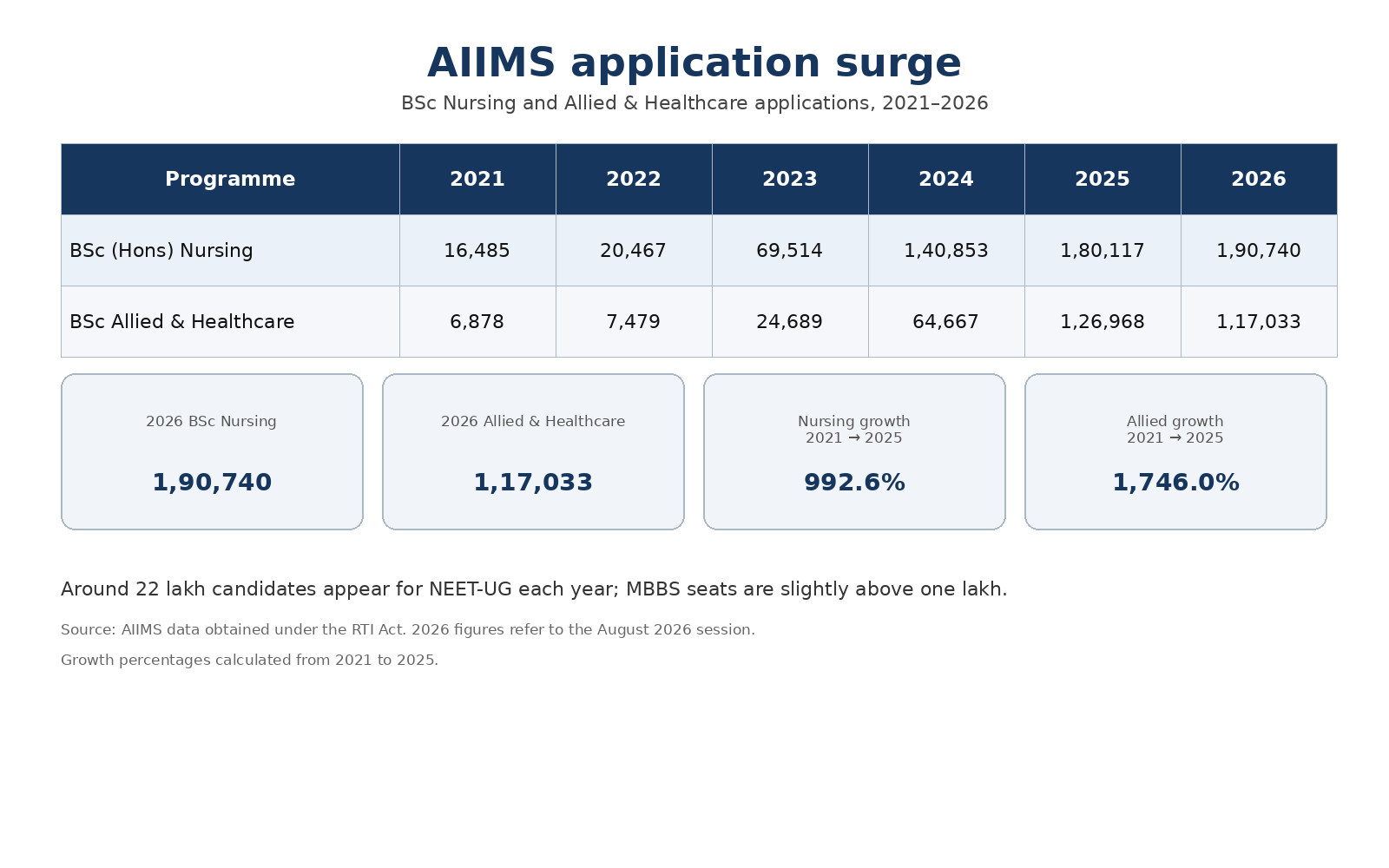
Nearly 1.91 lakh candidates applied for the BSc (Hons) Nursing entrance examination for the August 2026 session, while more than 1.17 lakh applications were received for BSc Allied & Healthcare Courses, according to information obtained under the Right to Information (RTI) Act.
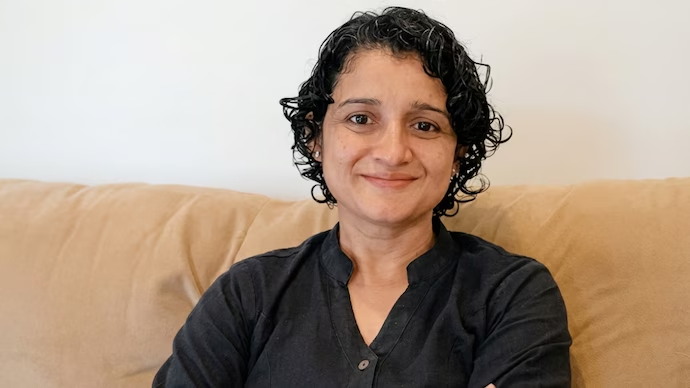
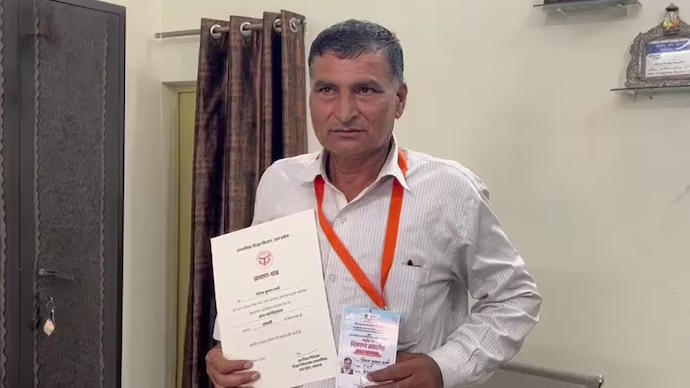
The figures were obtained by 30-year-old Vipul Sharma, an allied healthcare professional working in laboratory healthcare at Lady Hardinge Medical College.
According to the AIIMS RTI response, the institute received 1,90,740 applications for BSc (Hons) Nursing and 1,17,033 applications for BSc Allied & Healthcare Courses for the August 2026 session.
The rise has been particularly striking over the past five years.
Applications for BSc (Hons) Nursing increased from 16,485 in 2021 to 1,80,117 in 2025, an increase of more than 990%. Applications for BSc Allied & Healthcare Courses rose from 6,878 in 2021 to 1,26,968 in 2025, an increase of more than 1,700%.
Nursing applications rise sharply
AIIMS data shows that applications for BSc (Hons) Nursing grew across all major categories between 2021 and 2025.
Total applications rose from 16,485 in 2021 to 20,467 in 2022 before increasing sharply to 69,514 in 2023. The figure climbed further to 1,40,853 in 2024 and reached 1,80,117 in 2025.
Among OBC (NCL) candidates, applications increased from 6,754 in 2021 to 78,319 in 2025. Applications from unreserved candidates rose from 5,542 to 48,988 during the same period.
SC applications increased from 2,292 to 28,543, while EWS applications rose from 1,334 to 15,218. ST applications climbed from 563 in 2021 to 9,049 in 2025.
Allied healthcare sees even faster growth
The increase in applications for allied healthcare courses has been even more pronounced.
AIIMS received 6,878 applications in 2021 and 7,479 in 2022. The number then more than tripled to 24,689 in 2023 before rising to 64,667 in 2024 and 1,26,968 in 2025.
OBC (NCL) applications increased from 3,326 in 2021 to 54,489 in 2025, while applications from unreserved candidates rose from 1,737 to 35,137.
SC applications went up from 859 to 20,150, EWS applications from 759 to 11,586 and ST applications from 197 to 5,606 during the five-year period.
For Sharma, the numbers point to a broader need to familiarise students with healthcare careers beyond medicine and nursing.
“Not everyone knows about the multiple professions that cost less to study and can offer good career opportunities. These professions were earlier broadly referred to as paramedical professions, but are now recognised as allied healthcare,” he said.
From laboratories to radiotherapy
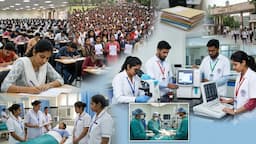
Allied healthcare covers a wide range of specialised undergraduate programmes, including medical laboratory technology, ophthalmic sciences, radiotherapy and perfusion technology.
Professionals in these fields work across diagnostic, therapeutic and other specialised healthcare services, often playing an essential role in patient care without being doctors.
For students who aspire to become doctors but do not secure an MBBS seat, these courses can provide another route into the healthcare sector.
Around 22 lakh candidates appear for NEET-UG each year, while the number of MBBS seats is slightly above one lakh, leaving a large number of students to consider other healthcare professions.
AIIMS offers nursing and allied healthcare programmes across its network. Other institutions, including PGIMER Chandigarh, also offer specialised allied healthcare courses.
Lower fees add to their appeal
Cost is another factor that can make these programmes attractive, particularly at government institutions.
Some allied healthcare programmes at central institutions such as AIIMS, PGIMER and JIPMER can cost around Rs 1,500 to Rs 15,000 for the programme. Courses at state-run medical colleges may cost around Rs 20,000 to Rs 60,000 a year.
The cost can be considerably higher at private universities and deemed institutions. Bachelor's programmes such as physiotherapy, medical imaging technology and cardiac technology can range from Rs 80,000 to Rs 3 lakh a year, depending on the institution and course.
Shorter, skill-focused vocational and state paramedical board diploma courses typically cost around Rs 20,000 to Rs 70,000 a year.
Nursing has an established career pathway
Despite the growing interest in allied healthcare, nursing continues to have greater visibility among students.
Sharma attributed this partly to the clearer government recruitment pathway available to nursing graduates. The Nursing Officer Recruitment Common Eligibility Test (NORCET), along with established government pay structures, has helped make nursing a more familiar career choice.
Allied healthcare professionals, meanwhile, often work in specialised departments such as biochemistry and laboratory services. Their workplaces may also operate on shift-based schedules depending on the nature of the service.
For Sharma, the growing application numbers should prompt students to look beyond the traditional hierarchy of healthcare careers.
Allied healthcare, he said, should not be seen merely as a “Plan B” for students who do not secure an MBBS seat, but as a group of specialised professions that form an important part of the healthcare system.