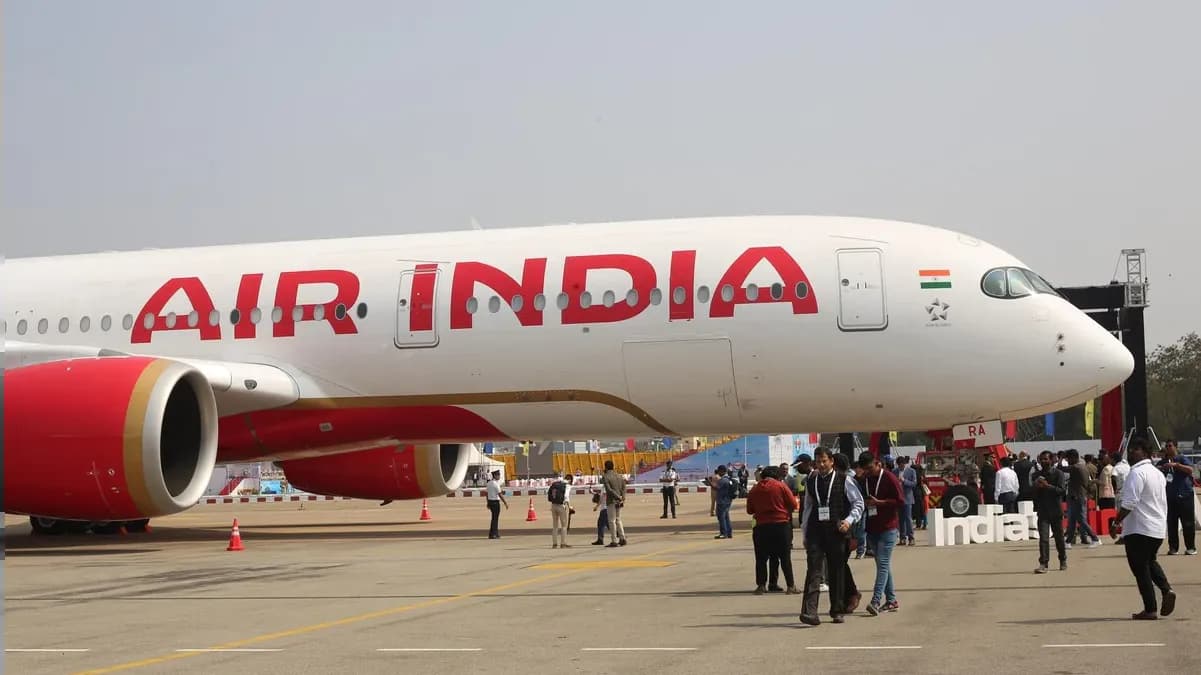
All India Cabin Crew Association (AICCA) has criticized Tata Group-owned Air India's room-sharing policy for cabin crew members and termed it as "illegal, bad in law, and Void ab initio on multiple fronts."
The aviation body has urged the Labour Ministry to intervene and stall the move.

In a letter recently to the Chief Labour Commissioner (CLC) New Delhi, the aviation body urged him for immediate assistance to stay "this illegal action, and initiate proceedings under Section 33, during the pendency of proceedings on the same matter."
"Our attention has been drawn to the notice issued by Air India on its bulletin board, inter alia proposing to unilaterally change the conditions of service of cabin crew, during the pendency of the National Industrial Tribunal and an industrial dispute in this very matter, compelling them to share rooms whilst on overnight layovers, with effect from December 1," the association said in a statement.
"Without prejudice, at the very onset, we must protest this and place our opposition on record, to this draconian move, and state that this is an illegal move, and also a change in conditions of service under the IESO--(Industrial Employees Standing Orders Act), under which the establishment is bound, other than during the pendency of NIT and Industrial Dispute," it added.
The aviation body is seeking these entitlements – hotel accommodation and conditions of accommodation in line with the policy on accommodation for pilots, as per the previous agreements and tribunal awards.
AICCA also recently wrote to Air India Chief Campbell Wilson, urging him "not to violate" the existing status quo, and to respect the sanctity of the Industrial Tribunal and the pending Industrial dispute over the issue.
"The said action is a violation of Industrial Law, breach of Industrial Disputes Act, and comes during the hearing and pendency of a National Industrial Tribunal and another industrial Dispute, apart from the pending Supreme Court matter," AICCA said in its complaint to Wilson.
"This is clearly illegal, and is a blatant violation of Section 33-C, which could result in prosecution of the officers for violation," it added.
"We urge you not to violate the existing status quo, respect the sanctity of the Industrial Tribunal and the pending Industrial dispute, and engage in ethical and constructive dialogue with the AICCA, in the good spirit of mutual interests for the larger benefit of our company," reads the complaint.
Under the new policy effective December 1 this year, members will be required to share rooms during layovers except for cabin executives and those operating ultra-long-haul flights ahead of the merger of Vistara with it, scheduled for Nov 11.
Pertinently, Cabin crew members on ultra-long-haul flights will get single rooms during layovers as well as during unscheduled layovers in the event of a flight diversion, as per the internal communication.
Generally, ultra-long-haul flights are those having a duration of 16 hours or more. Air India operates such flights to North America.
Cabin executives, who are senior members with around 8 years of flying experience, will also get single rooms during layovers, as per the internal communication.
Air India and Vistara together will have a staff strength of around 25,000. Out of them, there will be about 12,000 cabin crew members, according to the statement.
Air India has reportedly declined to comment on the issue.
The AICCA is a 50-year-old registered trade union that now has cabin crew membership from across Indian and foreign airlines pan-India.
According to the aviation body, a similar move was attempted in 2018 by the then Air India management and the Ministry of Civil Aviation, which was resisted by the AICCA on legal, ethical, and moral grounds.
It alleged that Air India's policy on room sharing violates every major regulatory body in the world, including the US and European aviation safety regulatory bodies such as the Federal Aviation Administration (FAA) and European Aviation Safety Agency (EASA) as well as the International Civil Aviation Organization (ICAO) and the latest Civil Aviation Requirement (CAR) issued by the Directorate General of Civil Aviation (DGCA).