


Washington calls it self-defense as fresh military action rattles an already fragile Iran-US ceasefire.
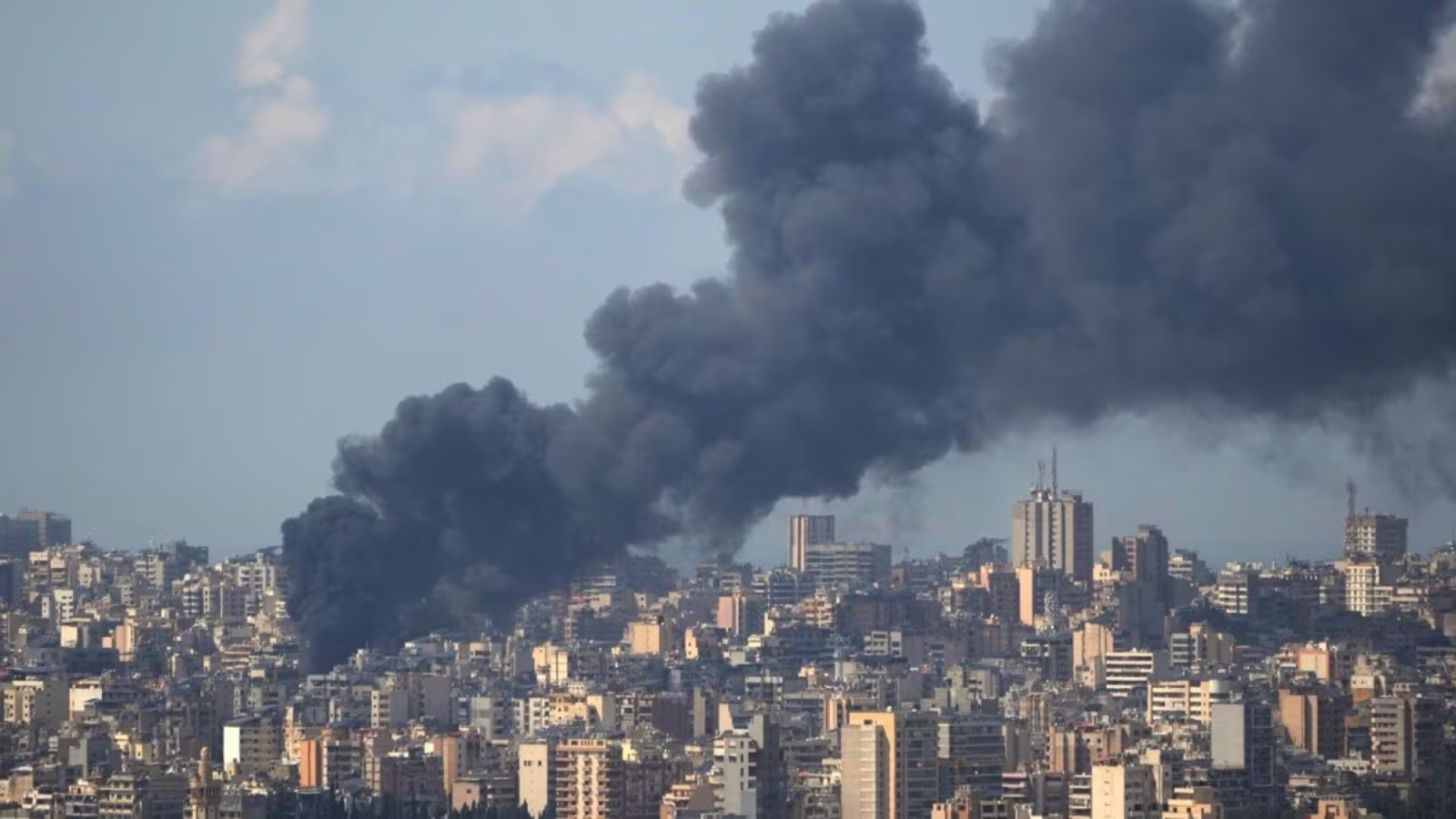
The United States carried out what it called “self-defense” strikes in southern Iran, targeting missile launch sites and boats allegedly laying naval mines, in a move that has raised fresh concerns over the stability of the Iran-US ceasefire in place since April.
The US military said the strikes were launched on May 26 local time near Bandar Abbas, close to the strategically critical Strait of Hormuz, even as President Donald Trump said diplomatic negotiations with Iran were “proceeding nicely”.

US Central Command, or CENTCOM, said the operation was aimed at neutralising immediate threats to American personnel in the region.
“The strikes were conducted to defend our troops,” CENTCOM spokesperson Captain Tim Hawkins said, adding that the US was “using restraint during the ongoing ceasefire.”
The strikes reportedly targeted Iranian military assets near Bandar Abbas, close to the Strait of Hormuz, one of the world’s most sensitive maritime chokepoints. Iranian media reported explosions in the area, though authorities later said the situation was under control.
Despite the military action, there was no immediate indication that the ceasefire agreement had collapsed.
The latest escalation comes as Washington and Tehran continue negotiations to end the conflict that began in late February after coordinated US and Israeli strikes on Iranian targets.
Trump, meanwhile, signaled that any future agreement with Iran should go beyond the immediate conflict and include broader regional commitments. He urged countries including Saudi Arabia, Pakistan, Turkey, Egypt and Jordan to join the Abraham Accords.
“After all the work done by the United States, it should be mandatory that these countries sign onto the Abraham Accords,” Trump wrote on social media.
The proposal could complicate already delicate diplomacy. Saudi Arabia has repeatedly said any normalization with Israel depends on tangible progress toward Palestinian statehood, while Pakistan does not maintain diplomatic relations with Israel.
Former Pakistani ambassador Masood Khan said Trump’s suggestion adds “a new dimension” to an already complex negotiation process.
Trump also reiterated his demand that Iran’s enriched uranium stockpile be removed or destroyed under international supervision, one of the central sticking points in ongoing talks.
The Strait of Hormuz remains one of the most strategically vital waterways in the world. Located between Iran and Oman, it connects the Persian Gulf to the Gulf of Oman and the Arabian Sea, serving as the primary sea route for Middle Eastern oil exports.
Nearly 20 million barrels of crude oil and petroleum products move through the strait every day, accounting for about 25% of global seaborne oil trade, making any military activity in the area a major concern for global energy markets.

IIIT Ranchi student death: NHRC to examine allegations of administrative negligence and delayed medical aid
.jpg&w=256&q=75)
Karnataka introduces 7.5% sub-quota for rural government school students in professional course admissions
Dubai forum to examine AI agents’ role in journalism and digital publishing

NEET PG Counselling 2026 Round 1 registration begins Oct 12, check schedule and key dates
Groundwater and urban resilience in focus at UAEU’s international conference
IIIT Ranchi student death: NHRC to examine allegations of administrative negligence and delayed medical aid
Karnataka introduces 7.5% sub-quota for rural government school students in professional course admissions
Dubai forum to examine AI agents’ role in journalism and digital publishing
NEET PG Counselling 2026 Round 1 registration begins Oct 12, check schedule and key dates
PM Modi praises NEP impact, Tamil Nadu CM Vijay seeks ₹5,110 crore in dues

IIIT Ranchi student death: NHRC to examine allegations of administrative negligence and delayed medical aid
Karnataka introduces 7.5% sub-quota for rural government school students in professional course admissions
Dubai forum to examine AI agents’ role in journalism and digital publishing
NEET PG Counselling 2026 Round 1 registration begins Oct 12, check schedule and key dates
Groundwater and urban resilience in focus at UAEU’s international conference
IIIT Ranchi student death: NHRC to examine allegations of administrative negligence and delayed medical aid
Karnataka introduces 7.5% sub-quota for rural government school students in professional course admissions
Dubai forum to examine AI agents’ role in journalism and digital publishing
NEET PG Counselling 2026 Round 1 registration begins Oct 12, check schedule and key dates
PM Modi praises NEP impact, Tamil Nadu CM Vijay seeks ₹5,110 crore in dues
Copyright© educationpost.in 2026 All Rights Reserved.