


Ceasefire extension proposal remains uncertain as Washington and Tehran stay divided over nuclear demands and the Strait of Hormuz.
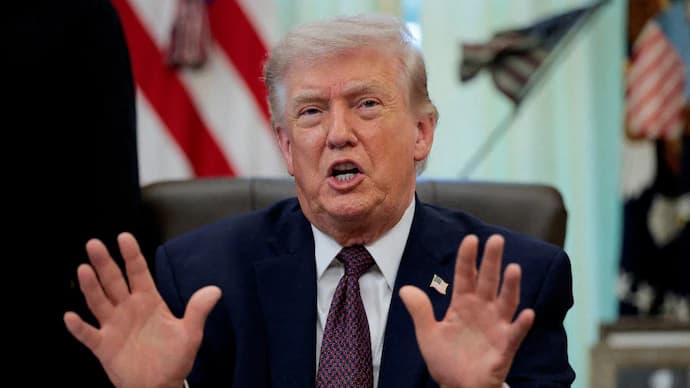
A crucial White House meeting on a possible agreement between the United States and Iran ended without a decision, leaving the future of a proposed ceasefire extension uncertain and exposing persistent divisions between the two longtime adversaries.
The meeting, chaired by Donald Trump and held on May 29, lasted nearly two hours. However, the US President left without approving or rejecting the tentative framework under discussion, according to an Associated Press report citing a senior administration official.

The talks came amid reports that US and Iranian negotiators had reached a preliminary understanding aimed at extending the fragile ceasefire between the two sides by 60 days while negotiations continue over Tehran's controversial nuclear programme.
Ahead of the meeting, Trump signalled a tough stance, declaring on social media that any agreement would require Iran to reopen the Strait of Hormuz, a critical global shipping route affected by the recent conflict. He also reiterated Washington's demand that Tehran permanently abandon any pursuit of nuclear weapons and allow the United States to remove its stockpile of enriched uranium.
Iran has repeatedly rejected those conditions. According to the administration official cited by AP, Trump is prepared to sign only a deal that meets his "red lines" and effectively limits Iran's nuclear ambitions.
Before entering the White House Situation Room, Trump said he was preparing to make a "final determination" on Iran. In a post on Truth Social, he stated that Iran "must agree that they will never have a Nuclear Weapon or Bomb" and called for the reopening of the Strait of Hormuz to international navigation, along with the removal of all sea mines.
A day later, US Defense Secretary Pete Hegseth warned that Washington remains ready to resume military action if diplomacy fails.
Speaking at the Shangri-La Dialogue in Singapore, Hegseth said the United States possesses the capability and resources to restart operations against Iran if necessary.
"Our ability to recommence if necessary... we are more than capable," he said, adding that US military stockpiles remain sufficient both in the region and globally.
Hegseth stressed that Trump remains committed to securing what he described as a strong agreement that would prevent Iran from acquiring a nuclear weapon.
Despite ongoing diplomatic efforts, mistrust continues to cloud relations between Washington and Tehran.
On May 29, Iran's chief negotiator, Mohammad Bagher Qalibaf, signalled Tehran's scepticism toward any promises made during negotiations.
Writing on X, he said Iran places little faith in guarantees or statements and would judge progress solely by actions. Referring to recent military strikes involving Israel and the United States, Qalibaf argued that Iran had learned not to rely on diplomatic assurances.
"No step will be taken before the other side acts," he wrote, adding that concessions are won through strength rather than negotiations.
A similarly critical view came from Mohsen Rezaei, a former commander of the Islamic Revolutionary Guard Corps. He accused Trump of undermining diplomacy by maintaining pressure tactics while pursuing negotiations.
According to Iran's Tehran Times newspaper, Rezaei said the US President had once again demonstrated that he was not genuinely committed to talks by continuing naval restrictions and pressing demands that Tehran considers excessive.
With both sides holding firm to their positions, the proposed ceasefire extension and broader nuclear agreement remain in limbo, raising fresh doubts about whether diplomacy can bridge one of the world's most volatile geopolitical divides.

IIIT Ranchi student death: NHRC to examine allegations of administrative negligence and delayed medical aid
.jpg&w=256&q=75)
Karnataka introduces 7.5% sub-quota for rural government school students in professional course admissions

Dubai forum to examine AI agents’ role in journalism and digital publishing

NEET PG Counselling 2026 Round 1 registration begins Oct 12, check schedule and key dates

Groundwater and urban resilience in focus at UAEU’s international conference
IIIT Ranchi student death: NHRC to examine allegations of administrative negligence and delayed medical aid
Karnataka introduces 7.5% sub-quota for rural government school students in professional course admissions
Dubai forum to examine AI agents’ role in journalism and digital publishing
NEET PG Counselling 2026 Round 1 registration begins Oct 12, check schedule and key dates
PM Modi praises NEP impact, Tamil Nadu CM Vijay seeks ₹5,110 crore in dues

IIIT Ranchi student death: NHRC to examine allegations of administrative negligence and delayed medical aid
Karnataka introduces 7.5% sub-quota for rural government school students in professional course admissions
Dubai forum to examine AI agents’ role in journalism and digital publishing
NEET PG Counselling 2026 Round 1 registration begins Oct 12, check schedule and key dates
Groundwater and urban resilience in focus at UAEU’s international conference
IIIT Ranchi student death: NHRC to examine allegations of administrative negligence and delayed medical aid
Karnataka introduces 7.5% sub-quota for rural government school students in professional course admissions
Dubai forum to examine AI agents’ role in journalism and digital publishing
NEET PG Counselling 2026 Round 1 registration begins Oct 12, check schedule and key dates
PM Modi praises NEP impact, Tamil Nadu CM Vijay seeks ₹5,110 crore in dues
Copyright© educationpost.in 2026 All Rights Reserved.