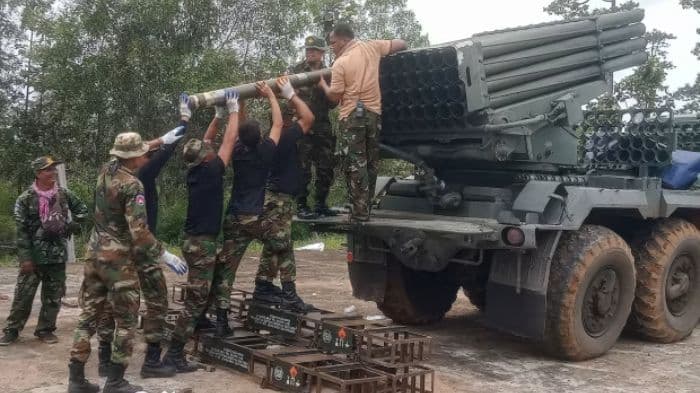
Thailand and Cambodia agreed to an immediate and unconditional ceasefire on July 28 following five days of intense border fighting that left at least 35 dead and displaced hundreds of thousands.
The announcement came after mediation talks hosted by Malaysian Prime Minister Anwar Ibrahim, who is also the current chair of Association of Southeast Asian Nations (ASEAN).

Anwar presided over the talks in Putrajaya, attended by Cambodian Prime Minister Hun Manet and Thailand’s Acting Prime Minister Phumtham Wechayachai. Representatives from the United States and China were also present as co‑organizers and observers of the negotiations.
The ceasefire is designed to halt the worst confrontation between the two Southeast Asian neighbours in over a decade, triggered by a longstanding territorial dispute along their approximately 817‑km (508‑mile) border—areas including the Preah Vihear and Ta Moan Thom temples seen as flashpoints.
Regional military commanders will meet on July 29 morning informally to discuss implementation. A meeting of defense attachés could follow, under Malaysia’s further diplomatic coordination.
A formal delegation of foreign and defense ministers from all three countries (Malaysia, Thailand, Cambodia) has been instructed to work out a mechanism for monitoring and enforcing the ceasefire.
Before the talks, Thailand had accused Cambodia of violation of international law and endangering civilians—a claim Phnom Penh denied, instead blaming Thailand for civilian risk and escalation.
Both leaders expressed gratitude during closing remarks. Hun Manet called the meeting “very productive” and expressed hope that relations can return to normal, while Phumtham reaffirmed Thailand’s desire for peaceful resolution and emphasized joint commitment to the truce.
Analysts emphasised the international dimension: U.S. President Donald Trump reportedly called both leaders over the weekend, linking the prospect of future trade deals to progress towards peace. China also supported the talks behind the scenes.
The conflict (which officially began on July 24) has displaced more than 270,000 people across both countries — refugees now seeking shelter in camps across border regions.
The ceasefire is seen as a critical first step toward de-escalation and the restoration of stability in Southeast Asia.