


Iran’s foreign minister asserted that the assassination of senior leader Ali Larijani will not destabilise the country’s political structure, even as repeated US-Israeli strikes target top officials in the ongoing conflict.
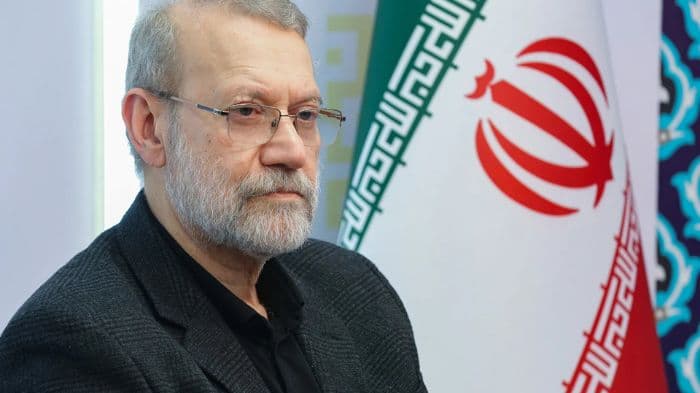
Iran has said the killing of senior official Ali Larijani will not destabilise its political system, amid a series of targeted strikes on the country’s leadership during the ongoing war with the United States and Israel.
Speaking after Larijani’s death, Foreign Minister Abbas Araghchi said the country’s political structure remains strong and is not dependent on any single individual.

Larijani, who served as secretary of Iran’s Supreme National Security Council and was considered one of the most influential figures in the country’s leadership, was killed in an Israeli strike in Tehran.
His death comes amid an intensifying campaign by the US and Israel targeting top Iranian officials, including military and political figures, in what analysts describe as a strategy to weaken Tehran’s leadership structure.
Iranian officials, however, have pushed back against suggestions that such strikes could destabilise the government. Araghchi said that Washington and its allies misunderstand the resilience of Iran’s system, which he described as rooted in established political, economic and social institutions.
The conflict, which began in late February, has already seen the killing of several high-ranking figures, including former Supreme Leader Ali Khamenei, significantly raising tensions across the region.
Despite these losses, Iranian leadership has maintained that the country will continue its resistance and governance without disruption, signalling continuity in decision-making even under sustained military pressure.
The developments mark a sharp escalation in the conflict, with both sides continuing military operations while diplomatic efforts remain limited.

Loughborough University appoints Professor Nichola Callow as Pro Vice-Chancellor for education

From digital pets to AI robots: How Hong Kong schools are reshaping classroom learning

Why Are Nearly 2,000 MBBS Seats Still Vacant After NEET Counselling 2026?
Ghaziabad School Introduces Global Lexile Framework to Assess Reading Skills of Students

SRMIST to Host National Conference on Regenerative Biology and Bioengineering from November 3
From digital pets to AI robots: How Hong Kong schools are reshaping classroom learning
Why Are Nearly 2,000 MBBS Seats Still Vacant After NEET Counselling 2026?

King's College London, Cranfield University agree to merge in August 2027

Hong Kong plans weekly AI and coding lessons for children: Is India ready for the shift?

Who handles student discipline? Singapore schools look beyond teachers, lessons India can learn

Loughborough University appoints Professor Nichola Callow as Pro Vice-Chancellor for education
From digital pets to AI robots: How Hong Kong schools are reshaping classroom learning
Why Are Nearly 2,000 MBBS Seats Still Vacant After NEET Counselling 2026?
Ghaziabad School Introduces Global Lexile Framework to Assess Reading Skills of Students
SRMIST to Host National Conference on Regenerative Biology and Bioengineering from November 3
From digital pets to AI robots: How Hong Kong schools are reshaping classroom learning
Why Are Nearly 2,000 MBBS Seats Still Vacant After NEET Counselling 2026?
King's College London, Cranfield University agree to merge in August 2027
Hong Kong plans weekly AI and coding lessons for children: Is India ready for the shift?
Who handles student discipline? Singapore schools look beyond teachers, lessons India can learn
Copyright© educationpost.in 2026 All Rights Reserved.