


Cabinet clears major reform to draw overseas capital, support the rupee and ease pressure from rising oil prices.
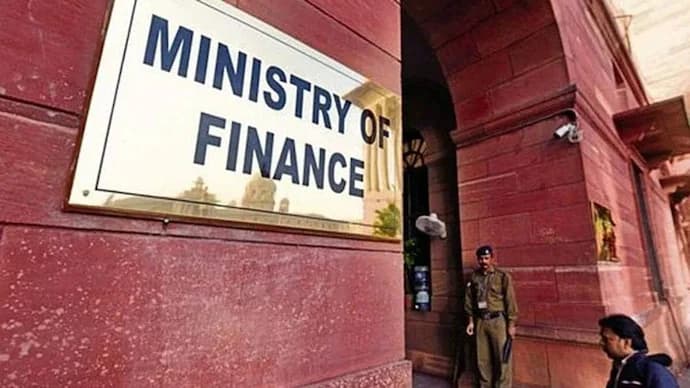
In a significant move to attract overseas capital and strengthen India's financial markets, the union government recently approved the removal of capital gains tax on foreign investments in Indian government bonds, according to sources.
The proposal was cleared by the union cabinet on June 3 as part of a broader strategy to boost capital inflows, support the rupee and shield the economy from the impact of the ongoing Iran conflict and elevated crude oil prices.

The cabinet has also approved an ordinance to amend the Income Tax Act, paving the way for the implementation of the changes, according to sources. The new provisions will take effect after receiving the President's assent.
The decision comes at a time when India is facing heavy foreign investor outflows, pressure on the domestic currency and rising energy costs linked to prolonged geopolitical tensions in West Asia.
The government's primary objective is to make India's debt market more attractive to overseas investors and offset economic challenges arising from higher crude oil prices and global uncertainty.
Foreign Portfolio Investors (FPIs) have sold nearly ₹2.5 lakh crore worth of Indian equities so far this year, making 2026 one of the worst years on record for foreign fund outflows.
The sustained selling has weighed on the rupee and intensified calls for measures that could improve the appeal of Indian financial assets among global investors.
At present, foreign investors pay a 12.5% long-term capital gains tax on listed shares and bonds held for more than 12 months.
Under the Cabinet-approved proposal, capital gains arising from investments by FPIs in Indian government securities, commonly known as G-Secs, will be fully exempt from tax.
The government is also expected to revisit the tax treatment of interest income earned on government bonds.
Currently, foreign investors are subject to a 20% withholding tax on interest income from government securities. An earlier concessional rate of 5% was withdrawn in 2023.
Market participants have long argued that India's existing tax framework makes government bonds less competitive compared to those offered by other emerging economies.
Officials believe the latest tax relief will encourage greater foreign participation in the bond market and generate fresh dollar inflows.
Higher overseas investment in government securities could help support the rupee, improve liquidity in the debt market and provide an additional source of funding at a time when equity inflows remain subdued.
The move also assumes importance as rising crude oil prices continue to fuel concerns over inflation, the current account deficit and economic growth.
By attracting more foreign capital into government bonds, policymakers hope to strengthen India's external finances and reduce pressure on the currency.
Sources indicated that the tax exemption could be the first in a series of measures aimed at reviving foreign investor interest in India.
The government is understood to be examining additional steps to improve capital flows and enhance the attractiveness of Indian financial markets for overseas investors.
Market participants are now awaiting the formal notification of the ordinance and any related announcements from the government and the Reserve Bank of India.
The decision marks one of the most significant tax reforms for foreign investors in recent years and highlights the government's efforts to cushion the economy against global uncertainty and geopolitical shocks.

Madurai Kamaraj University seeks grants for college struggling to pay salaries amid ₹2 crore annual deficit

IISc Study Challenges Chandrasekhar Limit, Finds White Dwarfs Could Grow Far Beyond Expected Mass

Surat medical college ragging case: Two senior doctors arrested after PG student’s death

IIIT Ranchi student death: NHRC to examine allegations of administrative negligence and delayed medical aid
.jpg&w=256&q=75)
Karnataka introduces 7.5% sub-quota for rural government school students in professional course admissions
Madurai Kamaraj University seeks grants for college struggling to pay salaries amid ₹2 crore annual deficit
IISc Study Challenges Chandrasekhar Limit, Finds White Dwarfs Could Grow Far Beyond Expected Mass
Surat medical college ragging case: Two senior doctors arrested after PG student’s death
IIIT Ranchi student death: NHRC to examine allegations of administrative negligence and delayed medical aid
Karnataka introduces 7.5% sub-quota for rural government school students in professional course admissions

Madurai Kamaraj University seeks grants for college struggling to pay salaries amid ₹2 crore annual deficit
IISc Study Challenges Chandrasekhar Limit, Finds White Dwarfs Could Grow Far Beyond Expected Mass
Surat medical college ragging case: Two senior doctors arrested after PG student’s death
IIIT Ranchi student death: NHRC to examine allegations of administrative negligence and delayed medical aid
Karnataka introduces 7.5% sub-quota for rural government school students in professional course admissions
Madurai Kamaraj University seeks grants for college struggling to pay salaries amid ₹2 crore annual deficit
IISc Study Challenges Chandrasekhar Limit, Finds White Dwarfs Could Grow Far Beyond Expected Mass
Surat medical college ragging case: Two senior doctors arrested after PG student’s death
IIIT Ranchi student death: NHRC to examine allegations of administrative negligence and delayed medical aid
Karnataka introduces 7.5% sub-quota for rural government school students in professional course admissions
Copyright© educationpost.in 2026 All Rights Reserved.