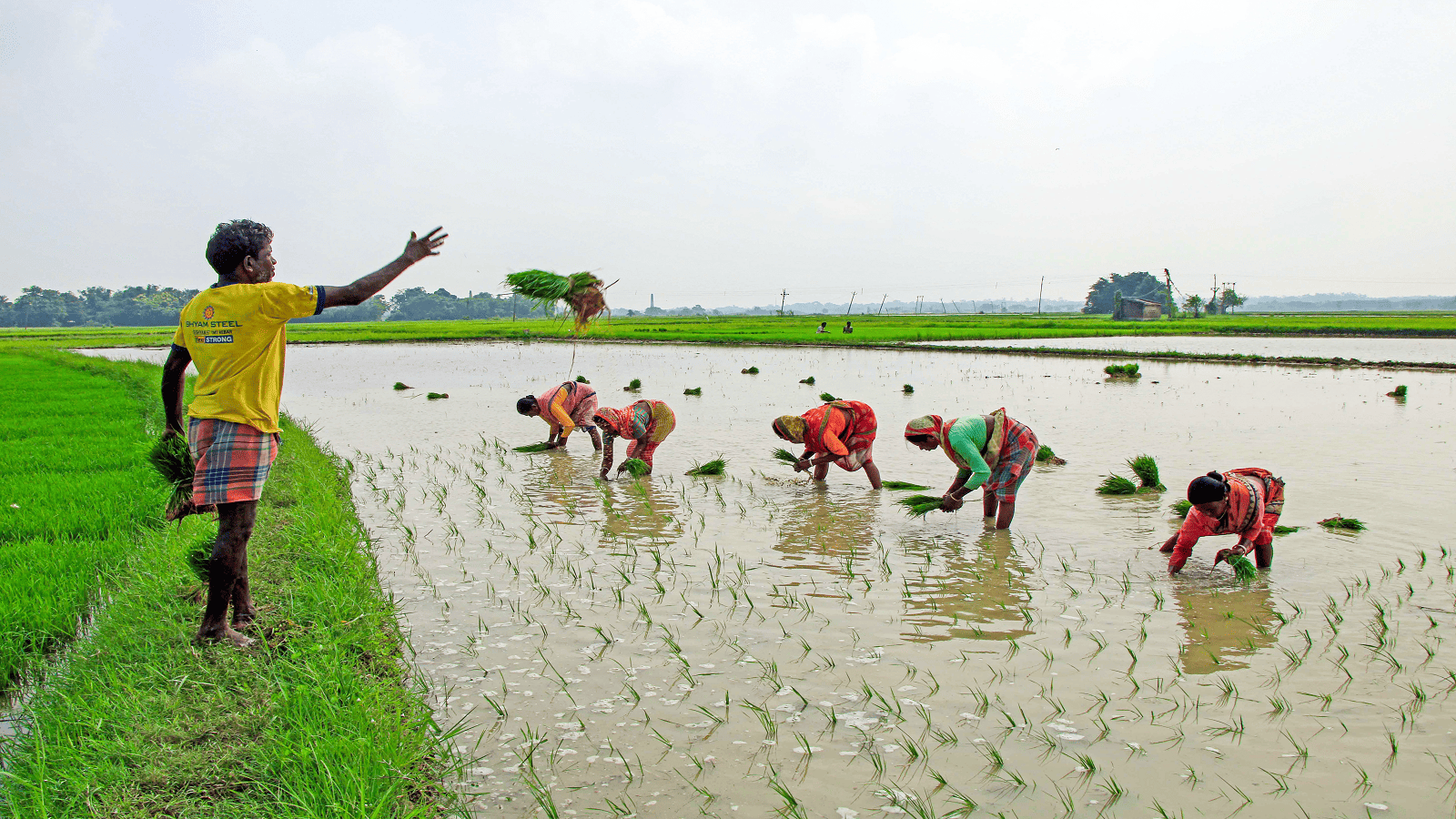
India’s monsoon deficit narrows sharply to 12.6% from 35% in June, while Kharif sowing improves and adequate reservoir levels ease crop and inflation risks.

India's monsoon situation has improved significantly in recent months and eased concerns over widespread disruption to Kharif crop, although rainfall distribution remains a major factor to watch, according to a report. A report by global brokerage Macquarie said that the cumulative rainfall deficit had narrowed sharply to 12.6 per cent as of Aug 19 from 35 per cent in June.
“The situation is recovering, albeit not fully recovered,” it added. The improvement has also been reflected in Kharif sowing, which has recovered considerably after a weak start to the season. As of Aug 14, total Kharif sowing was 2 per cent below last year's level, compared with a 21 per cent shortfall in late June, according to the brokerage. In addition, rice acreage was 3.7 per cent below last year, while maize acreage was down 4 per cent.

In contrast, acreage under pulses, oilseeds, sugarcane and cotton was within around 1 per cent of year-ago levels. Macquarie said the remaining weakness in sowing was largely concentrated in a few crops rather than being broad-based. Moreover, healthy reservoir levels are also providing a buffer against the rainfall deficit. Reservoir storage remains at or above the 10-year average in Maharashtra and Gujarat, while key agricultural states including Uttar Pradesh, Madhya Pradesh and Punjab have storage levels at around 80-100 per cent of their respective averages. However, Bihar and parts of southern India warrant close monitoring.
The improving monsoon, limited shortfall in overall sowing and adequate irrigation reserves have collectively reduced downside risks to Kharif output, the report said. It further noted that the development is also positive from an inflation perspective, with food-supply and inflation risks moderating from June levels.
Disclaimer: "This story has been published from a syndicated news feed. Only the headline and subtitle have been edited by EPN."


IIT-Bombay student death: Key developments, allegations, investigation and 18-point charter

FM Sitharaman Meets JPMorgan CEO Jamie Dimon at Investor Conference in Mumbai

India’s Next FDI Phase Should Deepen Integration with Economic, Industrial Ecosystem: Assocham

CM Mohan Yadav, Scindia to Lead Telecom Investor Outreach for Gwalior in Bengaluru

Govt Launches NFI 7th Edition, Biovigilance Programme and New Apps to Boost Medicine Safety

IIT-Bombay student death: Key developments, allegations, investigation and 18-point charter

IIT Delhi launches second batch of Executive Program in Semiconductors, AI and Deep-Tech

MEA Internship 2026: Applications open for October intake, check eligibility and stipend

UNDP Internship 2026: Applications open for Digital, AI and Innovation internship, check details

HPPSC Recruitment 2026: Apply for 228 Medical Officer posts, check eligibility and fee

IIT-Bombay student death: Key developments, allegations, investigation and 18-point charter

FM Sitharaman Meets JPMorgan CEO Jamie Dimon at Investor Conference in Mumbai

India’s Next FDI Phase Should Deepen Integration with Economic, Industrial Ecosystem: Assocham

CM Mohan Yadav, Scindia to Lead Telecom Investor Outreach for Gwalior in Bengaluru

Govt Launches NFI 7th Edition, Biovigilance Programme and New Apps to Boost Medicine Safety

IIT-Bombay student death: Key developments, allegations, investigation and 18-point charter

IIT Delhi launches second batch of Executive Program in Semiconductors, AI and Deep-Tech

MEA Internship 2026: Applications open for October intake, check eligibility and stipend

UNDP Internship 2026: Applications open for Digital, AI and Innovation internship, check details

HPPSC Recruitment 2026: Apply for 228 Medical Officer posts, check eligibility and fee
Copyright© educationpost.in 2024 All Rights Reserved.
Designed and Developed by @Pyndertech