


Home Minister Amit Shah says the excise duty cut reflects the government’s focus on citizen welfare, while Petroleum Minister Hardeep Singh Puri explains the decision as a step to shield consumers from global oil price surge.
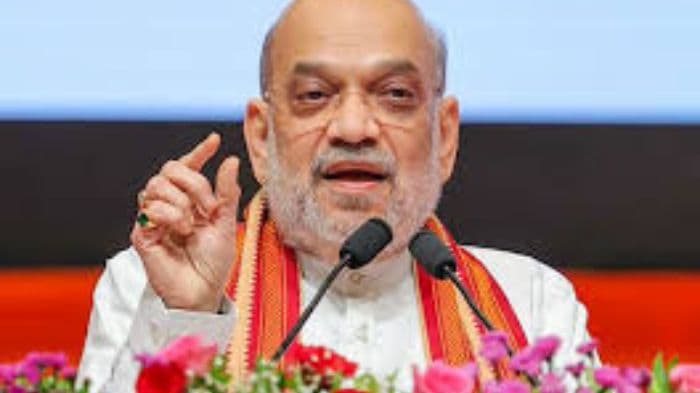
Union Home Minister Amit Shah on March 27 described the Centre’s decision to cut excise duty on petrol and diesel as an example of “people-centric governance,” saying the move reflects sensitivity towards citizens amid rising global fuel prices.
In a post on X, Shah said that while many countries are witnessing fuel price hikes due to the ongoing West Asia crisis, the Indian government has chosen to reduce excise duty to provide relief to consumers. He added that the decision highlights the government’s commitment to prioritising public welfare during a period of global uncertainty.

Shah noted that global fuel markets are under pressure due to supply disruptions, with prices rising across countries. In this context, he said the Centre’s decision stands out as a measure aimed at easing the burden on citizens rather than passing on the full impact of price increases.
The excise duty cut was announced by the Union Finance Ministry late on Thursday. According to the notification, excise duty on petrol has been reduced from ₹13 per litre to ₹3 per litre, while diesel has been fully exempted from excise duty, down from the earlier ₹10 per litre levy.
The revised rates have come into effect immediately, the government said. The move is expected to offer some relief to consumers, although the extent of price reduction at the retail level may depend on global crude oil trends and oil marketing company pricing decisions.
India, which imports nearly 88% of its crude oil requirements and about half of its natural gas, remains vulnerable to global energy market fluctuations. The ongoing geopolitical tensions in West Asia have further intensified concerns over fuel prices and supply stability.
Shah also praised Prime Minister Narendra Modi for the decision, stating that it demonstrates a governance approach focused on public welfare during challenging global conditions.
The excise duty cut comes amid broader government efforts to cushion the domestic economy from external shocks, particularly in the energy sector, as global uncertainties continue to impact fuel markets.
The revival of student-union elections at Indian universities: Explained
El Niño raises food-production risks as WMO flags uneven rainfall outlook for South Asia
EU research groups seek greater say in €175 billion Horizon Europe programme

NSF opens bioengineering funding call with awards of up to $50 million a year

A whale’s death inspired him at four, now 11-year-old is set for Earth Medal
A whale’s death inspired him at four, now 11-year-old is set for Earth Medal
Prof. Ajay Kumar Sood named International Science Council Fellow for 2026

2.6 million Afghan girls have lost five years of education, says UNICEF

Riyadh, Diriyah extend remote learning as security concerns persist
.jpg&w=256&q=75)
From Class 8 to hospital owner: Rajasthan Police expose alleged fake doctor registration

The revival of student-union elections at Indian universities: Explained
El Niño raises food-production risks as WMO flags uneven rainfall outlook for South Asia
EU research groups seek greater say in €175 billion Horizon Europe programme
NSF opens bioengineering funding call with awards of up to $50 million a year
A whale’s death inspired him at four, now 11-year-old is set for Earth Medal
A whale’s death inspired him at four, now 11-year-old is set for Earth Medal
Prof. Ajay Kumar Sood named International Science Council Fellow for 2026
2.6 million Afghan girls have lost five years of education, says UNICEF
Riyadh, Diriyah extend remote learning as security concerns persist
From Class 8 to hospital owner: Rajasthan Police expose alleged fake doctor registration
Copyright© educationpost.in 2026 All Rights Reserved.