History shows us something important: the systems that cause the most harm are not made by people who want to do bad things. They are made by people who want to do things but they do not design them very well.
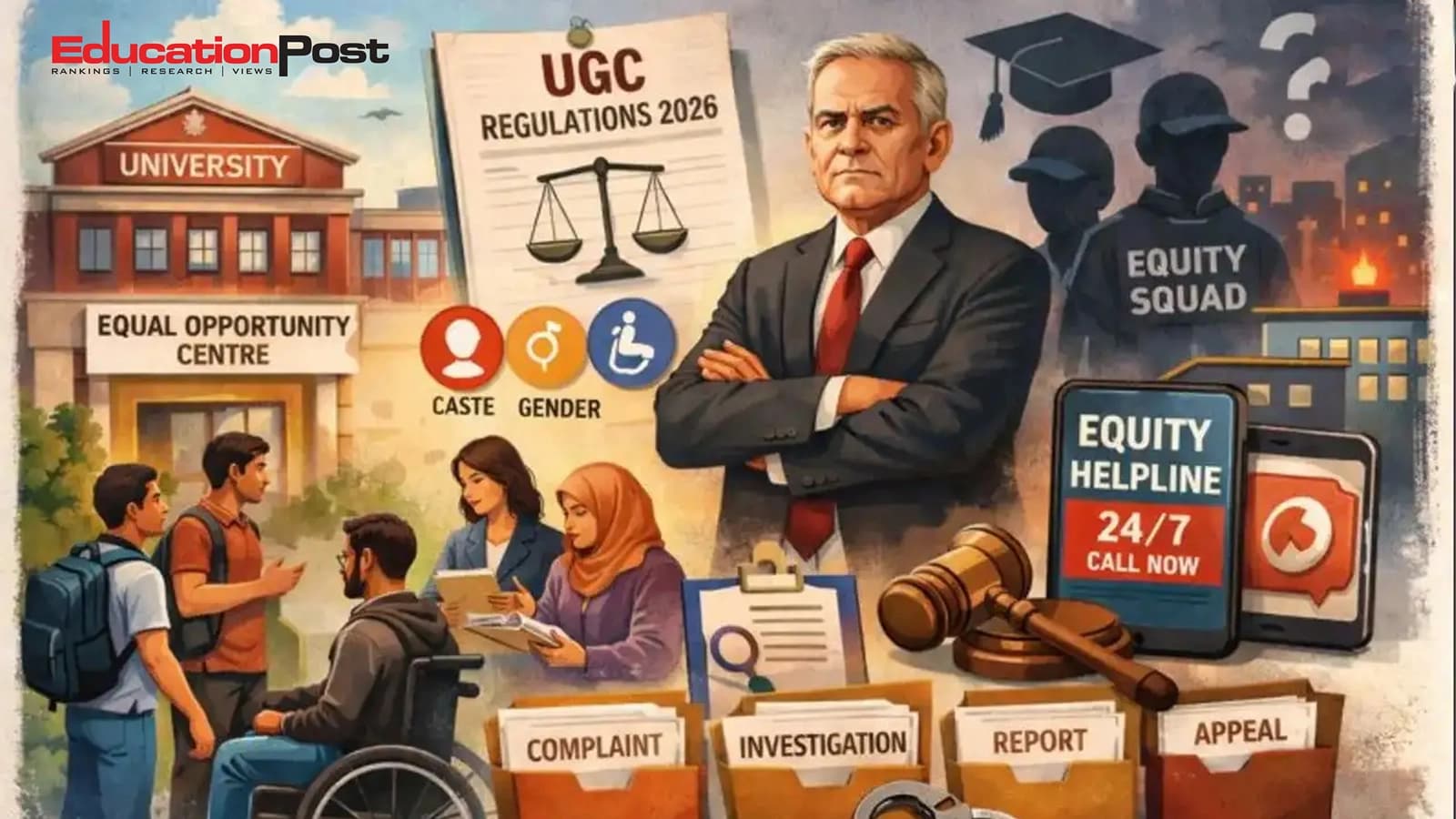
The UGC Equity Rules 2026 were brought in with a good intention, that is to give people justice, dignity, inclusion and protection. These are things that no good society can say no to. The UGC Equity Rules 2026 are all about values that every student thinks are important. The UGC Equity Rules 2026 are based on principles that every democracy should stand up for because that is what the UGC Equity Rules 2026 are, about.

But governance is not poetry. Policy is not morality. And intention is not impact.
We should not judge a system by what it says it will protect. By what it actually allows to happen. A system is judged by what it enables, not by what it claims to do. We need to look at what a system enables to really understand it.
From a students point of view the UGC Equity Rules 2026 are not really about helping students they are like the beginning of a system that uses fear to control what students do in school. The UGC Equity Rules 2026 are supposed to protect students. They might actually start to control every little thing students do. The UGC Equity Rules 2026 are also supposed to help students who have problems. They might turn into a way for schools to have more power over students. The UGC Equity Rules 2026 are supposed to be about fairness. They might just make students feel anxious all the time, about the UGC Equity Rules 2026.
This is not an attack on inclusion. This is not an attack on equity. This is not an attack on social justice.
This is a warning about system design failure.
The Core Shift: From Justice Systems to Power Systems
Healthy societies work in a simple way: they operate on this principle that is really important for healthy societies to function properly. Healthy societies need to follow this principle in order to be societies.
> Law → Evidence → Due Process → Justice
The way the new framework is set up is a bit different. The structural logic of the framework does not follow the same pattern as what we are used to. The new framework has its structural logic that works in a different way. This is what is important, about the logic of the new framework.
> Complaint → Interpretation → Committee → Authority → Consequence
This is definitely not a model that follows the law. It does not work like a model that is used in court. The thing, about this model is that it does not care about peoples rights.
This is a control model.
When people in charge make decisions and stories become more important than facts and what people think is true becomes more important than actual proof. This is when the way a country is run starts to change into a system where the people in power control what people think and believe, which's a kind of psychological authority. The system of governance transforms into this authority very quietly. Committees replace courts. This is a big change. Narratives replace evidence. This is also a big change. Perception replaces proof. This is another big change. All of these changes happen quietly. They transform governance into psychological authority. Governance is the system of running a country.
When it transforms into psychological authority the people in power have a lot of control, over what people think and believe.
The danger is subtle. The transformation is invisible. The consequences are irreversible.
---
The big risk, with weapons that nobody is talking about
When you have a system that gives power to people without making sure they use it correctly it can lead to people using that power in ways. This is what creates a market of misuse. Every system that does this will have the problem because the people with power will often try to use it for their own gain and not for what it was meant for. Every system like this needs to have safeguards, in place to prevent the misuse of power. It will always lead to trouble.
Not because people are bad — but because systems shape behavior.
The UGC Equity framework does something that it does not mean to do. It makes a system where the UGC Equity framework has an effect. The UGC Equity framework is, like a path that the UGC Equity framework creates. This path is a problem because of the way the UGC Equity framework works.
When people have conflicts, with each other these personal conflicts can become formal complaints. Personal conflicts are a deal and they can really get out of hand. If personal conflicts are not resolved they can turn into complaints.
When people who are academics do not agree on something this can sometimes turn into a problem, for the school or university they work for. Academic disagreements can become cases.
When people do not get along this can lead to action being taken by the people, in charge. Social friction is a problem because it can turn into administrative action.
When a complaint is made and it gets into a system like an organization, the process of dealing with it can be really tough. The process itself becomes a kind of punishment. You have to go through much to get anything done it is like the system is punishing you for making a complaint, about something. This is what happens when a complaint enters a system the process itself becomes punishment.
Reputation damage is instant. Social stigma is immediate. Psychological trauma is irreversible.
If someone is found to be innocent, on the damage is still done. The person who was accused has already had to deal with the consequences. Innocence is a deal and when it is questioned it can be very costly. Even if innocence is proven later the cost is still paid because the harm has already been done to the persons life and reputation.
These days all it takes is an accusation to ruin someones life even if they are not found guilty. An accusation is enough to cause a lot of harm to a persons life. In todays world accusation can destroy a persons life it does not matter if they are actually convicted or not. The accusation itself is very powerful. It can change everything for the person who is being accused.
---
The Psychological Economy of Fear
The most dangerous outcome of such systems is not legal — it is psychological.
Students start to watch what they say. Teachers lose interest in their work. Institutions make many rules and this affects the students and the teachers so the institutions begin to over-regulate the students and the teachers.
When people stop talking to each other conversation falls apart. Discussion comes to an end. The idea of risk the idea of intellectual risk just goes away.
Schools and universities are not really about learning. They have become places where people just follow the rules. Campuses are supposed to be where students go to learn and grow.. Now campuses are more about making sure everyone does what they are told. Campuses stop being spaces of learning. Become spaces of compliance, where the focus is, on following rules rather than learning new things on the campuses.
Fear is something that people learn without realizing it. It is like a lesson that everyone picks up on. Fear becomes the hidden curriculum that teaches people things they do not even know they are learning. The hidden curriculum of fear is, around us.
The thing is, this situation affects students who're from the reserved category as well. Students, from the reserved category are also going to feel the impact of this. It is not one group of students the reserved category students are also going to be hurt by this. This is something that affects the reserved category students too.
The greatest myth in this debate is that only unreserved category students are at risk.
In life systems that are too protective can cause people to react badly and create a whole environment where people are against them. This happens because these overprotective systems can be really annoying and make people feel like they are not trusted. Overprotective systems are the reason, for this kind of backlash.
When people think that protection is like a shield it makes others feel bad. This bad feeling can turn into anger. When anger builds up people start to look down on the ones who have protection.. When that happens those people become isolated from everyone else. Protection is what creates this problem because protection is seen as treatment and that is not fair, to others so protection leads to isolation.
This thing does not help students who are already struggling. It actually makes them feel more alone. The system does not empower marginalized students it just isolates them from everyone. Marginalized students need support and understanding. This does the opposite. It isolates marginalized students. Makes their situation worse.
True inclusion comes from people being and doing things as one group, not from being divided into separate institutions. Inclusion is really about integration, where everyone's part of the same whole not, about being separate.
When we have systems that put many labels on people it makes the differences between them seem bigger. This does not help to bring people and make things better. Systems that over-label identities are really not doing what they should be doing which is to help people understand each other. Instead systems that over-label identities make people focus on what makes them different from each other and that creates divisions. Systems that over-label identities do not help to heal the divisions, between people they actually make these divisions worse.
---
The Silent Casualty: Academic Freedom
Universities are around for one reason: they want to find the truth. The whole point of universities is to look for the truth. Universities are, about finding the truth.
To find the truth you need a things.
- An open mind
- A lot of patience
- The ability to listen to the truth.
Finding the truth is not easy it requires people to be honest. The truth requires people to be brave. The truth requires people to be willing to hear the truth and to see the truth.
The truth requires people to ask questions. The truth requires people to look for answers. The truth requires people to think for themselves and the truth requires people to be strong.
The truth is not always easy to find. The truth is always worth it. The truth is what makes us free. The truth is what makes us happy. The truth requires work. The truth requires time.
People who seek the truth are people they are people who want to know the truth and they are people who want to be free. The truth is a thing and the truth is a powerful thing. The truth requires us to be honest with ourselves and the truth requires us to be honest with others.
The truth is what makes life worth living it is what makes us human. It is what makes us real. The truth requires us to be brave. The truth requires us to be strong. The truth requires us to stand up for what's right and the truth requires us to stand up for what we believe in.
The truth is the important thing in life it is what makes us who we are and it is what makes us free. The truth requires us to be patient. The truth requires us to be kind. The truth requires us to be honest. The truth requires us to be fair. People who seek the truth are people who want to make a difference they are people who want to change the world. They are people who want to be happy. The truth requires us to be happy. The truth requires us to be free. The truth is what makes life worth living and the truth is what makes us real.
The truth requires us to be us it requires us to be true to ourselves. It requires us to be true, to others. The truth is a thing and the truth is a powerful thing. The truth requires work. The truth requires time but the truth is always worth it.
Fear driven systems just cannot handle this kind of thing. They are really sensitive, to these sorts of issues. Fear driven systems have a time dealing with them.
People are replacing courage, with administrative caution. This is what is happening with courage. It is being replaced by administrative caution. Academic courage is no longer the priority administrative caution is what matters now. Academic courage is being pushed aside for caution.
Innovation is dying. The ability to think critically is also dying. The culture of doing research is dying too. When innovation dies we do not have ideas. Critical thinking is very important it is dying well. The research culture is. This is a big problem. Innovation. So does the research culture.
Learning is about following steps than really understanding things. Education is not about using your brain to think it is just, about doing what you are told. Education becomes procedural not intellectual.
---
The Structural Paradox
We need to make sure that a system that is supposed to help people who are vulnerable does not end up making them more vulnerable.
A system like this has to be very careful not to create problems for the people it is trying to protect.
The system has to think about how it can help vulnerable people without making things worse, for them.
A system designed to protect the vulnerable must not create forms of vulnerability.
A system that is supposed to be fair and just should not trade the law for what people think. The law is what matters in a system designed for justice not what people perceive as just. A system designed for justice has to stick to the law.
A system that is supposed to be fair to everyone must not make people feel scared all the time. We need a system where people feel not a system that makes people feel afraid of what might happen. A fair system is one where people are treated equally. They do not have to live in fear. Fear should not be a part of a system that is designed to be fair to everyone, like the one we are talking about.
This is the paradox at the heart of the UGC Equity Rules 2026.
---
The Deeper Danger: Governance Psychology
These days power does not need to use force to get things done. Power is not about being strong or tough. Modern power is about being smart and clever. It is, about getting what you want without having to fight for it. Modern power is a kind of power.
We need systems, for this to work. The thing is, systems are very important. We cannot do without systems. Systems are what make things run smoothly. So we really need systems in place.
We need committees to get things done. Committees are very important. We cannot do without committees.
The thing is that it needs some procedures to follow. Procedures are really important for this. It has to have procedures, in place.
The thing that is missing is language. We need to have language. Moral language is really important. It needs to be included. The moral language will make it better.
They do not silence people they make people silence themselves. This is what happens when people are afraid to speak up. People silence themselves because they are scared of what might happen. The people, in charge do not actually silence people the fear of them does. This fear makes people silence themselves. That is a very powerful thing. People silencing themselves is a problem because it means that people are not able to say what they think.
---
What real equity would look like is a situation where everyone has the opportunities. Real equity is when people are treated fairly. It is not about being equal it is about being just.
Real equity would look like people getting what they need to be successful. For example some people may need help than others. Real equity is when we give people what they need to be on the level as everyone else.
Some things that real equity would look like include:
- People having access to the resources
- Everyone being treated with respect
- People having the chances to succeed
Real equity is about making things right. It is, about making sure that everyone has what they need to be successful. Real equity would look like a world where everyone has the opportunity to thrive.
A healthy system is about balance. You need to have the amount of everything, in a healthy system. This balance is what makes a healthy system work properly. A healthy system would really be built on this balance.
Protection + Safeguards + Evidence + Due Process + Transparency
Complaint + Authority + Speed + Punishment
To get justice there has to be some friction. Real justice is not easy to come it needs proof. You have to be patient when you are waiting for justice. Real justice also needs to be independent so it is fair, to everyone. Real justice is very important. It requires all these things.
---
Real justice requires friction. Real justice requires proof. Real justice requires patience. Real justice requires independence.
Conclusion: A Choice That Will Define Indian Higher Education
India is not just building universities.
It is building future citizens.
It is building future institutions.
It is building future governance culture.
The UGC Equity Rules 2026, in their current form, risk normalizing a culture where fear replaces trust, silence replaces dialogue, and compliance replaces courage.
If this path continues, campuses will not become safer. They will become quieter.
And silence is not safety.
Silence is suppression.
True equity empowers.
True justice balances.
True protection liberates.
Systems that forget this do not create equality — they create control.
(This editorial is authored by Dr. Abhinav Nikunj, a Healthcare Provider, Policy Observer, and Education System Analyst. Education Post is not responsible for its content as it expresses opinions.)