


Thunderstorms, gusty winds and hail forecast as brief clean-air window shuts and temperatures swing sharply across the capital.
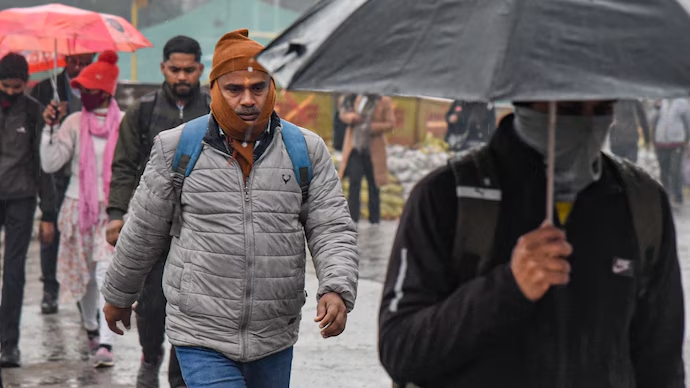
Rain lashed parts of Delhi-NCR on January 27, dragging down temperatures and intensifying the winter chill, even as air quality deteriorated again after a short-lived respite. The Air Quality Index (AQI) stood at 281 at 7.30 am, firmly in the ‘poor’ category, underscoring the fragile nature of the region’s pollution gains.
The India Meteorological Department (IMD) attributed the spell of rain and unsettled weather to an intense Western Disturbance sweeping across north India. The system is expected to trigger light to moderate rain and snowfall over large parts of the western Himalayan region until Wednesday, with isolated spells of heavy rain or snowfall and the possibility of hailstorms on Tuesday.

For Delhi-NCR, the weather bureau has issued warnings of thunderstorms, lightning and hail, accompanied by strong surface winds of 40–50 kmph and gusts touching 60 kmph. The volatile conditions are likely to persist through the day.
The change in weather follows a chilly Republic Day across north India on January 26, when minimum temperatures dipped sharply. In the Capital, Safdarjung, Delhi’s base weather station, recorded a minimum temperature of 4.2 degrees Celsius — over two degrees lower than the previous day — while Ayanagar emerged as the coldest pocket at 3.6 degrees.
Daytime temperatures, however, told a different story. Delhi recorded a maximum of 23.2 degrees Celsius, about 1.1 degrees above normal and nearly five degrees higher than Sunday, reflecting sharp diurnal swings typical of western disturbance-driven weather.
Despite the cold snap, no rainfall was recorded at any weather station on January 26, with clear and stable conditions prevailing throughout the day. Air quality, however, remained stressed, with the AQI at 241, also in the ‘poor’ category — a precursor to the further decline witnessed on January 27.
.jpg&w=256&q=75)
Egypt insists international schools include Arabic, history in final scores

China lets students replace dissertations with practical work. Is India missing a trick?

BITS Design School Opens Applications for 2027 Admissions; Check Last Date and Selection Process

IICA Signs MoU with Association of ARCs to Strengthen Insolvency Training and Industry Collaboration

DIDAC Skills 2026: India’s Emerging Sectors Eye Job Growth, Focus on Skill Development
Egypt insists international schools include Arabic, history in final scores

China’s Chery unveils AI companion robot designed to ease loneliness
.jpg&w=256&q=75)
New Zealand reforms could leave more students without school qualifications

Alfred Nobel’s will created one of the world’s most recognised prizes. Here’s how

Pepperdine University earns Google recognition and Digital Education Council membership for AI initiatives

Egypt insists international schools include Arabic, history in final scores
China lets students replace dissertations with practical work. Is India missing a trick?
BITS Design School Opens Applications for 2027 Admissions; Check Last Date and Selection Process
IICA Signs MoU with Association of ARCs to Strengthen Insolvency Training and Industry Collaboration
DIDAC Skills 2026: India’s Emerging Sectors Eye Job Growth, Focus on Skill Development
Egypt insists international schools include Arabic, history in final scores
China’s Chery unveils AI companion robot designed to ease loneliness
New Zealand reforms could leave more students without school qualifications
Alfred Nobel’s will created one of the world’s most recognised prizes. Here’s how
Pepperdine University earns Google recognition and Digital Education Council membership for AI initiatives
Copyright© educationpost.in 2026 All Rights Reserved.