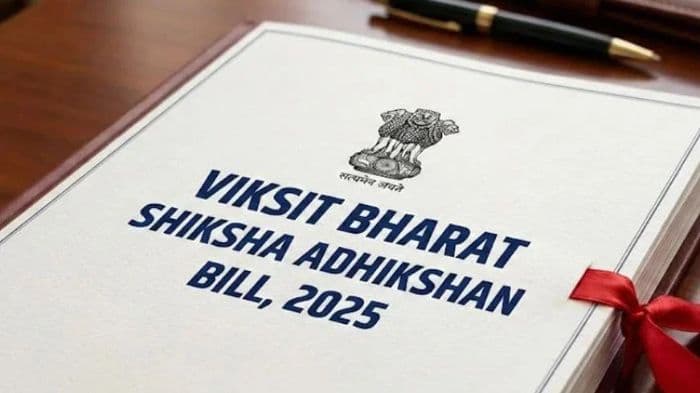
A proposal calling for a “shared governance” framework in higher education has been put forward as an alternative to the Centre’s proposed Viksit Bharat Shiksha Adhisthan (VBSA) Bill, with critics arguing that the legislation could lead to excessive centralisation of authority in India’s education system.
The VBSA Bill, introduced in Parliament in December 2025, seeks to overhaul the regulatory architecture of higher education by establishing a single apex body that would replace existing regulators such as the University Grants Commission (UGC), the All India Council for Technical Education (AICTE) and the National Council for Teacher Education (NCTE).

Under the proposed framework, the new commission would function through separate councils responsible for regulation, accreditation and academic standards. The move is intended to streamline oversight and align India’s higher education governance with the goals of the National Education Policy (NEP) 2020.
However, educationists and organisations such as the All India People’s Science Network (AIPSN) have expressed concern that the bill may concentrate too much decision-making power at the national level. According to them, higher education regulation should reflect India’s federal structure, as education is listed as a concurrent subject in the Constitution.
Critics argue that the proposed legislation could create a top-down system in which the Centre exercises greater control over standards, accreditation and regulation of higher education institutions. They warn that such centralisation could widen disparities between centrally funded institutions and universities run by state governments.
As an alternative, experts have suggested a shared governance model in which both the Union government and states participate equally in determining regulatory frameworks and academic standards. The proposal calls for stronger roles for State Higher Education Councils and broader representation of academics, educators and stakeholders in decision-making bodies.
Proponents of the alternative model also argue that collaboration between the Centre and states is essential for addressing structural challenges in higher education, including funding constraints faced by state universities and disparities in infrastructure and research capacity.
The VBSA Bill is currently under review by a Joint Parliamentary Committee, which is examining stakeholder feedback and recommendations before submitting its report to Parliament.






.webp&w=256&q=75)
.jpg&w=256&q=75)


.jpg&w=256&q=75)
