


The court sought responses from the Centre, CBSE, and NCERT on petitions challenging the mandatory policy requiring students to study at least two native Indian languages from July 1.
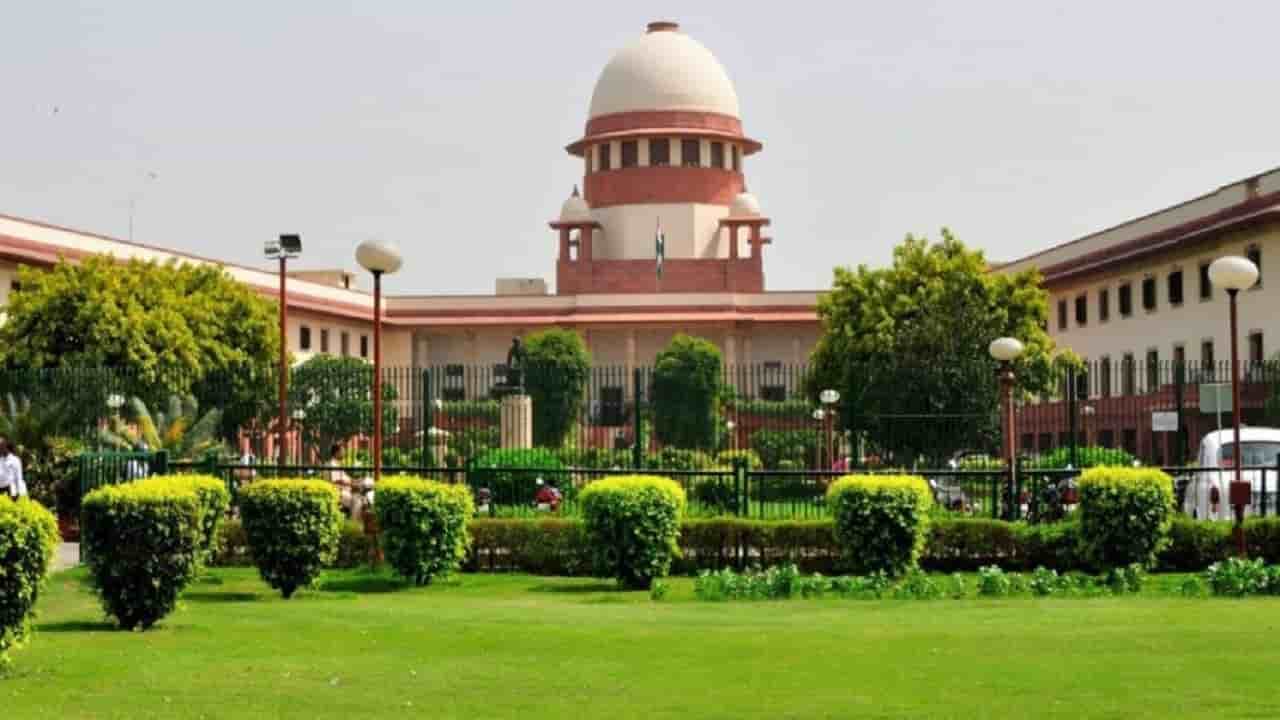
The Supreme Court has agreed to examine petitions challenging the CBSE’s newly introduced three-language policy for Class 9 students, which is set to come into effect from July 1 and requires students to study at least two native Indian languages.
A bench headed by Chief Justice Surya Kant, along with Justices Joymalya Bagchi and Vipul M Pancholi, on May 27 issued notices to the center, the CBSE, and the NCERT, asking them to file detailed responses within two weeks.

The court also directed Additional Solicitor General Aishwarya Bhati to place on record a report detailing the CBSE’s preparedness to implement the policy nationwide. The matter will now be heard in the second week of July.
During the hearing, senior advocate Mukul Rohatgi, appearing for petitioner Yashica Bhandari Jain and others, told the court that the CBSE had circulated instructions across the country making three-language study mandatory from the upcoming academic year.
Senior advocate Kapil Sibal, representing another set of petitioners, argued that the policy raised constitutional questions linked to federalism and individual freedom.
“Language is a matter of choice and cannot be imposed,” Sibal submitted.
The apex court did not grant any interim relief at this stage and said the issue would be taken up in detail during the next hearing.
The challenge relates to a CBSE notification issued on May 15 under which students entering Class 9 from July 1, 2026, will be required to study three languages identified as R1, R2, and R3. The policy mandates that at least two of these must be native Indian languages.
The CBSE said the decision was taken to align the school curriculum with the National Education Policy (NEP) 2020 and the National Curriculum Framework for School Education (NCF-SE) 2023.
“In order to adequately address the competencies envisaged at the secondary stage, these textbooks will be supplemented with one appropriate local or state literary material, selected by schools, such as short stories, poems, or nonfiction works,” the board said.
It further stated that schools would receive detailed instructions by June 15 regarding the use and selection of supplementary literary materials.
As per the circular, foreign languages may only be chosen either as the third language after two Indian languages or as an additional fourth subject.
“With effect from July 1, 2026, for Class IX, the study of three languages (R1, R2, R3) shall be compulsory, with at least two languages being native Indian languages,” the circular said.
The board noted that until separate R3 textbooks are introduced, students would use the Class 6 R3 textbooks for the 2026-27 academic session.
CBSE also clarified that students would not face a board examination in the R3 language at the Class 10 level in order to reduce academic burden.
“All assessments for R3 shall be entirely school-based and internal. The performance of students in R3 will be duly reflected in the CBSE certificate. It is clarified that no student will be barred from appearing in the Class X Board Examinations due to R3. Sample question papers and rubrics for internal assessment will be shared by the board shortly,” it added.
Schools have been asked to upload details of their R3 language options for Classes 6 to 9 on the OASIS portal by June 30.
According to CBSE, textbooks for Class 6 R3 courses in 19 scheduled languages will be available before July 1. For other Indian languages, schools may use SCERT and state-level study resources.
To address possible shortages of qualified language teachers, the board said schools could temporarily assign teachers from other subjects who have working knowledge of the required language.
“Collaborative and flexible mechanisms such as inter-school resource sharing through Sahodaya clusters, virtual or hybrid teaching support, engagement of retired language teachers, and utilization of suitably qualified postgraduates may be adopted,” it added.
The board also said children with special needs would receive relaxations under the Rights of Persons with Disabilities Act, 2016. Returning foreign students may also be considered for exemptions from the requirement of studying two native Indian languages.
Earlier this year in April, CBSE had announced the phased rollout of the three-language formula beginning from Class 6. At the same time, it proposed a two-tier structure for mathematics and science in Class 9 from the 2026-27 session.
Under the revised format, both subjects will have standard and advanced levels. While all students will sit for a common 80-mark examination, those opting for the advanced track will take an additional paper focused on conceptual understanding and higher-order thinking skills.
CBSE had stated that the first Class 10 board examinations under this dual-level system would be held in 2028 for students entering Class 9 in the 2026-27 academic year.

India AI Fellowship 2026: UG Students to Get ₹1 Lakh, PG Students ₹2 Lakh

New Zealand teachers work nearly five hours more than OECD average
.jpg&w=256&q=75)
New Zealand reforms could leave more students without school qualifications
Gujarat School Entry Rules 2026: Outsiders Need Written Permission to Enter School Campuses
Himachal Pradesh to Introduce Moral Science from Class 1, CM Sukhu Directs Education Department
New Zealand reforms could leave more students without school qualifications

Alfred Nobel’s will created one of the world’s most recognised prizes. Here’s how

Pepperdine University earns Google recognition and Digital Education Council membership for AI initiatives
Dhirubhai Ambani International School breaks into global top 10 with record IB score
.jpg&w=256&q=75)
Meta faces $25 billion penalty in New Mexico privacy ruling

India AI Fellowship 2026: UG Students to Get ₹1 Lakh, PG Students ₹2 Lakh
New Zealand teachers work nearly five hours more than OECD average
New Zealand reforms could leave more students without school qualifications
Gujarat School Entry Rules 2026: Outsiders Need Written Permission to Enter School Campuses
Himachal Pradesh to Introduce Moral Science from Class 1, CM Sukhu Directs Education Department
New Zealand reforms could leave more students without school qualifications
Alfred Nobel’s will created one of the world’s most recognised prizes. Here’s how
Pepperdine University earns Google recognition and Digital Education Council membership for AI initiatives
Dhirubhai Ambani International School breaks into global top 10 with record IB score
Meta faces $25 billion penalty in New Mexico privacy ruling
Copyright© educationpost.in 2026 All Rights Reserved.