


The organization has questioned the book's title, regional representation, nutrition content, and development process, while urging revisions to better reflect the state's cultural diversity.
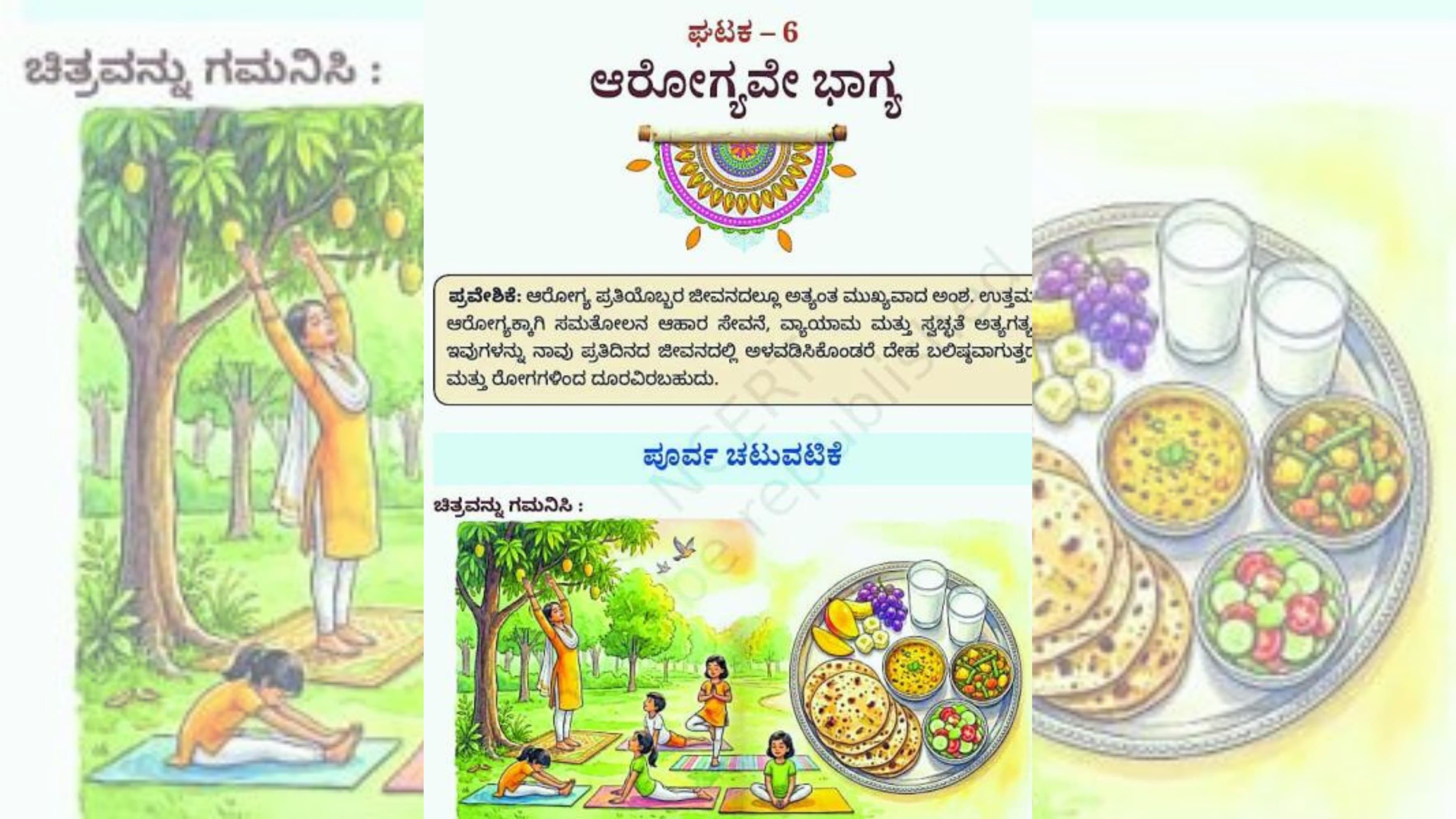
A Karnataka-based education rights group has criticized the newly introduced NCERT Class 6 Kannada textbook R3, alleging that it fails to reflect the state's cultural diversity and promotes an ideological narrative in school education.
The People's Forum for Right to Education (PAFRE), in a statement, said the textbook does not adequately represent Karnataka's varied linguistic, social, and cultural traditions.

According to the organization, the content overlooks the folklore, literature, and lifestyles associated with regions such as Coastal Karnataka, North Karnataka, Malnad, and Old Mysuru.
PAFRE also questioned the textbook's suitability for sixth-grade students, arguing that its stories, illustrations, and activities do not sufficiently engage young learners.
The group claimed that the overall presentation adopts a preachy tone rather than an interactive educational approach.
The organization raised objections to the textbook's title, "Krishna," and linked it to what it described as a growing presence of mythology and religious themes in educational materials following the implementation of the National Education Policy (NEP) 2020.
Referring to earlier textbooks that carried names such as "Mridula" for Class 3 and "Krishna" for Class 6, PAFRE described the trend as an attempt at the "saffronization" of education.
According to the group, Karnataka's cultural identity is shaped by the contributions of literary and social figures, including Pampa, Kuvempu, Karanth, and Basavanna.
It argued that assigning a religiously associated title to the textbook overlooks the state's literary and intellectual heritage.
PAFRE also expressed concern over a chapter related to nutrition and health. The organization said illustrations of balanced meals feature foods such as ragi mudde, roti, rice, vegetables, milk, and fruits, while excluding eggs, fish, and meat.
The group alleged that the lesson presents a vegetarian-focused view of nutrition and does not adequately represent the food habits of many communities across Karnataka.
It highlighted the widespread consumption of fish in coastal districts, meat-based dishes in North Karnataka, and other traditional non-vegetarian foods in different parts of the state.
Calling the approach "cultural imposition through education," the organization demanded immediate changes to the textbook.
Among its demands, PAFRE called for the implementation of the Kannada Learning Act, 2015, in CBSE schools by ensuring Kannada is taught as either the first or second language.
It also sought the continued use of existing Kannada textbooks, including Savi Kannada, Siri Kannada, and Thili Kannada, with Thili Kannada being adopted as the R3 textbook.
The organization further urged authorities to withdraw the CBSE decision to use the same Class 6 R3 textbook as the R3 textbook for Class 9 from the current academic year.
PAFRE also sought a written explanation from NCERT on the choice of the title "Krishna" and asked why Karnataka's Department of State Educational Research and Training (DSERT) was not involved in developing the textbook.
Additionally, the group demanded the inclusion of references and illustrations featuring eggs, fish, and meat in the nutrition chapter, along with a reprint of the textbook.
It also called for the book to be renamed with a title that, according to the organization, better reflects Karnataka's linguistic and cultural identity.
Jammu and Kashmir Unemployment: Economic Growth Has Yet to Resolve Job Crisis
China’s Chery unveils AI companion robot designed to ease loneliness
Varanasi Air Show 2026: Schools in Two Chandauli Blocks to Hold Online Classes on October 22, 24
India AI Fellowship 2026: UG Students to Get ₹1 Lakh, PG Students ₹2 Lakh

New Zealand teachers work nearly five hours more than OECD average
China’s Chery unveils AI companion robot designed to ease loneliness
.jpg&w=256&q=75)
New Zealand reforms could leave more students without school qualifications
Alfred Nobel’s will created one of the world’s most recognised prizes. Here’s how
Pepperdine University earns Google recognition and Digital Education Council membership for AI initiatives
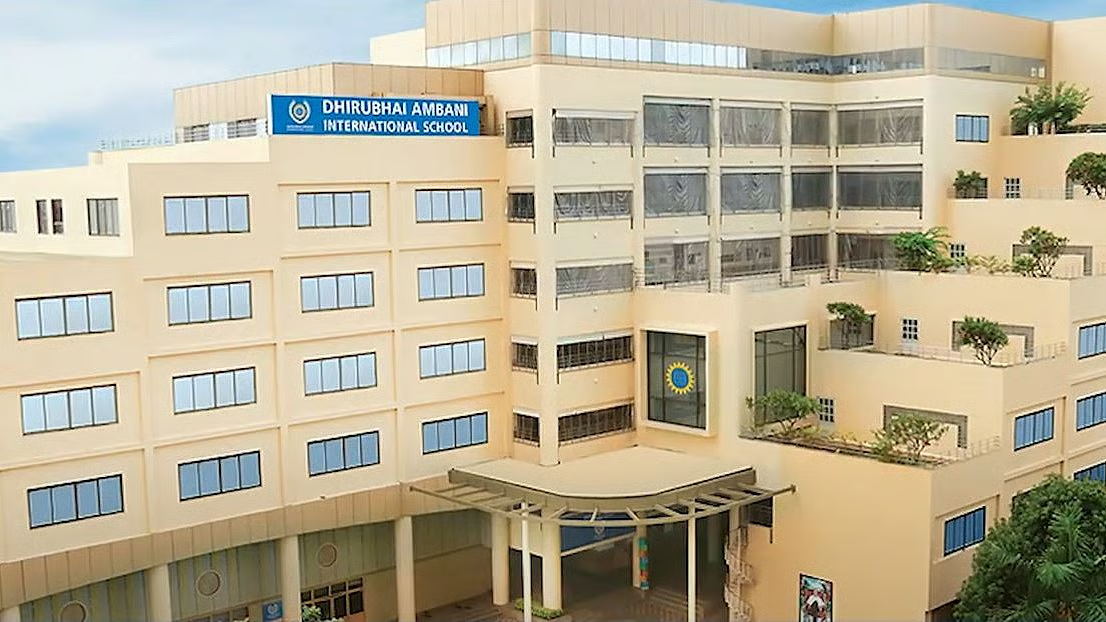
Dhirubhai Ambani International School breaks into global top 10 with record IB score

Jammu and Kashmir Unemployment: Economic Growth Has Yet to Resolve Job Crisis
China’s Chery unveils AI companion robot designed to ease loneliness
Varanasi Air Show 2026: Schools in Two Chandauli Blocks to Hold Online Classes on October 22, 24
India AI Fellowship 2026: UG Students to Get ₹1 Lakh, PG Students ₹2 Lakh
New Zealand teachers work nearly five hours more than OECD average
China’s Chery unveils AI companion robot designed to ease loneliness
New Zealand reforms could leave more students without school qualifications
Alfred Nobel’s will created one of the world’s most recognised prizes. Here’s how
Pepperdine University earns Google recognition and Digital Education Council membership for AI initiatives
Dhirubhai Ambani International School breaks into global top 10 with record IB score
Copyright© educationpost.in 2026 All Rights Reserved.