


The panel urged the Education Ministry to speed up textbook distribution, strengthen teacher training, improve exam evaluation transparency and provide targeted fee relief for disadvantaged students.
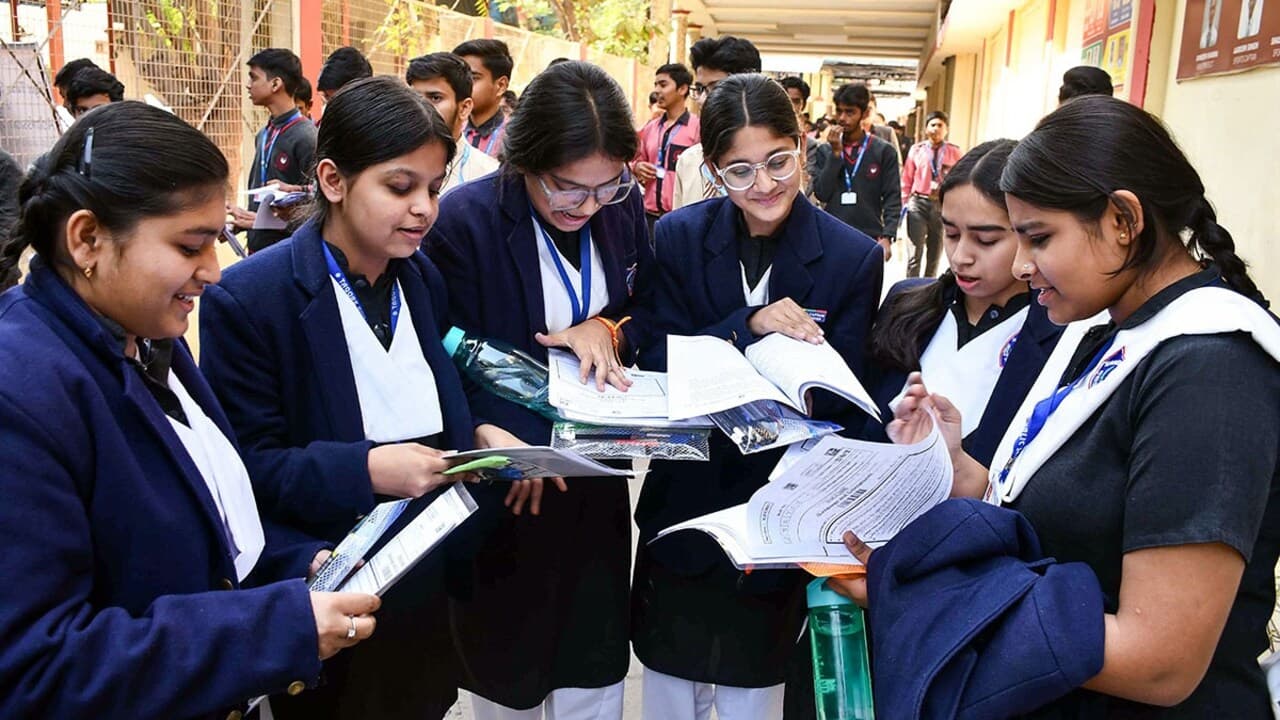
A parliamentary panel has flagged delays in the rollout of new textbooks for Classes 9 to 12, saying the gap between curriculum changes and their implementation is causing stress and confusion among students.
The Committee on Estimates, in its Tenth Report (Eighteenth Lok Sabha) for 2026-27, said the gap between curriculum development and ground-level implementation needs urgent attention.

The report, titled "Budget and Policy Aspects for Providing Affordable and Quality Education in the Country including Review of CBSE," was presented in the Lok Sabha on Aug 12.
The committee said CBSE has aligned the curriculum for Grades 9 to 12 with the objectives of the National Education Policy (NEP) 2020 and the National Curriculum Framework (NCF) 2023.
However, the transition has not progressed uniformly because NCERT is yet to complete the rollout of revised textbooks for Classes 9 to 12.
This has left schools dealing with a mismatch between what students are expected to learn and the materials available to them, the panel observed. Students are increasingly being introduced to higher-order and application-oriented learning while continuing to depend on older textbooks and study resources.
"The non-availability of textbooks and newer, application-based Board examination patterns are creating significant academic stress and confusion for students especially for the students appearing for the Class 10 and 12 examinations," the committee said.
The panel asked the Education Ministry to accelerate the preparation, printing and distribution of the remaining textbooks so that the transition to the revised curriculum can be completed without further disruption.
It also called for closer coordination between NCERT and CBSE, saying the two institutions need to work together to ensure that curriculum changes are translated effectively into classroom teaching and examinations.
Teacher training was another area of concern. The committee recommended a nationwide capacity-building initiative that would equip teachers to handle application-based pedagogy and the changing demands of the curriculum.
CBSE currently runs capacity-building programs across the country, with teachers and principals required to complete at least 50 hours of training every year. The training covers subject expertise, classroom practices, ethics and core educational values.
The panel credited CBSE with training more than 11 million participants through online and offline programs during the past five years. Government school teachers receive the training without charge.
However, the committee flagged a steep fall in participation in online training. The number of teachers trained online dropped from more than 5.3 million in 2022 to approximately 162,814 in 2025.
Financial barriers were also identified among teachers working in private CBSE-affiliated schools, particularly those in rural and semi-urban regions. Unlike government school teachers, they are required to bear training costs, including an additional ₹700 per teacher for single-day workshops.
"The Committee are of the view that some of the non-government schools in rural or semi-urban areas do not have enough budgetary resources to send their teachers on paid trainings," the report said.
The committee recommended that the ministry establish annual training targets and ensure that teacher development programs continue throughout the year instead of operating without a consistent long-term framework.
It also asked authorities to reconsider the existing training charges to improve participation among teachers from financially constrained private schools, especially those in rural areas.
The report further drew attention to student enrollment figures at the secondary and higher secondary levels. While Class 10 registrations increased from 2,251,812 in 2024 to 2,385,079 in 2025, Class 12 registrations rose from 1,633,730 to 1,704,367 during the same period.
CBSE's examination fee structure also came under scrutiny. Visually impaired candidates are exempt from examination fees, but other students appearing in India are charged ₹1,600 for five subjects under the standard fee structure.
The panel noted that students from economically weaker and socially disadvantaged backgrounds do not receive similar concessions from CBSE.
It recommended targeted fee exemptions and waivers for such students "in order to lessen the financial burden and give them opportunity to continue their education."
The committee also sought greater accountability in the evaluation of Board examination answer sheets. It recommended that CBSE make its assessment process more transparent by putting standardized and objective evaluation mechanisms in place.
Digital examination infrastructure should also be strengthened, according to the panel. It said the Pariksha Sangam platform should undergo continuous upgrades to maintain "foolproof security and efficiency" for Board examinations as well as national-level tests such as CTET and JNVST.
The committee also questioned whether current public spending on education is sufficient to meet the country's policy goals.
NEP 2020 envisages raising public expenditure on education to 6% of GDP. However, the panel noted that combined spending by the Centre and states remains at 4.1% of GDP, leaving a considerable gap despite the policy approaching the end of its implementation period.
For 2026-27, the Union Budget allocated ₹1,39,286 crore to the Ministry of Education, an 8.27% increase from the previous year.
The committee said the Department of School Education and Literacy accounted for only 1.52% of the total budgetary allocation against the overall 4.1% of GDP being spent on education in 2024-25.
Calling education a key driver of national development, the panel said funding must be adequate to address infrastructure requirements, improve learning outcomes and strengthen the quality of education.
It urged the Education Ministry to formulate a fixed financial plan with clear timelines under which both the center and states would progressively raise their spending on education.
"To bridge the GDP gap, the Ministry should move away from marginal incremental budgeting and ensure a mandatory annual baseline increase of 10% in the education budget to gradually converge with the 6% GDP target," it said.
The panel also proposed setting up a specialized, non-lapsable education fund as the second phase of NEP implementation approaches. Such a fund, it said, could provide sustained financing for infrastructure, digital development, and inclusive education across multiple financial years without funds expiring at the end of a budget cycle.

Jammu and Kashmir Unemployment: Economic Growth Has Yet to Resolve Job Crisis
China’s Chery unveils AI companion robot designed to ease loneliness
Varanasi Air Show 2026: Schools in Two Chandauli Blocks to Hold Online Classes on October 22, 24

India AI Fellowship 2026: UG Students to Get ₹1 Lakh, PG Students ₹2 Lakh

New Zealand teachers work nearly five hours more than OECD average
China’s Chery unveils AI companion robot designed to ease loneliness
.jpg&w=256&q=75)
New Zealand reforms could leave more students without school qualifications

Alfred Nobel’s will created one of the world’s most recognised prizes. Here’s how

Pepperdine University earns Google recognition and Digital Education Council membership for AI initiatives
Dhirubhai Ambani International School breaks into global top 10 with record IB score

Jammu and Kashmir Unemployment: Economic Growth Has Yet to Resolve Job Crisis
China’s Chery unveils AI companion robot designed to ease loneliness
Varanasi Air Show 2026: Schools in Two Chandauli Blocks to Hold Online Classes on October 22, 24
India AI Fellowship 2026: UG Students to Get ₹1 Lakh, PG Students ₹2 Lakh
New Zealand teachers work nearly five hours more than OECD average
China’s Chery unveils AI companion robot designed to ease loneliness
New Zealand reforms could leave more students without school qualifications
Alfred Nobel’s will created one of the world’s most recognised prizes. Here’s how
Pepperdine University earns Google recognition and Digital Education Council membership for AI initiatives
Dhirubhai Ambani International School breaks into global top 10 with record IB score
Copyright© educationpost.in 2026 All Rights Reserved.