


The $1 billion fundraising drive aims to strengthen faculty recruitment, student scholarships, advanced research facilities, startup incubation and industry partnerships, with ₹4,155 crore already committed toward its 2029 target.
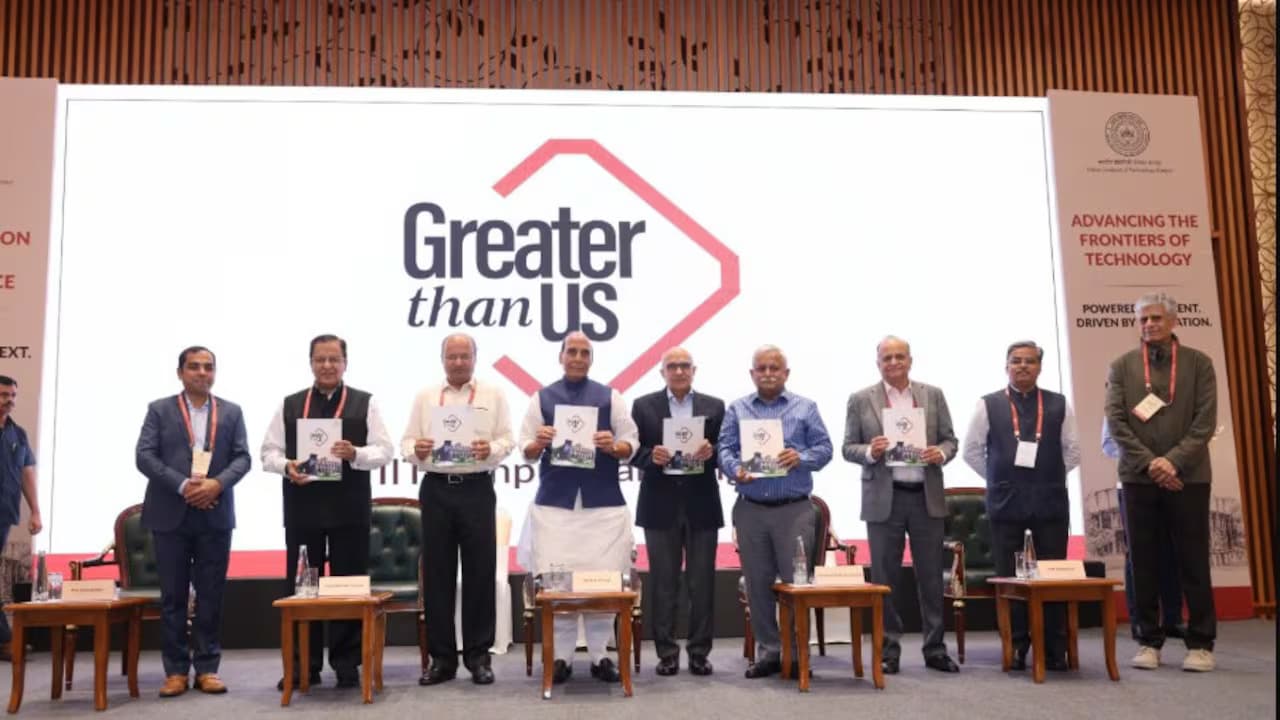
The Indian Institute of Technology (IIT) Kanpur has launched a $1 billion fundraising campaign to expand its research infrastructure, attract and support academic talent, and accelerate deep-tech innovation, with ₹4,155 crore already committed toward the target.
The campaign, titled ‘Greater Than Us,’ was launched by Defence Minister Rajnath Singh at Bharat Mandapam in New Delhi on Oct 14, 2026.

The institute aims to achieve its fundraising target by March 2029, making it the largest fundraising campaign undertaken by any IIT.
The initiative will bring together alumni, corporate partners, government institutions, philanthropic donors, and other supporters to finance research facilities, scholarships, faculty development, entrepreneurship, and emerging technologies.
IIT Kanpur Director Manindra Agrawal said nearly half of the target had been committed even before the campaign was formally announced, reflecting donor confidence in the institute's future plans.
“No IIT has attempted a campaign at this scale, with almost half the target already committed,” Agrawal said.
The campaign is structured around three pillars: Foundation, Talent, and Frontier. Together, these priorities are intended to strengthen the institute's research capabilities, expand support for students and faculty, and accelerate the development of technologies with applications across industry, healthcare, cybersecurity, and national security.
The launch also included the announcement of the Gautam School of Innovation and Entrepreneurship (G-SINE) at IIT Kanpur's Noida campus, backed by a ₹180-crore commitment from alumnus Rahul Gautam.
The school is scheduled to begin operations in July 2027, adding a new dimension to the institute's plans to connect technological research with entrepreneurship and commercialization.
Rajnath Singh highlights IITs' role in national development
Addressing the campaign launch, Defence Minister Rajnath Singh emphasized the importance of maintaining the legacy of India's premier technical institutions while preparing them for emerging scientific and technological challenges.
"Great institutions take decades to build. The early generations who founded and strengthened the IITs worked with limited resources but extraordinary commitment. They built not just campuses and laboratories but a culture of excellence, service, and nation-building. Our responsibility is to carry that legacy forward," he said.
Singh said the campaign would help IIT Kanpur strengthen the connection between scientific research, technological innovation, and national development.
He noted that the institute's long-term contribution would be reflected in the talent it develops, the knowledge it generates, the technologies it advances, and the opportunities it creates for future generations.
"The IIT Kanpur campaign gives us a chance to prepare the institution for a future in which scientific discovery, technological innovation, and national development are closely linked. Its success will show in the talent it nurtures, the knowledge it advances, the technologies it helps develop, and the opportunities it creates for generations to come," he added.
The defense minister also called for closer collaboration among the armed forces, the Defence Research and Development Organisation (DRDO), academic institutions, defense public sector undertakings, private industry, and startups to accelerate the development and adoption of indigenous technologies.
He said the rapidly changing nature of warfare has increased the strategic importance of domestic technological capabilities, particularly as artificial intelligence, autonomous systems, unmanned platforms, advanced sensors, cybersecurity, and space-based technologies reshape military operations.
Singh emphasized that higher education and research institutions must align scientific research with operational requirements and industrial needs to help India develop technologies suited to its national security priorities.
He also linked technological self-reliance with the government's vision of a developed India, stating that the 'Aatmanirbhar Bharat' initiative underpins the broader goal of building a technologically capable, economically competitive, and innovation-driven nation.
According to the defense minister, India's objective should extend beyond consuming existing knowledge and technology to actively contributing to their development and advancement.
IIT ecosystem supports startups, patents, and technological innovation
Singh highlighted the growing contribution of India's IIT network to research, entrepreneurship, and technological development. He noted that the wider IIT ecosystem has supported more than 6,000 startups, 56 unicorns, and nearly 5,000 patents.
“These achievements demonstrate that IITs are not merely institutions that impart knowledge, but are increasingly becoming engines of innovation, enterprise and technological capability. Institutions such as IIT Kanpur play a significant role in advancing India’s development by expanding scientific capabilities, strengthening the innovation ecosystem and creating solutions that benefit society,” he said.
The minister also acknowledged IIT Kanpur's DRDO-Industry-Academia Centre of Excellence and welcomed the proposal to establish a School of Defence Technologies at the institute.
He said the proposal to establish a National Military Drone Technology Hub at IIT Kanpur in collaboration with the Ministry of Defence had made significant progress, with the approval process nearing completion.
The proposed hub is intended to accelerate the development and indigenization of military drone technologies and strengthen India's capabilities in this strategic area.
Singh expressed confidence that closer cooperation between academic institutions and defense organizations would bring together scientific expertise, institutional capabilities, and the operational experience of the armed forces to develop technologies of strategic importance.
He added that universities and research institutions could play a crucial role in converting scientific discoveries into practical defense applications and addressing the military's evolving technological requirements.
Campaign to fund research infrastructure and campus expansion
Under the Foundation pillar, IIT Kanpur plans to invest in research and institutional infrastructure, including a ₹524-crore Central Research Facility and a ₹200-crore high-performance computing facility.
The Central Research Facility is intended to strengthen the institute's research capabilities by providing advanced infrastructure for scientific investigations and interdisciplinary projects. The high-performance computing facility will include advanced graphics processing units (GPUs) to support computationally intensive research, including artificial intelligence applications and scientific simulations.
The institute is also expanding its residential and campus infrastructure to accommodate students and faculty as its academic and research activities grow.
Plans include four new student residence halls, each with a capacity of 1,000 students, as well as 96 faculty apartments and a new Centre for Mental Health and Wellbeing. The first of the four residence halls is expected to be completed by June 2027.
These investments are intended to improve the facilities available to students and researchers while supporting the institute's broader expansion plans.
The campaign's infrastructure pillar also reflects the need for research institutions to maintain advanced laboratories, computing resources, and campus facilities to support work in increasingly complex scientific and technological fields.
₹3,000 crore allocation planned for students, faculty, and researchers
The Talent pillar will focus on developing academic and research capabilities by supporting students, researchers, innovators, entrepreneurs, faculty members, and future leaders.
IIT Kanpur plans to allocate ₹3,000 crore under this pillar for scholarships, doctoral fellowships, faculty recruitment, and entrepreneurship programs.
The institute aims to provide financial assistance to every eligible student, helping reduce financial barriers to higher education and allowing students to pursue academic opportunities based on their abilities and interests.
Doctoral fellowships and research support are also expected to help attract and retain researchers working in advanced scientific fields.
Investment in faculty recruitment will strengthen teaching and research capacity, while entrepreneurship programs will help students and researchers explore opportunities to develop businesses based on technological innovation.
Through these measures, IIT Kanpur intends to build a stronger talent pipeline connecting higher education, research, and enterprise.
Agrawal said the campaign would invite alumni, industry partners, donors, and other supporters to contribute not only financially but also through professional networks and institutional partnerships.
“Nearly half of this goal was committed before we announced it, and that tells us donors believe in where we are going,” Agrawal said.
“This campaign is an invitation to every alumnus, partner and friend of IIT Kanpur to help write the Institute’s next chapter,” he added.
Frontier pillar targets AI, quantum technology, semiconductors, and MedTech
The Frontier pillar will support research and innovation in advanced technology fields, including artificial intelligence, quantum technologies, cybersecurity, semiconductors, drones, medical technology, and environmental sustainability.
The institute has already secured ₹1,556 crore against the ₹1,000-crore target set for this pillar, according to the campaign details. The funds will support research initiatives designed to connect fundamental scientific work with practical applications and commercial opportunities.
Planned initiatives include a Quantum Technology Centre, a semiconductor packaging center, and a drug discovery program. These projects are intended to strengthen research capabilities in areas with growing importance for India's technological development, industrial competitiveness, healthcare, and strategic autonomy.
The emphasis on translating fundamental research into usable technologies is central to the campaign's broader objective. By supporting research facilities and specialized programs, IIT Kanpur aims to help researchers develop innovations that can be adopted by industry, public institutions, and other users.
Singh also highlighted the importance of research in advanced materials, semiconductors, quantum technology, and environmental sustainability, describing these areas as essential to addressing national priorities and developing future technologies.
He referred to the government's approval of the ₹1 lakh crore Research, Development and Innovation Scheme, which is intended to encourage private-sector investment in research and advanced technologies.
“While public policy can create an enabling environment, institutions must nurture talent and generate ideas, and industry must help translate innovations into practical applications and scale them up,” he said.
The minister's remarks underscored the importance of cooperation between government, universities, and businesses in converting research into commercially viable products and technologies.
IIT Kanpur expands focus on defense technology and indigenous innovation
Defense research and the development of indigenous technologies form another important part of IIT Kanpur's broader research agenda.
Singh highlighted the institute's existing work through its DRDO-Industry-Academia Centre of Excellence and the C3i Cybersecurity Technology Innovation Hub.
He also referred to the institute's medical school as an initiative supporting research and innovation in healthcare and medical technology.
The proposed School of Defence Technologies and National Military Drone Technology Hub would further strengthen the institute's engagement with the defense sector if the initiatives proceed as planned.
The proposed drone technology hub is expected to support efforts to develop domestic capabilities in military drones, an area of growing importance as unmanned systems become more prominent in modern warfare.
The defense minister said partnerships between research institutions, defense organizations, and industry could help India reduce dependence on external technologies and improve its capacity to develop solutions suited to its operational requirements.
IIT Kanpur's fundraising campaign is intended to provide additional resources for research and innovation across these fields, while creating opportunities for collaboration among scientists, entrepreneurs, companies, and government agencies.
Research at IIT Kanpur targets practical applications across industries
The institute's fundraising plans build on existing projects that seek to apply research to practical problems.
IIT Kanpur's artificial intelligence engine supports the government's Centralized Public Grievance Redress and Monitoring System (CPGRAMS), which is used to manage public grievances. Its cybersecurity researchers also operate a security operations center at the Bhilai Steel Plant.
The institute has additionally supported faculty-led startups developing technologies such as a heavy-payload logistics drone and a strike drone. These projects illustrate how research undertaken within an academic institution can be developed into practical tools for industrial and defense applications.
The campaign seeks to expand this connection between scientific research and real-world implementation by investing in facilities, talent, and advanced technology programs.
The institute's focus extends across multiple sectors, including cybersecurity, healthcare, artificial intelligence, semiconductors, quantum technology, drones, and sustainability.
Research in these fields could support the development of new products, industrial applications, and technologies relevant to India's economic and strategic priorities.
The fundraising drive is intended to provide the resources needed to move more research projects from early-stage investigation toward testing, commercialization, and wider adoption.
IIT Kanpur's role in Uttar Pradesh's industrial development
Singh also highlighted IIT Kanpur's potential contribution to Uttar Pradesh's industrial and economic development, describing the institute as a link between scientific research, emerging technologies, and enterprise.
He said Kanpur's industrial legacy, combined with the institute's technological expertise, could create opportunities for entrepreneurship, employment, investment, and economic growth.
The minister added that closer collaboration between academic researchers and businesses could help translate scientific advances into industrial applications and support Uttar Pradesh's ambition to become a $1 trillion economy.
IIT Kanpur's work in entrepreneurship, advanced manufacturing, cybersecurity, and emerging technologies could contribute to the development of new businesses and industries, while providing opportunities for students and researchers to apply their expertise beyond academic settings.
The campaign's emphasis on research infrastructure and commercialization is aligned with this objective of strengthening connections between universities and the wider economy.
Gautam School of Innovation and Entrepreneurship to open in July 2027
Alongside the fundraising campaign, IIT Kanpur has announced the Gautam School of Innovation and Entrepreneurship at its Noida campus, supported by a ₹180-crore commitment from alumnus Rahul Gautam.
The institute has signed a memorandum of understanding with Gautam for the establishment of the school, which is scheduled to begin operations in July 2027.
The school will launch with a flagship MBA program in Technology and Entrepreneurship. It will have its own full-time faculty and degree programs, with an academic focus on developing technology-driven entrepreneurs and future business leaders.
Its areas of interest will include artificial intelligence, cybersecurity, digital health, biotechnology, drones, and advanced manufacturing.
The school is also expected to work alongside a proposed Deep Tech Hub at the Noida campus. This arrangement is intended to give students access to advanced technology facilities and help them develop research-based ideas into products that can be brought to market.
The initiative will also draw on the resources and experience of IIT Kanpur's Startup Incubation and Innovation Centre (SIIC), which has incubated 571 startups.
By combining management education, technical expertise, and startup incubation, the school aims to strengthen the pathway from research and innovation to business creation.
The ₹180-crore commitment from Gautam represents a separate contribution supporting the establishment of the school within the institute's wider efforts to expand entrepreneurship and deep-tech development.
IIT Kanpur fundraising campaign targets long-term technological growth
Through the ‘Greater Than Us’ campaign, IIT Kanpur aims to raise $1 billion by March 2029 to support its next phase of academic, research, and institutional development.
With ₹4,155 crore already committed, the campaign has secured substantial early backing from alumni, donors, corporate partners, and government institutions.
The Foundation pillar will focus on research and campus infrastructure, the Talent pillar will support students and researchers, and the Frontier pillar will advance work in emerging and strategic technologies.
The initiative also aligns with the broader national objective of strengthening India's scientific capabilities, encouraging domestic innovation, and developing technologies that can address economic, social, industrial, and defense-related needs.
Singh expressed confidence that the campaign would strengthen research capabilities, expand opportunities for talented students, and support the development of solutions to national and global challenges.
He urged IIT Kanpur alumni, industry representatives, philanthropic supporters, and institutional partners to contribute through financial assistance, mentorship, research collaboration, and professional networks.
The launch was attended by IIT Kanpur Director Manindra Agrawal, Awanish Kumar Awasthi, advisor to the chief minister of Uttar Pradesh, and members of the institute's faculty, student community, and alumni.
By combining large-scale fundraising with targeted investments in research facilities, academic talent, entrepreneurship, and emerging technologies, IIT Kanpur aims to strengthen its position as a center for scientific discovery and innovation and contribute to India's technological development as the country works toward its 2047 vision of becoming a developed nation.

AI boom puts forward deployed engineers on track for ₹1 crore annual packages

70% of study-abroad aspirants target budgets below ₹30 lakh

NTA opens JEE Main 2027 registration, applications close on Nov 22

59% of Class 12 students report low satisfaction with school life

Reed College’s concrete owl stolen, frozen and set on fire
AI boom puts forward deployed engineers on track for ₹1 crore annual packages
Reed College’s concrete owl stolen, frozen and set on fire

Canada announces $813 million research boost to back 450-plus researchers

Abu Dhabi aims to bring 2,000 Emirati teachers into private schools within five years

Australian schools record thousands of student sexual misconduct reports as child safety concerns grow

AI boom puts forward deployed engineers on track for ₹1 crore annual packages
70% of study-abroad aspirants target budgets below ₹30 lakh
NTA opens JEE Main 2027 registration, applications close on Nov 22
59% of Class 12 students report low satisfaction with school life
Reed College’s concrete owl stolen, frozen and set on fire
AI boom puts forward deployed engineers on track for ₹1 crore annual packages
Reed College’s concrete owl stolen, frozen and set on fire
Canada announces $813 million research boost to back 450-plus researchers
Abu Dhabi aims to bring 2,000 Emirati teachers into private schools within five years
Australian schools record thousands of student sexual misconduct reports as child safety concerns grow
Copyright© educationpost.in 2026 All Rights Reserved.