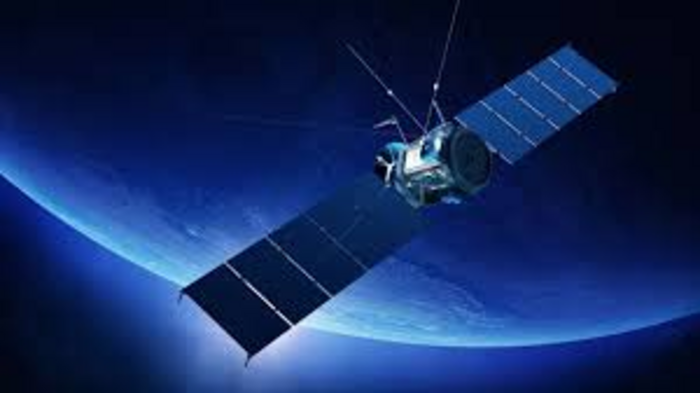
The Indian Space Research Organisation (ISRO) has announced plans to launch three new Earth Observation (EO) satellites by March 2026, marking a significant step towards strengthening India’s capabilities in weather forecasting, disaster management and climate monitoring. The satellites are expected to play a crucial role in enhancing data availability for agriculture, water resources and environmental governance.
According to ISRO, the upcoming satellites will be equipped with advanced optical and radar-based sensors capable of high-resolution imaging and all-weather monitoring. These capabilities will enable continuous observation of land, oceans and atmospheric conditions, improving the accuracy of weather prediction models and early warning systems for extreme events such as floods, cyclones and droughts.

A major focus of the mission is to support Agrometeorological (Agromet) services. Satellite-derived data on rainfall, soil moisture, crop health and vegetation indices will assist farmers and policymakers in crop planning, yield estimation and risk management. Enhanced agricultural advisories are expected to improve productivity, reduce climate-related losses and strengthen food security, especially for small and marginal farmers.
The satellites will also significantly contribute to flood prediction and water resource management. By providing near real-time data on river basins, reservoirs and rainfall patterns, the systems will help authorities issue timely alerts and plan mitigation measures. This is particularly relevant in the context of increasing climate-induced disasters and urban flooding.
From a climate perspective, the new EO satellites will aid in long-term climate change monitoring, including tracking changes in land use, forest cover, glaciers and coastal ecosystems. The data generated will support national commitments under international frameworks such as the Paris Agreement and the Sendai Framework for Disaster Risk Reduction.
Overall, ISRO’s planned launches underscore India’s growing reliance on space-based technologies for climate resilience, sustainable development and evidence-based policymaking, reinforcing the strategic importance of Earth observation in addressing 21st-century environmental challenges.