The study, published in the journal Nature, stems from a partnership involving the John Innes Centre (JIC) and the Chinese Academy of Agricultural Sciences (CAAS), along with various research teams in China, the UK, USA, and France.
The study has linked over 70 agricultural traits to relevant genomic sites.

The various genetic markers found at each of these sites can be utilized to speed up the enhancement of peas.
Their research has revealed fresh insights into the characteristics that Mendel famously examined and highlighted important genetic diversity.
Importance of the Research
The enlarged gene bank and genomic assets accessible to researchers and breeders globally can potentially revolutionize pea breeding and enhance studies on this ecologically important legume.
The research arrives at a moment when peas and various legumes are being recognized as a source of plant-based protein and as sustainable crops capable of fixing their own nitrogen.
This will facilitate enhanced predictive breeding, like utilizing AI models that can identify gene combinations to produce higher-yielding, disease-resistant, and agronomically suitable pea plants.
Mendel’s Research
Mendel is recognized as the father of genetics due to his pioneering research on inheritance in pea plants conducted 150 years ago.
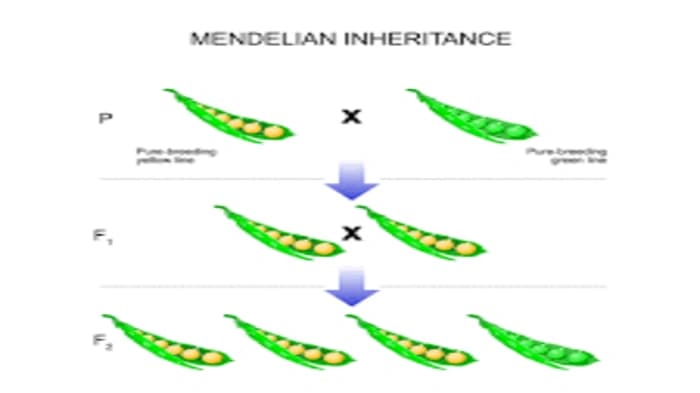
He concentrated on seven characteristics: pea seed shape (round or wrinkled), pea seed color (green or yellow), pod shape (constricted or inflated), pod color (green or yellow), flower color (purple or white), plant height (tall or dwarf), and the position of flowers (axial or terminal).
Mendel selected pea plants due to their readily noticeable characteristics (such as flower color and seed shape), rapid growth, and ability to undergo self- or cross-pollination.
Mendel's Principles of Heredity
Law of Segregation: Every individual carries two alleles for a trait, but only a single allele is transmitted to the offspring during the formation of gametes.
Characteristics are shaped by allele pairs.
In meiosis, the two alleles divide (split), ensuring that each gamete gets just one allele.
Law of Independent Assortment: Genes for various characteristics separate independently of each other during the formation of gametes.
The passing on of one characteristic (e.g., plant height) does not influence the passing on of another characteristic (e.g., seed color), provided the genes are located on separate chromosomes.
This accounts for the differences in characteristics among descendants.
Law of Dominance: In the presence of two different alleles in a pair, one allele (the dominant allele) conceals the expression of the other allele (the recessive allele).
In a heterozygous condition (for instance, Tt), the dominant trait (tallness) is shown, while the recessive trait (shortness) remains concealed.
Conclusion
Mendel's research went unrecognized until its rediscovery in 1900. Currently, his principles form the foundation of classical genetics, aiding our comprehension of how traits are inherited from one generation to the next.